NSW Government Plans to Further Curtail the Right to Protest
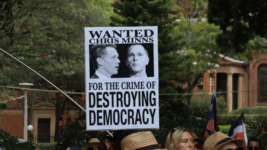
Despite Greater Sydney continuing to be under the grips of a blanket ban on protests, New South Wales premier Chris Minns appeared before the press on 26 January 2026, and announced that the mass of antiprotest laws his party has been involved in progressing have not come to an end, and he will soon be passing more to prevent regular protests in the CBD and at other prominent sites.
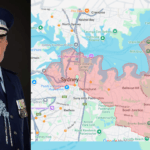
The current ban on protests, or the partial assembly restriction declaration (PARD) regime was imposed on a large section of Sydney on Christmas Eve 2025, which was the same day the laws were enacted in response to the 14 December 2025 Bondi massacre. The 3-month-long PARD covered central, southwest and northwest policing districts. Now reduced, it covers the CBD and the east.
The excuse that underpins these laws is that the premier linked the ongoing pro-Palestinian protests that began when Israel commenced the Gaza genocide in October 2023 with the ISIS-inspired mass shooting at Bondi, when no real link exists. And when asked on Monday if he’d finished legislatively restricting protests, he insisted he hadn’t but didn’t elaborate on the guts of his new proposal.
So, the NSW premier is now hinting at enacting the fourth antiprotest regime since 2022, and one that sounds just as rights-eroding as the initial trifecta, as he’s spruiking a law that would provide the ability to prevent public demonstrations in the CBD and at prominent sites, like the Sydney Harbour Bridge and the Opera House.
Indeed, Minns’ new proposal to wrench away NSW constituents’ rights to protest and to assemble in public to express themselves politically, sounds strangely similar to a proposal that Australia’s antisemitism envoy Jillian Segal flagged to SBS News in late 2024, when she argued that protests should be restricted from Gadigal land in the Sydney CBD as they were making people feel unsafe.
A boot stamping on a face forever
“I do believe we’re going to have to confront this idea that the centre of Sydney can be dominated weekend after weekend after weekend by the same protests,” Minns said on Monday. “People have got a right to protest, but other Australians have a right to enjoy the city, go to mass or go to church or go to synagogue through Hyde Park free from trying to navigate a protest every weekend.”
“And if you’re the subject of that protest, it’s particularly confronting and quite divisive,” explained the premier, as he appeared to be suggesting that protests against an Israeli perpetrated genocide in the Gaza Strip have been directed at parts of the NSW community. But no protesters have been blaming any locals for the mass killing of Palestinians under Israeli PM Benjamin Netanyahu.
“I’m not going to announce anything today on Australia Day,” Minns further continued, “but I’m certainly not going to suggest to you all, that that’s the end of our proposed changes.”
The NSW premier has been legislating increasingly authoritarian laws in NSW since February last year. The newly implemented PARD laws have been perceived as an exceptionally broad extinguisher of basic rights, so for Minns to have yet again suggested a further crackdown on the right to protest has made quite a few locals fall off their seats on becoming aware of the dastardly plot.
The premier failed to explain, however, that the right to protest and most other rights are not protected in NSW already because successive NSW and federal Australian governments have refused to protect the rights of constituents since these two jurisdictions were founded. Nor did he flesh out the reasons for the constant protests occurring over recent years that he chiefly seeks to silence.
Minns further justified this shift towards tyrannical lawmaking in NSW being due to its multicultural society and therefore, its constituents can’t be trusted with the same rights to free speech as in the US, as it might cause conflict, despite the USA being a multiethnic society too. He neither set out that the laws he’s placing on the books lay a foundation for a future authoritarian leader to take the reins.
Outlawing the public square
The 24 December 2025 PARD protest ban has caused much consternation amongst the constituency.
The PARD law permits the NSW police commissioner to impose a 90 day ban on authorising street marches in a designated area within the state, following an incident having been declared terrorism-related. The top cop then reviews fear levels in the community ever fortnight to assess whether they are so high that allowing processions on public streets might cause constituents to feel fear.
These overbearing laws, as on display following the US Trump administration having kidnapped the Venezuelan president and the people wanting to express opposition, don’t prevent stationary assemblies, however attending NSW police officers can take the temperature of such gatherings and if they’re assessed to potentially cause fear amongst the community, they can then be moved on.
But it would seem that after slapping themselves on the back about the success of the PARD, NSW authorities then realised that they can only stamp out protests in this way if a terrorism incident has occurred, and it then struck them that something that could be weaponised at times of less heinous crimes or perhaps with no related incident needed as a pretext, should be on the menu.
Minns was head of NSW Labor, when in April 2022, it waved through the Perrottet government’s crackdown on unauthorised protest in this state, specifically in relation to rising climate actions. This antiprotest regime resulted in bans on unauthorised protests that obstruct major roads, tunnels and bridges in Greater Sydney, Newcastle and Wollongong, along with actions at specific major facilities.
The next tranche of antiprotest laws were rolled out in February 2025. This was the places of worship antiprotest regime, which bans unauthorised demonstrations near religious institutions and is also accompanied by a move on power, which had to be reenacted after the first law was struck down as unconstitutional. These measures were fuelled by the then yearlong antisemitic moral panic in NSW.
The post-Bondi Beach massacre PARD law has stunned many constituents prone to participate in public assemblies. Its overbearing nature does remind of a COVID-era ban on protests, however that prohibition was during a circulating killer virus and lockdown orders, while the imposition of the first ever PARD order had nothing to do with the need to preserve public health during a pandemic.
In the wake of the enactments of these antiprotest regimes in NSW over recent years, it might be expected that further restrictions on political expression may be the most rights-undermining set of antiprotest laws so far, as it is definitely being enacted by a NSW Labor government that considers constituents should not hold such broad rights as to make their views publicly known.
Authoritarian stooge
“Seriously, this guy just can’t stop,” NSW Greens MLC Sue Higginson wrote on Instagram, following the NSW premier’s disturbing announcement on Monday. “He really hates the people power of protest. I think this has been his plan all along.”
When Minns determined to pass the protests laws on the authority of the NSW Liberal Nationals state government in 2022, long-term Labor voters were shocked that their party would guarantee such laws, which might end up targeting workers protest, as, once upon a time, the Labor Party had prioritised the rights of workers and indeed, the right to assemble in public for industrial action.
But on taking office, the premier distinctly shed the approach that past Labor leaders have taken to governing this state, in favour of a much more conservative vision for NSW that leaves many asking why he didn’t sign up to conduct his politicking for the opposition.
“Rather than listen to the people, engage and respond, he will use state power to silence and remove them, just like a dictator,” Higginson warned on 26 January, as the repression mounts.
“Get ready folks for the next big round of antiprotest law. NSW: the police state – what a legacy NSW Labor premier Chris Minns.”
Paul Gregoire
Receive all of our articles weekly
Related Articles
 NSW Government’s Blanket Protest Ban: A Massive Gifting Away of Our Basic Rights for Xmas
 Sydney Rallies Against Trump’s Imperial Assault on Venezuela, Despite Protest Ban
 The Ban on “Authorised” Protest and Suppression of Political Dissent Continues in NSW
 NSW Police Commissioner Bans Protests, Suppressing Fundamental Democratic Rights
 Proposed Temporary Ban on NSW Protests Is a Slippery Slope to Permanency
 Police Commissioner Reduces Scope of Protest Ban Pending Court Appeal