Supervised Injecting Rooms Save Lives. Why Are Councils Turning Their Backs on Them?
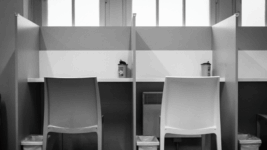
Australia is facing a growing crisis of drug-related harm. Overdose deaths are rising and there’s inadequate investment in proven harm reduction strategies such as Supervised Injecting Facilities (SIFs). Despite the evidence supporting SIFs as effective public health interventions, Australia operates only two such facilities, one in Sydney and the other in the City of Yarra, Victoria.
SIFs are proven harm reduction strategies that save lives and provide a safe, supervised space for people to use drugs, preventing the fatal overdoses that too often occur alone, in alleyways, and public toilets. SIFS also connect people to health and social services and reduce public drug use. The success of existing facilities in Sydney and North Richmond, backed by multiple independent evaluations, demonstrates their effectiveness and public benefit.
Critics of SIFs often claim they attract drug use, increase crime and have a negative impact on public safety and ‘amenity’. However, research obtained both locally and internationally consistently shows these claims are unfounded. SIFs do not increase crime or drug use; rather, they improve community amenity, reduce the demand on emergency services and help people access treatment, housing and support.
From personal experience, having worked in the City of Yarra since 2010, there’s been a remarkable improvement in the amenity of the area surrounding the injecting room. The streets and laneways, once littered with used syringes are now clean, public injecting is almost non-existent, and the number of street dealers has diminished.
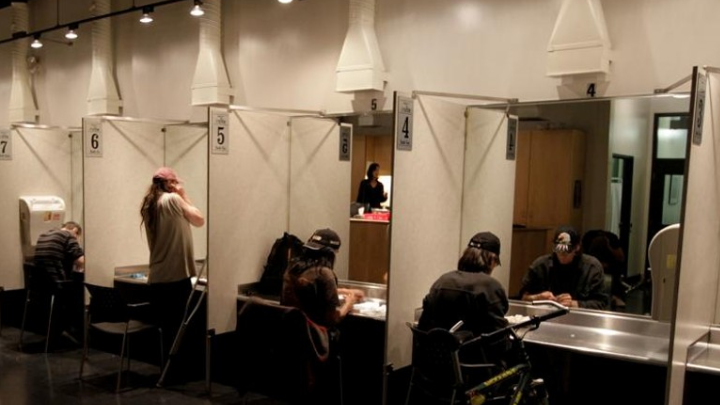
My support for Supervised Injecting Facilities is not only influenced by the vast improvements in public amenity. I have seen in the City of Yarra since 2018 when the Medically Supervised Injecting Room was opened in North Richmond. It is also a view I have held for over 35 years dating back to my time as a member of Victoria Police.
As a former Senior Sergeant, I saw the impact of drug injecting in public and concluded back then that in order to reduce drug risks to users and the public the problem had to be ‘taken off the streets’. Police work is very much a ‘reactive’ based response. Where injecting rooms are established, public injecting is moved from streets and laneways into safer places. Calls for police to respond to public injecting are therefore reduced. Police resources can then be re-directed and better allocated. Redirecting police resources to more harmful crimes such as family violence is a win-win for the community.
Yet, despite their success, they are still shrouded in controversy. Recently, in Melbourne, two local government areas, Cities of Yarra and Melbourne councils, voted to change their support for SIFs. Yarra voted 6-2 to support the closure of the local SIF that was established in 2018. They also recommend that this service be relocated to another location. The council claimed, without evidence, that the North Richmond SIF had led to increased crime in the area. Anecdotes are aplenty, facts are rarely put forward. Evidence needs to be respected and lead policy development.
Astonishingly, in an act of pure opportunism, City of Melbourne also held a council meeting recently where a hastily arranged agenda included a move put forward to withdraw their long-standing support for the establishment of an injecting room in the city. Council called for submissions which were overwhelmingly in support of the council maintaining its support. Councillors spoke both for and against the motion. The language was again littered with misinformation and inaccuracies. The North Richmond facility was wrongly portrayed as a failure, rather than the success it clearly is. Unfortunately, the motion passed, despite the submissions.
To the Yarra council’s credit, they did recommend that more injecting rooms are needed. This is true, including in the Melbourne CBD which now has the highest overdose rate in this state. Harm Reduction Australia agrees, and it is why we are launching our new Drug Consumption Rooms (DCR) Policy Brief today. Those who work on the frontlines in Melbourne’s CBD know that expansion is necessary in order to provide greater access to these lifesaving, harm reduction services for people who use drugs.
DCRs must be established where there is demonstrated community need in order to increase access to these services and reduce drug-related harms, especially fatal overdoses. This should include expanding service models to meet the specific needs and preferences of local communities of people who use drugs including the type and range of drugs used and the preferred modes of consumption.
We should be considering nuanced spaces, which could include stand-alone rooms out of public sight and others connected to existing health services. Introducing peer-based and mobile models offers a more cost-effective, scalable solution . International experience shows that mobile drug consumption rooms are not only cost-effective, but they can also address opposition to the establishment of permanent sites.
In order to address resistance from the community to the establishment of injecting and other drug consumption rooms, community engagement and education on the benefits and effectiveness of drug consumption rooms is needed.
Resistance to new programs such as these often stems from misinformation or stigma. Therefore, any expansion of DCRs must be accompanied by evidence-based community education campaigns. Partnering with local health advocates, councils, and business leaders can help demystify these services and foster broader public support.
Harm Reduction Australia’s new Drug Consumption Rooms Policy Brief can be found here.
Main image: Drug consumption room by Claude Truong-Ngoc licenced under CC BY-SA 3.0
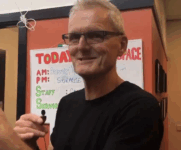
Greg Denham
Receive all of our articles weekly
Related Articles
 Legalise Drugs to Reduce Violent Crime: An Interview With LEAP’s Greg Denham
 Medically Supervised Injecting Centre to Open in Melbourne
 Residents Demand Safe Injecting Facility
 Police Against Drug Prohibition: An Interview with LEAP’s Greg Denham
 Richmond’s Safe Injecting Room Saves Lives: An Interview With NRCH’s Demos Krouskos
 Drug Policing Causes Most of the Harms: An Interview With Former Police Sergeant Greg Denham