Challenge to Ruling that Conferred Copyright of Animal Abuse Footage to Perpetrators
A Federal Court ruling caught many off-guard last year, as it found Game Meats Company (GMC) owned the copyright relating to images, including a 14 minute film, taken by Farms Transparency Project (FTP) at a goat slaughterhouse, which, if not overturned by a High Court appeal, will serve to preserve extreme cruelty in animal agriculture and undermine basic copyright law.
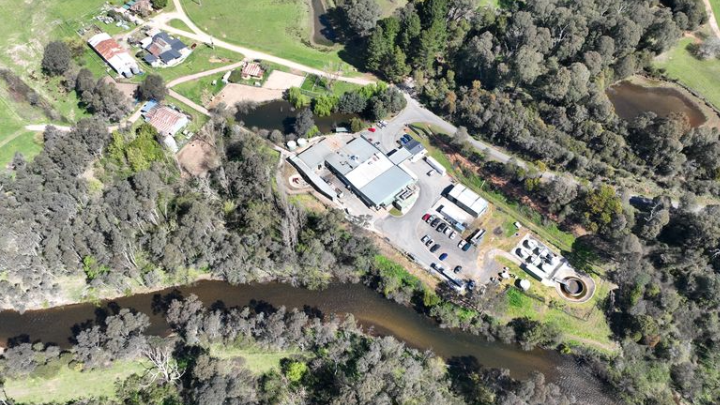
FTP agents entered GMC’s abattoir located on Dhudhuroa land in the Victorian town of Eurobin on seven occasions over 9 January to 13 April 2024, to install and later retrieve video recording equipment. FTP then sent a short film of goats being brutalised to the Department of Agriculture as a complaint on 3 May that year. Yet, the public servants then forwarded a copy of it to GMC days later.
Channel 7 was then sent the film, which it reported on but didn’t air. FTA also published the animal abuse on its website in May 2024, which led GMC to file to sue the activists over trespass, as well as to seek an injunction to block the airing of the 14 minute clip and called for a constructive trust over its copyright, and in late 2024, GMC was awarded $130,000 in damages but denied further remedies.
Copyright law stipulates that the person who made a film owns it on publication. Yet, on appeal of the original GMC civil suit ruling, the Federal Court found that due to the nature of FTP’s wrongdoing, this served as a basis to order the activists to sign over the copyright of their film to GMC and further, that FTP destroy all images and footage capturing the abuse of goats at the Eurobin slaughterhouse.
This is the first time an Australian court has imposed a constructive trust in respect of copyright that involves the tort of trespass, and Farm Transparency Project is now appealing this outcome to the High Court next month, due to the serious implications that the ruling not only has to its work, but also the further impacts for others attempting to expose concealed wrongdoing.
Upholding the rights of the corrupt
“The ruling prioritises private commercial interests above the public interest. It allows for any company found to be engaged in wrongdoing or illegal activity to shield itself from any consequences, if the evidence was the result of someone jumping a fence – or in this case, crawling under one – to film it,” explains Farm Transparency Project executive director Chris Delforce.
“This would grind all animal cruelty investigations in Australia to a halt, because, of course, no business that profits from animal cruelty would ever willingly allow their practices to be filmed and published. Almost every animal cruelty scandal in recent decades in Australia has come about in similar circumstances,” the internationally renowned filmmaker told Sydney Criminal Lawyers.
Trust is a common law concept involving the owner of a thing or right transferring ownership to another for the benefit of a third. A constructive trust is imposed as an equitable remedy. So, in 2025’s GMC versus FTP, Justice Ian Jackman found footage was held in trust by FTP for GMC, due to the trespassing involved, and the court ordered FTP to sign over copyright and destroy all imagery.
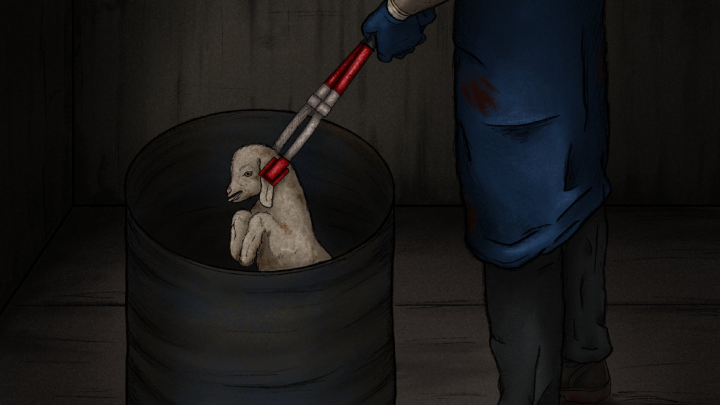
If the ruling stands, it will not only have a chilling effect on the risky operations of animal activists who expose the extreme cruelty and barbarity that goes on behind closed doors of slaughterhouses, but this further has grave implications for public interest journalism, as covert investigations into cases of wrongdoing may result in captured evidence belonging to the subject of the inquiry.
“More broadly, journalists often rely on material sourced in a way that courts might consider to be wrongdoing, whether that’s trespass or otherwise, and already face an environment where the slightest hint or risk of litigation is enough for editors and legal teams to shut down important stories,” Delforce further made clear as to why this determination is garnering so much controversy.
“This ruling makes it even more difficult for the public to hear about what happens behind closed doors, not just of farms and slaughterhouses, but any business dependent on secrecy,” he added.
In the public interest
The Human Rights Legal Centre (HRLC) and the Alliance for Journalists Freedom (AJF) have been granted the ability to make submissions to the FTP’s High Court appeal of the Federal Court’s ruling as amicus curiae, or experts not directly related to the case. These organisations seek to provide submissions regarding the broader implications of the constructive trust and injunction ruling.
In particular, the HRLC and AJF seek to explain to the court how this ruling could affect whistleblowers and news organisations, and due to this, the impact that it would have on the entire public. In their submission, they posit that if there are other ways in which remedies can be advanced other than constructive trust, then those avenues should be taken.
The rights organisations warn that if this ruling becomes precedent then wrongdoers will have further means to skirt justice. Investigative journalists and whistleblowers may find themselves, as the FTP did, attempting to alert the public or authorities to corruption they’ve uncovered only to find that a court then rules the copyright of the evidence belongs to the alleged perpetrators.
As for Farm Transparency Project, Delforce explains that regardless of the High Court outcome, they’ll “never stop exposing the horrific cruelty in farms and slaughterhouses”. However, “an adverse ruling would enable these facilities to get an easy injunction, and we’d be forced to put a lot more energy into pre-empting or working around that”.
“Mainstream media coverage, which has already become more and more difficult in recent years, would be completely impossible – making it much less likely that our investigations will reach the people who need to see it: the general public who unknowingly fund it,” the filmmaker underscored.
Delforce adds that if the ruling remains his organisation and others will no longer be attempting to tipoff the authorities about extreme animal cruelty operations prior to exposing them to the public, because the risk of those in charge turning around to the alleged perpetrators and tipping them off, would result in more court actions seeking injunctions, and the cost would be “too high”.
Ag-gag laws
“Animal agriculture is a powerful and vastly-resourced industry, with significant control at all levels of government – but it knows that it sits on a very precarious foundation of secrecy,” Delforce explained this week. “Whenever that secrecy is challenged, it uses everything at its disposal to push back hard: arrests, search warrants, new laws, advertising campaigns, lawsuits, even physical violence.”
And this is hardly Delforce’s first time around the block either. He directed the globally acclaimed documentary film Dominion, which exposes a smorgasbord of animal cruelty that’s difficult to watch but presents the viewer with the truth behind what’s on the plate, and activists worldwide sing the doco’s praises, and it used the same techniques undertaken to make the 14 minute GMC film.
Delforce’s Adelaide home was raided by South Australian and New South Wales police in 2015, over filming in piggeries, after his first doco Lucent was released. He was initially charged with 17 break and enter offences, but these were replaced by four charges of using a surveillance device to capture footage and six for publishing it. But the case was dropped because police didn’t observe protocol.
“These kinds of consequences are just something you have to accept when you decide to take on a multi-billion-dollar empire, and the more effective your advocacy, the tougher the crackdown,” Delforce said in terms of the legal consequences he’s repeatedly faced whilst exposing the cruelty of animal agriculture.
Farm Transparency Project then took the NSW state to the High Court in 2022, to challenge the constitutionality of the two offences in the Surveillance Devices Act 2007 (NSW). These were those specifically related to making it unlawful to communicate or publish private conversations or recordings of activities and another which makes it a crime to possess such materials.
The sort of laws that prevent the obtaining, possessing and disseminating of the hidden cruelty and brutalisation involved in the animal agricultural industry are commonly referred to as ag-gag laws.
The High Court ruled in August 2022 found that the laws in the NSW legislation, which do not have any specific public interest provision, do “not impermissibly burden” the implied right to freedom of political communication contained in the Australian Constitution, and instead, the measures were found to strike a balance between upholding of the freedom and protecting the citizenry’s privacy.
Farm Transparency International Limited versus The Game Meats Company of Australia Pty Ltd goes before the High Court on 5 May 2026.
“While we never expected state or federal agriculture departments to do anything meaningful in response to our numerous complaints about serious animal cruelty, given the inherent conflict of interest, we were naïve about just how closely they work with these places and how desperately they’ll fight to maintain economic prosperity at the expense of all else,” Delforce said in conclusion.
“It’s a lesson we’ve learned the hard way.”
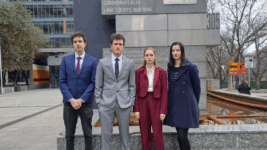
Main image: The Farm Transparency Project team, with Chris Delforce second from the left

Paul Gregoire

Receive all of our articles weekly
Related Articles
 High Court Challenge to NSW Ag-Gag Laws: An Interview With Farm Transparency Project’s Chris Delforce
 Court Refuses Injunction to Prevent Publication of Footage Exposing Extreme Animal Cruelty in Abattoir
 Against Animal Atrocities: An Interview With Animal Justice Party MLC Emma Hurst
 “If Not Us, Then Who?”: An Interview With Animal Justice Party Candidate Alison Waters
 Preventing Animal Cruelty in Law: An Interview With Animal Justice Party MLC Emma Hurst
 Sydney Animal Liberationists Call on Government to End Lawful Systemic Abuses