Join the National Walk for Truth: Travis Lovett on the Need for a National Truth-Telling Process
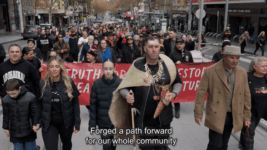
Kerrupmara, Gunditjmara and Boandik man Travis Lovett is walking from Naarm-Melbourne to Ngunnawal land in Canberra from 19 April to 27 May 2026, and he’s inviting everyone on the continent to join him. As he explains, this is a walk for truth, and it is further about triggering a National Truth-Telling Process that will serve to enlighten and heal the entire nation.
Lovett is inspired when he talks about this process, and he’s aware that it works. Lovett is the deputy commissioner of the Yoorook Justice Commission, which is the nation’s first official truth-telling body. The commission underwent a formal truth-telling process to uncover and put on the record the truth about colonisation in Victoria, which has opened up a formal treaty-making process in that state.
As Lovett underscores, the will to undertake truth-telling in this country is nothing new. Truth-telling is the formal process of speaking openly and sharing information about the progress of settler colonialism on this continent, including the dispossession and genocidal violence it unleashed upon the First Peoples of the land, and how these processes continue on into the present.
Lovett stresses that this process is not about blaming people for what has transpired, but it is about unpacking and dismantling the ongoing colonial processes present in the Australian system, and while this process seeks to propagate First Peoples self-determination, it will also free the non-Indigenous people from being a part of a system that continues to produce prejudicial outcomes.
Dispelling falsehoods
The ‘Great Australian Silence’ is a phenomenon that took place in this country from 1901 federation and started to be diluted in the late 60s/early 70s. This process entailed supressing the truths of colonisation and erasing First Peoples from history books. Australian black armband historians, like W E Stanner and Henry Renoylds, then exposed this history, which First Peoples had never forgotten.
Lovett is concerned with the transformative capacity that truth-telling produces and the value it has to reform the systemic prejudices that continue to be a characteristic of institutions established in the past, and when he’s not campaigning for the National Walk for Truth, Travis is the executive director of the Centre for Truth-Telling and Dialogue at the University of Melbourne.
Sydney Criminal Lawyers spoke to Travis Lovett about what was achieved via the Yoorook Justice Commission and the Victorian Walk for Truth, along with why this should be translated to the national level and how every day Australians ought to consider joining the National Walk for Truth and the type of experiences they’re likely to have.
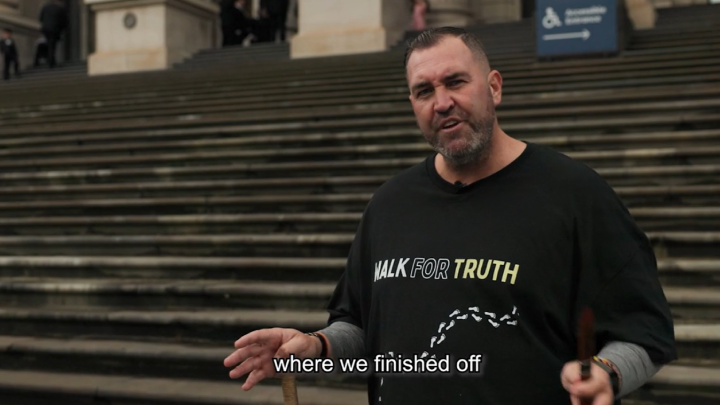
Travis, the National Walk for Truth is beginning in Naarm on 19 April and arriving in Canberra on 27 May 2026. The event aims at bringing about a broader understanding that the entire nation should undergo a truth-telling process.
So, what is truth-telling? Why is it needed in this country?
We want to bring our nation together, first and foremost. We want every day Australians to understand First Peoples lived experience. But we also want to be able to share and walk with people.
Our ancestors have always walked Country for tens of thousands of years. What we are doing through this walk is further enacting that part of our culture and traditions. We are inviting everyday Australians to come and walk with us.
We do stop at sites, because this is truth-telling. We do stop at sites of significance, particularly massacre sites. We listen to local Traditional Owners, who share those lived experiences. They are not stories: they are lived experiences of our people.
But not just the traumas, we actually talk about the strength, the resistance and the contributions that our people have made.
So, this is what we do, we are walking from Naarm to Canberra. It will take 40 days. It will be about 840 kilometres minimum, and we open legs to the public to be able to join us, where the Traditional Owners want to highlight.
We are also walking and talking alongside Traditional Owners, elevating their lived experiences, and that’s really important, because every day Australians don’t know.
We know from the first walk, many of our community and society will say, “I didn’t know about this. I didn’t know this happened here. I didn’t even know massacres happened in Australia. We didn’t learn this in the schools. We didn’t learn this as part of growing up in Australia.”
So, what we want to do is we want to highlight those lived experiences. We have been fortunate enough in Victoria, to have a Royal Commission process called the Yoorook Justice Commission, which investigated those ongoing and systemic injustices since colonisation here in Victoria.
I have heard loud and clear, and not just in Victoria, but in going around and spending more than 600 hours personally, in the car talking to people in their front yard, backyard, but also, down by the riverbank and so forth.
Wherever someone wanted to meet, in their safe space, I was able to go and hear them.
Since we finished the commission, and we handed that report over at the end of the Walk for Truth. I have travelled all over Australia, listening and learning. And overwhelmingly, everyone has said, “We want what you mob had.”
We need it nationally as well, not just in our state. That is the importance of why, at this stage, right now, I am calling, alongside the voices and the advocacy I have met with, but also, with those who have shared things calling for truth online.
It is also a key part of the Uluru Statement from the Heart. One of the three pillars: Voice, Treaty and Truth. What we are doing is we are focusing in on that.
We have an open letter to the prime minister that we are also encouraging people, not just Aboriginal people but all of society, to check out on our website www.walkfortruth.com
Please consider adding your name to and signing that open letter, calling on the prime minister to establish a National Truth-Telling Process as a matter of priority.
Again, we are not asking the prime minister or the federal Anthony Albanese Labor government to commit to new things. He has already committed to implementing the Uluru Statement from the Heart. That is all we’re asking him to do.
He already made a commitment to not leaving anyone behind. The fact of the matter is, the data and the evidence from the government – not just from our peoples lived experience, but from the government – highlights that our people are not being able to progress.
This is the question that I pose. This is the question that truth-telling can understand and unpack. Why is there a ‘gap’ in the first place?
Why, with everything going on, are our people still dying in custody and overrepresented in the child protection system? In every single area our people are well underrepresented, or with incarceration, we are overrepresented.
So, let’s actually have a truth-telling process that unpacks that: that understands not just the traumas of our people but also considers the contributions that our people have made. Not only in Victoria, but as I said, right across the nation.
People have long called for truth-telling. It is called for through January 26. Whether you call that a protest, a march or a walk. It is also through the Statement from the Heart but not limited to it.
Our people have spoken the truth for 200-plus years, and we are asking and calling on the federal government again to enact their own commitment to First Peoples and to Australians, as the prime minister has done.
People have the ability to come and join us on the walk, and if they can’t come and join us on the walk, share the message on social media about what is happening.
Come listen and learn and engage. If you have never thought about Aboriginal affairs before but are wanting to learn and understand more, come and join us, share information and also, sign the open letter to the prime minister.
On the last day of the walk, when I come into Canberra with many other thousands of people, who will choose to come and join us, we are also organising across the nation, coordinated walks that will come into places, where mob and allies want to work together.
So, it could be the places of power. And that is what we are enacting, that visual sign of support for national truth-telling because people have long called for truth and that is why we are walking – that is the motivation-that is the driver.
This is not about blaming everyday Australians, but what we are asking people to do is to understand that when we call and ask for recognition, it is for the institutions to be accountable for that institutional harm that they’ve caused our people.
This is not just historic. What we were able to do in Victoria, was investigate the current systems in Victoria and identify that they are still informed by their colonial roots, and we know through facts and evidence and our people’s lived experience that this is the same process nationally.
That’s why as a collective, as a people, we are calling on the prime minister to establish a National Truth-Telling Process.
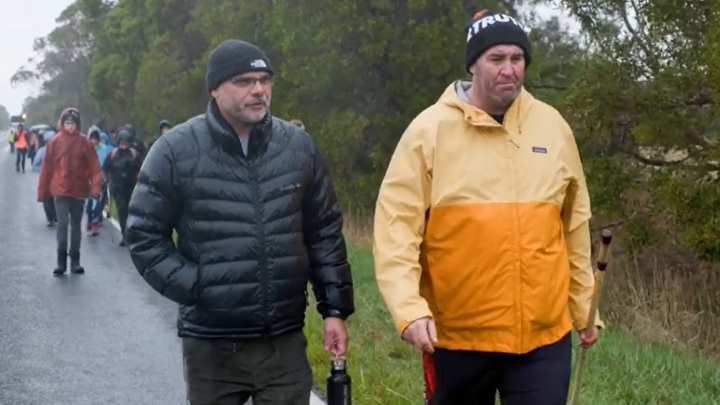
The state of Victoria undertook a truth-telling process, the Yoorook Justice Commission. It took place starting in May 2021, and it tabled its final report in June 2025.
How would you describe what transpired and its outcome? How do you consider it is continuing to impact?
We have made recommendations for change and transformation. Some of those recommendations have already been implemented through the treaty process. So, that report is not sitting on the shelf and gathering dust, it is actually coming into effect, and our people are advocating for those recommendations.
The beauty about what we did at Yoorook was we went out and we spoke to people. But we didn’t just speak to First Peoples, we spoke to non-Aboriginal people as well, understanding their lived experience and understanding more about our people, our culture and our contributions.
That walk and that work has further garnered and further given people an opportunity to come and listen and learn from our people about our lived experience, but also, come together and listen to the recommendations that we were able to form from all that evidence-all those conversations.
This was a Royal Commission. It has been legally checked: the facts and so forth as well, everything that we recommended and the findings that we made.
Also, through the treaty process, we were able to negotiate, as a people, the establishment of Gellung Warl, which is our democratically elected body.
We are going through a process right now in Victoria to elect our representatives, who will also carry the baton forward and be able to advocate continually right across government for the broader recommendations that haven’t been implemented on the agenda.
Through our terms of reference, we have also produced an official public record that stays forever. Again, a Royal Commission has established an official public record of the true lived experience of First Peoples, not just the traumas, but the strength, the resistance and the contributions that our people have made.
Again, it is an undisputed document because it has been legally factchecked as well. But it is also a lived experience and it further, reiterates the First Peoples.
When the premier gave an apology to First Peoples here in Victoria – not just the Stolen Generations, and I don’t want to diminish that – but to all of the injustices that our people have been through, it further solidified that our people have been telling the truth for 200 years, about the massacres and about the violence, about the role the church has played, about the failed policy, about the White Australia Policy and about the half-caste policy, as well as that which is still informing policies today.
That is the power of the truth-telling process, and this is why we need this nationally.
Walk for Truth is also a coalition of community members. As you say, they’ve produced an open letter to prime minister Anthony Albanese, requesting that he put in place a National Truth-Telling Process that is resourced and legislated.
You have also requested that what is divulged through the process is widely disseminated.
What do you envision for a National Truth-Telling Process? And have you heard anything from the federal government on it as yet?
We are calling for the establishment of a National Truth-Telling Process, and over the coming months, we will be able to form our view around whether it is a commission, or whether it is not.
I have not been too descriptive, because that enables our people along the journey to actually form and solidify our view. I am not here to talk on behalf of every Aboriginal person, but what we are doing is publicly creating space to be able to share our views and opinions.
We know and I know, because I have delivered truth in Victoria, alongside our people, the beauty about having Royal Commission powers but also, the complexity that it can create.
So, again, we are leaving it open, on purpose, to allow our people’s voices to come in and help determine what that looks like, so by the time, we get to the prime minister, we will be able to articulate very clearly what that process should look like, and that will provide the flexibility to also, see, feel and connect with people that he will be meeting and talking with.
We have invited the prime minister to come and walk with us. We have had positive engagements so far. That is really positive. They are showing signs of wanting to come and listen and learn and to understand what the walk is about, and to understand about having a conversation about truth-telling.
I want to be clear though, there is no public commitment from Anthony Albanese or from the Labor government, apart from him committing to implementing all elements of the Uluru Statement from the Heart.
There is still time, and we are continually encouraging him and his office and his party to back in and support the commitments that they have already made to our people, and not just to our people but to everyday Australians.
We as First Peoples, we want to heal. We want to contribute to social cohesion. We have unfinished business right across this nation, with First Peoples and the racism and the lived experience.
These are not stories. The lived experience of First Peoples needs to be front and centre in any dialogue, and that is why our people are calling for a National Truth-Telling Process, backed by community-backed by grassroots.
Everyone is calling for it. We had a conference here in Naarm, over the weekend, with over 350 people, mob coming from across the country, coming together to share their views on truth and treaty, and there was strong backing for both those elements, as well as incredibly, strong backing for the support for the National Walk for Truth and our people wanting to heal.
We do want to move forward. But it needs to be based on truth and justice, then healing. And all that is underpinned by a nation in hope. That is what this is about.
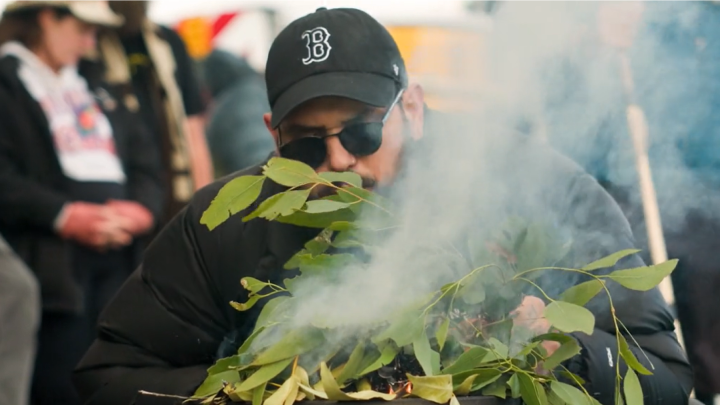
Walk for Truth has invited all to join the walk. As you’ve mentioned, last year, a Victorian Walk for Truth took place. What transpired during last year’s walk? Why would you say people should join this year, in light of that?
What transpired was an opportunity for people to come and listen and learn and engage with First Peoples lived experience, and that is a really important point that we can’t underestimate.
We had farmers come and join the walk. They had never ever engaged with First Peoples before. And one day I could see them, and I didn’t know who they were.
But the second time I saw this particular family, I went up and had a yarn and I said, “Hey, why have you chosen to come and join us on the walk?” And they admitted that they have sacred objects on their farm, and they didn’t know what to do with them.
They said, “We want to give them back. We want to return these objects. But we don’t know how to do it.”
These are the opportunities that the walk has created. And not just those things, but bringing people out, coming and walking Country together, actively and supporting each other, coming and listening and learning.
We had non-Aboriginal people whose family’s played a role in the colonial process. The great grandson of Alfred Deakin, the second prime minister, who is one of the architects of the so-called Half-Caste Act, came and joined with us and shared his family’s role in the early colonial process.
So, these are the opportunities that the walk creates. It creates opportunities for people to come, not in protest but to come and listen and learn and walk while we are talking.
We do stop at sites of significance and not just massacre sites. During the last walk, we stopped at Budj Bim, the cultural landscape, a 6,800-year-old aquaculture system, which is World Heritage-listed. Many people don’t know that these sites are in Victoria.
We have sites that are right across this country, not just in Victoria. That is what the walk is able to do. Again, it is not just about highlighting the traumas and making people feel bad.
We as First Peoples do have the solutions, and when we are empowered by self-determination, we know what works best for us, and that is when we are able to share those lived experiences and achieve things.
That is the opportunity, that is the invitation, to come to listen and learn and engage with us, and come and share your understanding, so we can understand different viewpoints.
This is not a combative process. It is a process of healing, of sharing knowledge, of sharing wisdom, but also, we as First Peoples are incredibly proud of our culture, and you see that and feel that when you are around us.
We want everyone in Australia and around the world to be proud to have one of the oldest living cultures in the world being ours. That is why we walk. But we highlight those injustices and we don’t shy away because that is truth-telling. But it is not combative.
So, I am asking everyday Australians to come and join us on the National Walk for Truth.
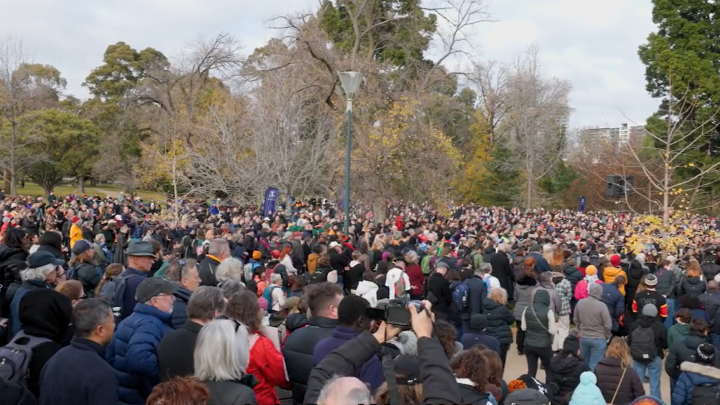
And lastly, Travis, the letter to the prime minister states that truth-telling is not about blame, but it is about healing, and it states that this is a collective journey.
So, in having undergone a similar process in Victoria, how do you envision this truth-telling process proceeds following something like a tribunal or whichever way it does take place and its findings have been released?
Well, this is the beauty of coming and learning and engaging with First Peoples, that gives us the flexibility and opportunity to strategize as a people, as well as around the truth coming out and sharing those truths and lived experiences.
People will also share those ideas about how we move forward. Whether that by systematically or whether that be changing services, for instance, or investing in different ways to get the outcome.
We as First Peoples don’t want to be in the situation where we are overrepresented in every negative way possible. We want to contribute to society. We want to be seen and valued. We want economic prosperity and we also want it in health, wellbeing and in connection to our land and waters.
That is what the truth-telling process can do. It is not just looking at the trauma, but it is also identifying the strengths of what we have been able to contribute.
Let’s take the principles around best practice models, so that when we are empowered to make the decisions that affect our lives, this is what will happen.
We want better outcomes. We want to be able to decide what that looks like for us, just like many other people, right across Australia, get to determine themselves.
But what every day Australians don’t understand is the power and control and the domination that the government has had over our lives. That is what we try to unpack.
We need to unpack what that looks like so that then we can be empowered to make recommendations and solutions about what works best for our people moving forward.
That is what truth-telling does. It is not about sitting in the past. And that is what we did with the Yoorook Justice Commission, we made recommendations for change and transformation and some of those were really practical, because you will get people in government or on shadow saying they want to do practical things.
That is what truth-telling unpacks. The practical things that they are doing now, clearly are not working. Only four out of the 19 Closing the Gap targets are on track.
So, let’s take a back step. Let’s understand why First Peoples are in the situation they are in, because again, we want to demonstrate this as a societal process to make people understand, not to make them feel bad, but to understand, so we can all move forward together.
That is where the healing comes, when people can understand and have the opportunity to. It is not about educating people, it is about getting people to understand our lived experience and how we want to move forward as a people, as First Peoples of these lands and waters.
We are taking a proud but also community-minded approach. No matter all the injustices that our people have been through, we have still been accepting and we have stood beside some of the worst injustices in the world.
My family alone – and not just my family – but we have represented Australia in every major conflict in this world.
Even when my grandfather represented this country in World War II, when he didn’t have voting or citizenship rights, he stood up, just like thousands of others, not just Aboriginal people, but also Aboriginal men and women for a country that didn’t recognise them.
Was my grandfather afforded soldier settlement, like many other non-Aboriginal settlers got? No, not at all. And we are able to highlight these injustices.
But again, people don’t understand that the government has been controlling our lives. So, we are trying to highlight the historical policies that continue to inform deep colonial roots and their biases about First Peoples.
This is not how we feel. These are the facts. And that is what a process like the National Truth-Telling Process can do. It is about moving forward-healing and moving forward with agreed measures.
Sign the open letter calling on PM Anthony Albanese to establish a National Truth-Telling Process
Join Travis on the National Walk for Truth
Paul Gregoire

Receive all of our articles weekly
Related Articles
 Prioritising Truth-Telling and Treaty, Prior to Any Parliamentary Voice
 Truth-Telling: Activist Stephen Langford on Facing Time Over Craft Gluing a Colonial Statue
 Australia Needs First Nations Truth-Telling Not Hasbara Hiding Israel’s Colonial Crimes
 Truth-Telling Before Treaty-Making: An Interview With Ken Canning
 If Not Then, Now: First Nations Justice Must Be Wrought via Treaties Based on Truth
 Thorpe Calls Out Gaslighting Albanese, as He Abandons Makarrata Truth-Telling Reform