NSW Police Commissioner Bans Protests, Suppressing Fundamental Democratic Rights
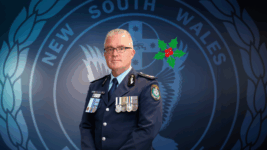
New South Wales police commissioner Mal Lanyon has exercised post-Bondi Beach massacre knee-jerk reaction laws to impose a blanket ban on protests across a large area of Greater Sydney for 14 days. And while many NSW constituents understand that this ban has been linked to the Bondi mass shooting, the dubious logic that underpins this idea, and the potential harms the laws portend, aren’t so obvious.
The Minns Labor government drafted the protest bans in the immediate aftermath of the 14 December 2025 massacre that specifically targeted a Jewish religious celebration and saw a father and son inspired by ISIS ideology callously murder 15 people.
The killers, however, have been shown to have been influenced by ISIS ideology, which reveals that they weren’t aligned with the secular pro-Palestinian demonstrations of the past 26 months, while those following the broad moral panic around antisemitism in NSW over the past two years, already well understand that NSW premier Chris Minns has long been opposed to this mass movement.
The broad restrictions on the right to protest, as well as on the right to free speech and the implied right to political communication contained in the Australian Constitution, have been imposed for two weeks, and they can then be reimposed every 14 days for a period of up to 90 days, after the NSW Police Force has declared that a violent incident is being investigated as terror-related.
The obvious issues with the laws are that the state can now silence grassroots opposition for lengthy periods. Right now, people in the designated area of the ban cannot publicly demonstrate against the Israeli state as it genocides Palestinians, or about anything else for that matter, while these laws are set to become that much more dangerous, if an authoritarian government is ever voted into power.
Mal Lanyon’s PARD
Mal Lanyon imposed the 14 day protest ban, or a public assembly restriction declaration (PARD), across Gadigal land in the NSW Police Central Metropolitan Region, as well as across Dharug land in the North West Region and on Dharawal, Dharug and Gundungurra land in the South West Region, just prior to midnight on Christmas Eve, 24 December 2025, and only hours after enactment.
NSW Labor oversaw the passing of its omnibus terrorism and antiprotest bill over three emergency sitting days right before Christmas that premier Minns called directly in response to the Bondi Beach massacre. The antiprotest measures provided that Lanyon’s designated area could be called within 14 days of the mass shooting having been declared a terror incident on 14 December.
Under the new laws, Lanyon’s PARD lasts for 14 days, unless he ends it. A PARD can be declared by the police commissioner or a deputy if an incident under NSW police investigation is declared terror-related, in accordance with the Terrorism (Police Powers) Act 2002 (NSW).
The newly enacted powers within that Act permitted Lanyon to declare such a broad designated area to withdraw a swag of basic rights from regular NSW constituents, because he’d determined that a public assembly in those three regions could cause a reasonable person to fear harassment, intimidation or violence, or fear for their own safety or that it could risk community safety.
If the police commissioner determines after the 14 day ban that a reasonable person would still harbour such fears, then he can reapply the blanket ban for another 14 days. This can be repeated for up to 90 days or three months.
Under new subsection 200(5) of the Law Enforcement (Powers and Responsibilities) Act 2002 (NSW) or the LEPRA, NSW police can now issue move on orders to demonstrations, protests, processions and public assemblies if they’re being held in an area that is the subject of a PARD.
To put it another way, people across most of Greater Sydney cannot gather together or assemble in public to discuss political matters up until 7 January 2026, because Mal Lanyon says so.
The criminalisation of road protests
Speaking on the omnibus bill, NSW Labor MLC Stephen Lawrence told the chamber on 23 December that one of the reasons for the proposed antiprotest laws was some politicians were positing a “connection between protests in Sydney… and the shocking murders at Bondi”.
“Indeed, the clearest of connections has been drawn between those events by political leaders,” he added. “It is a connection that I completely reject.”
The Sydney barrister, who specialises in public law, recalled that after the 2019 Christchurch massacre, which was perpetrated by a white Australian, who killed 51 Muslims, some on the left of politics said those on the right helped spur it. However, in stark contrast to their present rhetoric, figures like Scott Morrison and Tony Abbott, had then said the focus should be on the killer himself.
The difference to Christchurch is that those on the left blamed some on the right for their negative rhetoric about Muslims, yet in the present the NSW premier and politicians on the right have linked the local constituents who’ve protested for an end to the protracted Israeli-perpetrated genocide in the Gaza Strip to ISIS-inspired terrorists targeting a Jewish festival, when there is no real link.
Lawrence explained that whenever a PARD is considered under these new laws, public protests will always be banned because a precondition to imposing such a ban is that a protest would cause a “potential risk to public safety”, while every public protest is always assessed in a manner that suggests potential risks to the public, and that’s why there’s always a police presence at rallies.
The barrister further added that there has never been a determination as to whether the criminalisation of road protests is unconstitutional in NSW, and that the move on powers involved in the reforms are in line with a growing trend towards reinstating the ability of police to move on protests, which was removed after the violence unleashed by officers at the initial 1978 Mardi Gras.
“In summary, our freedom to communicate politically by way of protest will be limited by this bill,” Lawrence made certain. “Street processions, which are the essence of street protests, will be a crime. Static protests will be able to be moved on, and failure to comply will be a criminal offence.”
Long-term risks of blanket protest bans
The blanket prohibition protest law is problematic in the immediate for a number of reasons. The clearest issue the law poses is that it undermines the basic rights of people to meet in public and oppose most often bad government policy.
But rather than suppressing opposing voices in the wake of a terror-related incident like the Bondi Beach mass shooting in order to prevent further violence, the fact that people will not able to vent their frustrations in public following a ban, may produce a pressure cooker-type scenario involving constituents with built up frustrations seeking a way to vent, which cannot be achieved via protest.
Another issue with these laws, which Lawrence pointed out, is that following the enactment of the police power to move on protests near places of worship earlier this year, the new laws mark further moves toward restoring the antiquated power to direct protests to disperse, which was repealed because it posed such a risk of violence as on display at the 1978 Gay and Lesbian Mardi Gras.
The just passed protest bans don’t appear in a vacuum either, because in April 2022, when the current government was in opposition, it waved through the then Liberal National government’s measures that represented the most draconian protest restriction that this continent had ever seen, precisely because of the severe penalties they trigger.
The April 2022 protest laws were specifically rolled out in respect of growing and impacting climate defence direct actions, in a similar way to the 24 December 2025 enacted protests bans have been created in order to suppress pro-Palestinian marches because they upset the Israeli state, whilst Tel Aviv is in the midst of perpetrating the gravest crime since the World War II Holocaust.
But the beginning of this broad NSW bipartisan process of legislating to stamp out protests is usually considered the extreme inclosed land measures that the NSW Baird government rolled out in March 2016. These antiprotest measures were enacted, after then NSW premier Mike Baird promised a Minerals Council annual award ceremony in 2014, that such foils to public protests would be created.
Going back a decade ago, then NSW Greens MLC David Shoebridge and then NSW Council for Civil Liberties president Stephen Blanks repeatedly told Sydney Criminal Lawyers that one of the main issues posed by such draconian laws is that if an authoritarian government was voted into office in NSW, then it could wield these excessive powers in an extreme manner.
Circa 2016, however, when these lawyers raised such ideas, it seemed a bit of a stretch to imagine an authoritarian government in NSW acting in such a manner, especially as there were no common examples of such developments easily at hand at the time.
Yet, right now, local constituents have just borne witness to the US Trump administration employing a suite of extreme laws lying dormant on the American law books to create devastating policies, such as the mass deportation of undocumented immigrants and the deployment of National Guard troops to city streets, to undermine state law enforcement authorities.
And while such developments continue to appear like they could never happen in a democracy like the one now operating in NSW, the fact that Lanyon just blanket banned public demonstrations across large parts of Greater Sydney, should be proof enough that this constituency is not especially protected against shifts towards authoritarianism.
Paul Gregoire

Receive all of our articles weekly
Related Articles
 NSW Government’s Blanket Protest Ban: A Massive Gifting Away of Our Basic Rights for Xmas
 Proposed Temporary Ban on NSW Protests Is a Slippery Slope to Permanency
 The Antisemitism Envoy’s Call to Ban Antigenocide Protests in Cities is Undemocratic
 Antisemitic Mass Murder at Bondi Beach Robs Us All of Our Common Humanity
 Court Rejects Legislation Empowering Police to Move-On Protesters at Place of Worship
 NSW Government to Reintroduce Antiprotest Move-On Power, After Police Approve Nazi Rally