The Criminal Offence of Murder in New South Wales
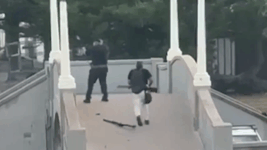
The first bullets fired by mass shooters Sajid and Naveed Akram rung out across Bondi Beach at about 6.47 pm on Sunday, 14 December 2025, which was when the NSW police was first called. The shooters had parked their car on Campbell Parade, just metres away from the elevated footbridge that leads to Archer Park, which is where a Hanukkah festival was taking place on Gadigal land.
From atop the bridge, Sajid and Naveed, a father and son from western Sydney, commenced firing upon the ‘Chanukah by the Sea’ Hanukkah event, which was attended by around 1,000 congregants. The killers used bolt-action rifles and shot guns. These weapons were legally owned by Sajid, who’d been a licensed gunowner since 2023. All up, the Akrams had six guns legally stored at their home.
Naveed was investigated by ASIO in 2019, in relation to links to a Sydney ISIS cell. The killers are suspected to have targeted the Archer Park event because those participating were Jewish. These circumstances led NSW police commissioner Mal Lanyon to declare the incident terror-related, under the Terrorism (Police Powers) Act 2002 (NSW), which opens up special investigative policing powers.
The father and son killed 15 innocent people and injured 40-odd others. One victim, Matida, was only 10. Sajid murdered a couple in their 60s who’d tried to stop him. After shooting for minutes on the bridge, Sajid stepped down and walked towards the congregation, only to be disarmed by Muslim onlooker Ahmed Al Ahmed, with NSW police then killing the father in an exchange of fire.
After being injured by NSW police officers during the incident, Naveed was taken to hospital in a coma, where he awoke on Wednesday, 17 December, and officers from the Joint Counter Terrorism Team attended the hospital to charge him with 59 criminal offences. The JCTT is made up of officers from NSW police, the Australian federal police, ASIO and the NSW Crime Commission.
The most serious crime on the NSW books
Fifteen counts of the offence of murder have been laid against mass shooter Naveed Akram, which is contrary to subsection 18(1)(a) of the Crimes Act 1900 (NSW). Murder is considered the most serious crime in the state, and it carries up to life imprisonment. The prosecution must prove the accused intentionally killed or caused grievous bodily harm towards the deceased, which caused their death.
The behaviour of the accused that led to the intentional death of another can either be an action or an omission. If it is found the accused perpetrated their deadly action or omission with intent to cause grievous bodily harm, rather than actual death, then the crime is assessed less serious. If a public official, such as a police officer, is killed, the crime is then assessed more seriously.
Murder also carries a standard non-parole period of 20 years. An SNPP is a guidepost or reference point for a sentencing judge, when determining the minimum term an offender must spend behind bars before being eligible to apply for release on parole.
If the killing that an accused is facing a charge of murder in relation to is found to have been unintentional or accidentally caused, then they might instead be found guilty of the lesser charge of manslaughter, or the unintentional killing of another, which is contrary to section 18(1)(b) of the Crimes Act, and it carries up to 25 years imprisonment.
Defences against murder
There are several potential defences to a charge of murder in New South Wales.
The most common defence is the legal defence of self-defence, which is contained in section 418 of the Crimes Act. This entails having acted to defend or to have prevented unlawful deprivation of themselves or another, or otherwise, it covers acting to protect one’s own property or protect against criminal trespass.
The defence of mental impairment or cognitive impairment can be argued in respect of murder. The defence is contained under section 28 of the Mental Health and Cognitive Impairment Forensic Provisions Act 2020 (NSW).
This defence maintains that a person is not criminally responsible for the act of murder if they were suffering mental impairment, cognitive impairment or both, at the time of the killing, as this implies the accused did not know what they were doing and that it was wrong. This is to be determined by a jury on the balance of probabilities.
The defence of extreme provocation or the partial defence to murder can also be argued in respect of the crime. It is a partial defence because the accused, if found not guilty of murder, is then found guilty of manslaughter. This defence is often argued in respect of an initial act perpetrated by the victim against the accused, which can be violence or even, an unwanted sexual advance.
To be argued successfully, the jury must find on the balance of probabilities that the deceased’s actions against the accused were so impactful that it caused the killer to lose control, and it must further be understood that a rational person would too have temporarily lost their reasoning capabilities if confronted with the same behaviour.
Other offences laid
Akram has further been charged with one count of committing an act of terrorism, contrary to section 101.1 of the Criminal Code Act 1995 (Cth). This offence carries up to life imprisonment. To prove it, the prosecution must show that the illegal action was perpetrated to advance a political, religious or ideological cause, and it was done to coerce government or intimidate the public, or part of it.
The Bondi shooter is also facing 40 counts of cause wounding or grievous bodily harm with intent to murder, which is contrary to section 33 of the Crimes Act and each count carries up to 25 years in prison.
The 24-year-old man who lived on Dharug land in the western Sydney suburb of Bonnyrigg is too facing one count of discharging a firearm with intent to cause grievous bodily harm, contrary to section 33A of the Crimes Act. This offence makes a convicted person liable to up to 25 years imprisonment.
Further, there is one count of publicly displaying a prohibited terrorist organisation symbol, contrary to section 80.2HA of the Criminal Code. This offence carries up to 12 months prison time.
The final offence laid against Akram is one count of place explosive in or near building, conveyance or public place with intent to cause harm, which is contained in section 48 of the Crimes Act and carries up to 14 years gaol time.
Murder in New South Wales
The NSW Bureau of Crimes Statistics are Research outlines that 75 murders took place over the 12 months to September 2025. Thirty five of these deaths were domestic violence related, 24 involved women and child victims of domestic violence. Twenty six women were murdered over the timeframe, as were 49 men, or 66 adults were killed compared with 9 children.
BOCSAR further reports that over the year 2024, 85 murders were recorded, which was the highest number of intentional killings in NSW, since 2014, when 93 transpired. However, this spike was due in part to the Bondi Junction mass stabbing at a local Westfield shopping centre in April 2024, which killed six random shoppers.
Since the turn of the century, murder, as well as most other major categories of crime, has been trending downwards in NSW. However, when looking at the ten years to 2024, the figures convey a general stabilising in relation to the commission of murder in this state.
Paul Gregoire

Receive all of our articles weekly
Related Articles
 Antisemitic Mass Murder at Bondi Beach Robs Us All of Our Common Humanity
 The Laws that Apply to Firearm Ownership in New South Wales
 There is Broad Social and Political Agreement on the Need to Reform NSW Firearms Laws
 The Criminal Offence of Murder Across Australia
 What is the Standard Non-Parole Period for Murder in New South Wales?
 ‘Not White, Not Right’ – Racist Graffiti Scrawled Across Iconic Bondi