Thorpe Demands Albanese Intervene as Aboriginal Custody Deaths Higher Than Ever
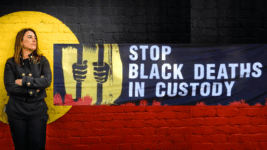
Despite decades of campaigning to end the crisis of Aboriginal deaths in custody, the Australian Institute of Criminology reported on 10 December 2025, that 33 First Nations people had died in the custody of either law enforcement or corrections over the year 2024-25, which comprised the highest number since monitoring began in 1979-80.
So, Senator Lidia Thorpe has renewed her call on prime minister Anthony Albanese to intervene.
The Deaths in Custody in Australia 2024-25 report outlines that 33 Aboriginal and Torres Strait Islander people died in custody over the 12 months to June this year.
Twenty-six First Nations persons, including one youth, died in corrections systems, and this marked a distinct increase in Indigenous inmates dying in prison, as it comprised of 18 more deceased than the 12 months prior. As for the Australian law enforcement custody situation, six First Nations adults died whilst being held by police or during a policing operation.
On 17 December 2025, the Australian government’s deaths in custody dashboard shows that 618 Aboriginal and Torres Strait Islander individuals have died in Australian custody since the handing down of the Royal Commission into Aboriginal Deaths in Custody (RCIADIC) report on 15 April 1991. Indeed, the Indigenous deaths in custody toll since 1 January this year comprises of 34 First Peoples.
The Royal Commission made 339 recommendations on how to proactively implement changes to Australian criminal justice systems in order to prevent the ongoing deaths of First Peoples. There has never been a comprehensive attempt to implement most of these reforms, so the crisis remains one of neglect by the authorities in terms of any attempt to achieve the stated aims of the inquiry.
Thorpe, a Gunnai, Gunditjmara and Djab Wurrung politician, has been calling on the PM to intervene at the federal level on Aboriginal deaths in custody, but also in respect of the growing shift towards draconian crackdowns on First Nations youth across multiple jurisdictions, and these demands have been so persistent that they’ve seen Albanesé’s excuse about a lack of capacity to act, fall down.
A crisis left to fester
“This national disgrace is happening on Albanese’s watch — the highest number of our people dying behind bars in almost half a century, in a country that claims to be Closing the Gap,” said Senator Thorpe. “The racist ‘tough-on-crime’ laws we’re seeing nationwide were always going to lead to more deaths. We warned that this would happen. When prisons are full, more of our people die.”
“In these horrific figures, I see violent colonialism perpetrated by hollow politicians desperate for votes and power,” the senator hit the nail on the head.
“How many more of our people do we need to bury before governments stop sacrificing our lives for political gain?”
Recommendation 6 of the RCIADIC defines deaths in custody, as deaths in police or corrections detention, including those resulting from “traumatic injuries sustained or by lack of proper care”, as well deaths in custody that take place when an individual dies as a result of police or prison guards attempting to detain them, or indeed, when such officers are attempting to prevent detainee escape.
The overall number of deaths in custody in 2024-25 was 113 detainees. Reasons why Aboriginal deaths in custody are in crisis is that the numbers of deceased are disproportionately high when compared with the non-Indigenous population, and the criminal justice system that is resulting in these deaths is a foreign one that has been imposed by the European invaders of their lands.
The latest ABS figures show that in June 2025, there were 17,432 First Nations peoples in adult prisons, which accounted for 37 percent of the 46,998 adults in Australian corrective systems. However, Aboriginal and Torres Strait Islander people only account for 3.8 percent of the continent’s population.
First Nations people accounted for 14 percent of the prison population, at the time the RCIADIC report was handed down in April 1991.
“This is not about safety. It is about punishment, control, politics and power,” Thorpe further underscored. “Every piece of evidence shows it would be cheaper, safer and more effective to invest in housing, bail services, income support, disability services and community led services, not cages.”
The power to intervene
Thorpe has been calling on the Albanese government to act on deaths in custody for years, and her calls have only been rising as the criminal justice situation in multiple jurisdictions have been worsening over the past two years. However, the prime minister has been denying any ability for federal ministers to intervene in state and territory criminal justice matters.
The understanding that Albanese is progressing is nothing new, as it’s traditionally been understood that law-and-order is a state and territory issue. However, what is new is October 2025 advice produced by barristers Kate Eastman SC from New Chambers and Emma Dunlop from Omnia Chambers, on the request of the Justice and Equity Centre.
The question put to the two senior counsel was whether the external affairs power contained in section 51(xxix) of the Australian Constitution taken together with article 40(3)(a) of the Convention on the Rights of the Child (CRC) permits the federal government to intervene in state and territory law. CRC article 40(3)(a) requires nations to set a minimum age of criminal responsibility for children.
The barristers found that the federal government could set a minimum age of criminal responsibility for states and territories, via the exercise of the external affairs power, and in turn, this could be used to set other minimum standards, such as prison being a punishment of last resort for kids, that children can’t be held in adult prisons, or that youths can’t be subjected to solitary confinement.
The broader takeaway from the Justice and Equity Centre inquiry is that the federal government has the constitutional power to intervene in state and territory matters in order to set minimum criminal justice standards.
Thorpe’s social justice reform strategy
“Albanese will try to claim this is just a ‘state and territory issue’, but we cannot accept this. The federal government must step in and pull the states and territories into line to stop these deaths,” Thorpe further added on 10 December 2025. “The Commonwealth has the constitutional power to legislate national minimum standards across the criminal legal system. Albanese must act now.”
The Victorian senator outlined seven key reforms that the Albanese government should progress to prevent ongoing First Nations custody deaths, which firstly involves establishing a national oversight body to monitor a concerted drive to implement the 339 RCIADIC recommendations in full, along with the recommendations of the Bringing Them Home report, which relate to forced child removals.
A framework to enable the federal government to penalise state and territories that breach Closing the Gap targets is called for, in particular in order to curb the current drive to enact laws to criminalise and incarcerate First Peoples.
Further, the Albanese government ought to act on the advice of senior counsel and set minimum prison standards for adult and child facilities, and international standards should be adhered to including those in the UN Declaration on the Rights of Indigenous Peoples, the Optional Protocol to the Convention against Torture and the Convention on the Rights of Persons with Disabilities.
An urgent meeting of National Cabinet should be convened to address deaths in custody and child incarceration. Bail reform should be progressed, including Poccum’s Law, which prioritises release into the community, and the recommendations of the Standing Council of Attorneys General Bail and Remand Reform Working Group report should be rolled out as well.
Thorpe is further calling for a new system that would allow First Nations responders to be deployed to First Peoples under crisis in the community, as well as a scaling up of justice reinvestment initiatives and the roll out of adequate healthcare into places of detention on this continent.
“We know that prisons do not make communities safer — they create more crime in the long term,” Senator Thorpe continued.
“We’ve known what works for decades. What’s missing is the courage from Canberra to follow the evidence, stop this violence and protect our people,” the Gunnai, Gunditjmara and Djab Wurrung woman said in concluding. “Ending deaths in custody must be a priority for this government.”

Paul Gregoire

Receive all of our articles weekly
Related Articles
 Black Deaths in Custody Continue Decades After the Royal Commission
 Black Deaths in Custody – Where Did We Go Wrong?
 Stop Black Deaths in Custody: An Interview With Gomeroi Activist Gwenda Stanley
 Organisers Declare Sunday’s Black Deaths in Custody Rally Will Go Ahead
 The Crisis in Aboriginal Deaths in Custody Continues at Record Levels
 The Issue of Police Investigating Police Over Aboriginal Custody Deaths Is Finally Becoming National Issue