NSW Police Fatally Shoot Yet Another Civilian During a Mental Health Callout
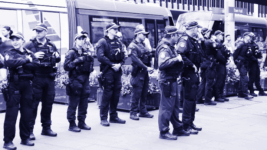
New South Wales police shot and killed a 49-year-old man on Darkinjung land in the state’s Central Coast town of Springfield at 3.30 pm on Wednesday, 7 January 2026, after a mental health check turned into a siege situation.
This killing of a civilian having a mental health episode by police marks just one death among many of late, which has made this a key NSW policing issue since 2023.
The NSW police news item outlines that officers were dispatched to the scene with a mental health clinician to perform the check. However, the man is said to have armed himself with several items, including one that was spikey that was swung at police officers. And after attending officers had applied pepper spray and a taser to the man, he retreated into his home.
The report explains that at this point, a perimeter was established around the property and NSW police negotiators and the Tactical Operations Regional Support Unit were called in. Then at around 9.25 pm the man lit an aerosol can, so tactical response officers entered the premises to restrain him, and when he allegedly tried and failed to stab an officer with a shard of glass, he was shot.
No clear explanation was given, however, as to why a man having an episode inside his house, whilst armed with objects, was posing any threat to anyone outside, and why he had to be raided. Indeed, the growing civil society wisdom on the issue is that if the clinician had been accompanied by other medical professionals and no armed police officers, then they’d likely not have shot him.
The questions about the decision to have tactical police raid a man undergoing a mental health crisis are easily asked because they were the subject of a recent coronial inquiry into a strikingly similar police killing during a mental health check that occurred on the NSW Central Coast in July 2019.
Indeed, the alternative model to police as first responders is well known. The NSW Police Force has indicated that it wants the establishment of alternative first responders to mental health crises, and the current NSW Labor government has only recently undertaken a community consultation process considering an alternative approach to how Triple 0 calls for mental health emergencies are handled.
Lessons not learnt
“Once again, we are seeing a police-led response to a mental health crisis end in tragedy,” said National Justice Project chief executive George Newhouse. “I was hoping that after the death of Todd McKenzie, this brutal use of force against people in a mental health crisis would end. The coroner made clear recommendations to stop anyone else from losing their life in this way.”
Police were called out to respond to 40-year-old Todd McKenzie at his home on Biripi land in the NSW town of Taree in July 2019. McKenzie locked himself in his home and a 9 hour siege eschewed. Local police knew Todd and his situation yet they verbally taunted him, prior to tactical police storming the house and shooting the man armed with kitchen utensils three times in the back.
The National Justice Project represented the McKenzie’s family at the inquest. In her April 2024 coronial inquiry report, NSW state coroner Harriet Grahame found that Todd’s death had been preventable and the NSW police operations had been flawed.
The coroner made three recommendations in light of the inquest findings, which included that tactical police officers must switch on their body-worn cameras during such operations, that the mental health training that NSW police officers undergo be reviewed and that clear records are kept when considering the use of a consultant psychiatrist.
“The question today is whether those lessons have been learned and whether the NSW Police Force has implemented the coroner’s recommendations in full,” Newhouse underscored.
Deadly first responders
The NSW police incident post further notes that more than one officer had discharged their firearms whilst the man was attempting to stab an officer with a piece of glass, although as NSW police assistant commissioner David Waddell later explained, the officers protective clothing had deflected the improvised weapon. The civilian was then treated by paramedics but died at the scene.
Waddell further declared a critical incident and the State Crime Command’s Homicide Squad was investigating the fatality. The inquiry will be reviewed by the NSW Police Professional Standards Command and oversighted by the NSW Law Enforcement Conduct Commission. In terms of critical incidents, the NSW independent police watchdog the LECC monitors police investigating police.
There were five police killings between May 2023 and January 2024 that were likely mental health-related. Such spates occur periodically. The fatal tasering of 95-year-old Clare Nowland in May 2023 brought the issue to a head, despite it being the first in the spate, as a young male officer tasered an elderly woman suffering dementia and using a walk frame in a nursing home, as she held a knife.
Following the spate, the NSW parliament mental health access inquiry found in June 2024 that police as first responders to mental health incidents actually escalate them. The NSW Police Force then released its own inquiry conducted in April that same year, which also found that officers are perceived as a threat and their presence heightens tensions at these situations.
The most recent mental health check fatality prior to this week’s occurred on Gadigal land in Waterloo last July, and involved some police officers turning up to check on Colin Burling only to then have the situation turn into officers restraining the member of the public to death, whilst his partner filmed the incident from above and two officers held up a sheet to hide it from onlookers.
Alternative first responders
The community consultation process relating to developing a new approach to responding to emergency calls for responses to mental health crises happening in the community closed on 2 December 2025. The NSW government said it is seeking to ensure that “people experiencing a mental health emergency get the right help, at the right time and from the right service”.
This hints at the London Metropolitan police having adopted the Right Care, Right Person model in late 2023. This model involves an alternative Triple 1 emergency assistance number that avoids police involvement in any response to a mental health crisis. The NSW police review and the NSW parliamentary inquiry both recommended consideration of this model now employed in the UK.
“The key recommendation of this review is that the NSWPF work with NSW Health to explore models for responding to mental health incidents in NSW consistent with the principles of the ‘Right Care, Right Person’ model,” notes the executive summary of the April 2024 NSW Police Force report on responses to mental health incidents in the community.
“The ‘Right Care, Right Person’ model is centred on a trauma informed response to people suffering emotional distress and mental health crises. It ensures that the agency who can help the most is the agency to respond and allows police to reinvest in focusing on core policing functions,” the NSW police report concluded.
Paul Gregoire

Receive all of our articles weekly
Related Articles
 Critics Call High Time on NSW Police as First Responders, as Labor Contemplates Change
 NSW Police Force Attempts to Suppress Evidence Relating to Fatal Mental Health Shooting
 NSW Police Turned Their Body Cameras Off Before Fatally Shooting Mentally Ill Man
 NSW Police Officers Cause Death of Yet Another Mentally Ill Person
 Parliament Finds Policing Mental Health Crises Is Deadly, But Major Parties Resist Reform
 Todd McKenzie Inquest Leads NSW Coroner to Join Calls for Mental Health Policing Reform