Civil Society Calls on Corrective Services NSW to Implement Ombudsman Prison Reforms
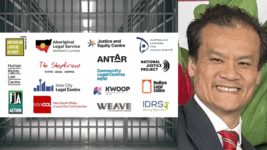
A coalition of 16 New South Wales legal and rights organisations is calling on NSW corrections minister Anoulack Chanthivong to urgently ensure that Corrective Services NSW (CSNSW) actions the 34 recommendations the NSW Ombudsman advised it implement in respect to inmate discipline in August 2024, along with three recent supplementary guidance’s the watchdog has further made.
Of particular concern to the civil society groups is that the minister ensures that the November 2025 legislative reform that lowered the standard of proof that is required to determine whether a NSW prisoner is guilty of a correctional centre offence from the criminal standard of “beyond a reasonable doubt” to the civil standard of “on the balance of probabilities” be reversed.
The NSW Ombudsman made 34 recommendations that Corrective Services ought to make in order to improve its inmate disciplinary system, which had been found a “systemic failure” in terms of acting in accordance with the legislated regime, which was “leading to unjust outcomes and potentially unlawful decisions”.
CSNSW agreed to and commenced progressing the reforms immediately, but then suddenly stopped in July 2025.
The Ombudsman understands it ceased receiving CSNSW progress updates because the minister was refusing to approve them. Then the standard of proof bill passed in late November having been introduced the month prior. And this lowering of the threshold of guilt to the balance of probabilities appears to have been a tactic to avoid properly overhauling the NSW prison disciplinary system.
The coalition of civil society groups states in its 4 May 2026 statement that it agrees with the Ombudsman and stands strongly opposed to “the decision to lower the standard of proof for correctional centre offences”, and it too insists that the “regressive reform… cannot, and does not,” address issues with a system involving “maladministration at all steps in the disciplinary process”.
“A systemic failure”
The NSW Ombudsman released a second report into the NSW inmate disciplinary system in March this year, because it “is not satisfied that sufficient steps have been taken in due time in response to” its first report’s 34 recommendations, and to raise concerns about the lowering of the standard of proof in terms of finding NSW prisoners guilty of correctional centre offences.
There are 71 correctional centre offences set out in schedule 2 of the Crimes (Administration of Sentences) Regulation 2014 (NSW). These include lesser offences, like not following routine, as well as serious wrongdoing like assault, theft and property damage. The legislation provides that the governor solely determines prisoner guilt and punishment.
Inmate discipline is administrative in nature, so it does not involve criminal charging or sentencing. Penalties can include reprimand and caution, deprivation of certain privileges, cell confinement, cancellation of work payments and having to pay compensation. These punishments don’t result in further sentencing but can influence parole decisions and extended penalties for high-risk offenders.
Issues found with the CSNSW system include illegitimate findings of guilt, a lack of assessment of evidence, serious criminal offences not being reported to NSW police, inmates charged with drug offences not referred to programs and inmates whose behaviour reflects a need for mental health assistance being punished instead. And on top of this, there was no legislated appeals process.
Legitimising and legislating failure
CSNSW told the Ombudsman it was committed to implementing its recommendations, and went on to make progress in several areas, including a “legislated right of internal review of inmate discipline decisions”. This then stopped as Chanthivong refused to permit more updates, and the administrative watchdog was left in the dark as to whether anything more was progressed.
Then the standard of proof in relation to this system was lowered. The system had relied on the criminal standard of beyond a reasonable doubt, which means that the evidence is completely convincing and no alternative scenario can be raised to hint at innocence, while the civil standard, the balance of probabilities, means the evidence more than likely points to an accused’s guilt.
The criminal standard is higher than the civil one. Other Australian jurisdictions’ prison discipline systems operate on the civil standard, but NSW had a more just regime. The minister said on introducing the reform that CSNSW officers were already wrongly applying the civil standard in many cases. So, rather than fix the issue, he legislated to ensure the then mistaken process is now correct.
The Ombudsman issued three supplementary recommendations in March. These included that the government reaffirm and implement its initial 2024 report recommendations, that CSNSW be given approval to provide the watchdog with monthly progress updates, and that the criminal standard is reinstated at least for serious criminal offences and that serious offences are referred to the courts.
The administrative watchdog further underscored that the standard of proof reform was no quick fix to the system, as “rather than a case of mistakenly applying the wrong standard, in our investigation we saw numerous cases where the paucity of evidence presented could not have sustained a rational finding on any legal standard”, including conduct being charged under offences that do not reflect it.
Unjust deserts
“Correctional centre offences can carry harsh punishments including solitary confinement, being banned from phone calls and in-person visits and potentially extending the time people spend behind bars,” the coalition of legal and rights groups affirmed in their correspondence with minister Chanthivong on Monday this week.
“Our organisations remain strongly opposed to the lowering of the standard of proof for correctional centre offences,” the statement continued. And the organisations underscored they are particularly concerned about how the standard of proof reform is impacting Aboriginal and Torres Strait Islander people in prison, as well as prisoners with cognitive and mental impairments and/or disabilities.
The coalition of civil society organisations includes the Aboriginal Legal Service NSW/ACT, Australian Lawyers Alliance, Australian Lawyers for Human Rights, Community Legal Centres NSW, Human Rights Law Centre, Inner City Legal Centre, Justice Action, Justice and Equity Centre, National Justice Project, NSW Council for Civil Liberties and Redfern Legal Centre.
These organisations and others further listed more of the failures the Ombudsman identified, which included inmates being charged for multiple offences over the same act, guilt being found where not enough evidence is present to prove it, the recording of pleas of guilt when the inmate has actually contested the charge, and receiving multiple penalties or more than the permitted maximum.
“We also recommend the NSW government phase out confinement and limitations on in-person visits and phone calls as punishments for correctional centre offences,” the civil society organisations said in concluding. “These punishments are contrary to the rights, wellbeing and inherent dignity of incarcerated people and do little to reduce recidivism.”

Paul Gregoire

Receive all of our articles weekly
Related Articles
 Ombudsman to Investigate Youth Solitary Confinement
 UN Prison Inspection Body to Visit Australia, as Nation Stumbles on OPCAT
 Australian Prisons are Failing to Serve the Interests of Society
 The Rights of Prisoners: An Interview with Brett Collins, Coordinator of Justice Action
 Independent OPCAT Inspections Will Improve the Plight of Youth Detainees
 The Use of Solitary Confinement on Kids Must Be Banned