Increasingly Authoritarian Governments Favour Failed Drug War Tactics
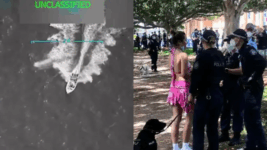
Recent months have seen the US Trump administration illegally killing foreign nationals in boats off the coast of Venezuela, while in NSW, the Minns government recently announced that it wouldn’t end the police use of drug dogs and strip searches at music festivals, and what these two divergent scenarios have in common is an ongoing reliance on the failed war on drugs.
Under US secretary of war Pete Hegseth, Washington has killed more than 80 people in boats off the coast of Venezuela since September, based on the suggestion that these individuals are narcoterrorists attempting to smuggle drugs in the direction of the United States. And the White House is justifying this on a drug war pretext, as it considers a full-scale war against Venezuela itself.
The Nixon White House launched the war on drugs on 17 June 1971. This comprised of a heightened law enforcement approach to drug prohibition, which began in the early 20th century. Forty years later, however, the Global Commission on Drug Policy announced in its first report released in June 2011 that “the global war on drugs has failed”.
This general admission from the former heads of state, ex-UN officials and public intellectuals, who made up the commission, has done little to progress reform in NSW, however. The Minns government was recently seen to be acting on drug law reform when holding the 2024 NSW Drug Summit. Yet, in its wake, Labor determined to reject all substantive drug reform recommendations.
The reasons for rejecting the removal of sniffer dogs from public events in NSW in particular, advised the NSW police minister Yasmin Catley, is that they’re important “investigative tools for the NSW police” out in the field.
So, in the same manner that the drug war is facilitating Trump’s move to war on Venezuela, NSW authorities favour the ability it provides police to mass surveil civilians out in public.
Drugboat diplomacy
The most recent strike the US military has undertaken against a suggested ‘drugboat’ occurred on 15 November 2025, in the eastern Pacific Ocean. This killed three suggested narcoterrorists or drug smugglers. It marked the 21st strike on such a boat since 2 September without any clear justification, and rather, it is based upon the assumption that the 50-year-old drug war warrants this.
The Trump administration has asserted that Venezuelan president Nicolás Maduro is the head of the drug outfit Cartel de los Soles, which the Trump administration designated a terrorist organisation on 24 November 2025.
Operation Southern Spear was announced mid-last month but has been progressed since August. It comprises of over a dozen US warships, including the largest aircraft carrier on the planet, stationed in the eastern Pacific and the Caribbean Sea, off the coast of Venezuela. There are 15,000 US military troops down there as well. This marks the largest US military deployment to the region for decades.
Without the ongoing drug war pretext, the Trump administration would have a much harder time justifying what are overtly illegal manoeuvres, both domestically and internationally, against a nation that has posed no threat to the US, as the White House continued to predicate its operations on the suggested existential threat Venezuelan narcoterrorists pose US civilians via drug trafficking.
Prior to this predication of a conflict against Venezuela based on the drug war, which many commentators assert is just a pretext for Washington to secure the largest oil reserves on the planet, which are located under the South American country, the United States was seen as a leader in a general shift towards ending drug prohibition.
So, while cannabis is now legal in 24 of the 50 US states, the Trump administration is not about to end drug prohibition whilst its sole justification for invading Venezuela is the war on drugs.
Indeed, the idea that gang members belonging to another Venezuelan drug cartel that Trump has designated a terrorist organisation, Tren de Aragua, had been menacing the American public and hence, warranted being expelled from the country, was a key plank in the early days of the White House’s mass deportation drive against undocumented immigrants.
Important tool on the beat
The most substantive changes to NSW drug laws and policies recommended by the 2024 NSW Drug Summit report were knocked back by the Minns government. This included ending police use of drug dogs and strip searches at festivals. Indeed, the key reform sought, drug decriminalisation or the removal of criminal sanctions against personal drug possession, was taken off the summit’s agenda.
“The use of drug detection dogs and the ability for police officers to carry out strip searches where appropriate are important tools used by the NSW Police Force to target and reduce drug supply and consequent harm at music festivals,” the government’s delayed response to the report reads.
But NSW police drug dog operations are notorious for failing to uncover drug dealers at festivals, which is their primary objective. The 2006 NSW Ombudsman report found that indications by sniffer dogs in public result in no drugs being uncovered on 74 percent of occasions, and the understanding was that less than 1 percent of positive indications result in a successful drug supply prosecution.
This lack of evidence that sniffer dogs and strip searches have had any effect on supply at festivals over the last 20 years casts a different light on the minister having dug in her heels in respect of the recommendations to remove them. Catley’s insistence that they are important “investigative tools” would suggest it’s the ability for police to mass surveil the public, that is their favoured outcome.
Labor’s removal of decriminalisation from the purview of the summit also tends towards the idea that rather than progressing this reform, which would remove criminal justice harms by ending the sanctioning of people in the possession of a personal amount of an illegal drug, the advantage that decriminalisation has for police in allowing officers to surveil the public warrants its retention.
After two weighty reports recommended progressing drug decriminalisation before NSW Labor came to power, rather than follow this expert advice, the Minns government rolled out a watered-down version of the reform policy, which allows NSW police to fine people found in possession of an illegal drug at their own discretion, rather than arrest them. But the power to arrest was retained.
This decision was also predicated upon the idea that the ability to progress drug possession charges against individuals “adds another tool to their kit”, which means that the retaining of drug possession as a crime on the books serves the purposes of NSW police officers out on the beat.
The understanding that it is an advantage for NSW police to surveil civilians out in public in respect of personal drug possession is further supported by the fact that the NSW government recently rolled out wanding laws that allow for the mass surveilling and searching of civilians out in the public on the pretext that law enforcement is cracking down on knife crime.
Convenient control
The 2019 coronial findings into six drug-related deaths at NSW festivals and the 2020 NSW ice inquiry report both recommended decriminalisation, and ongoing Coalition governments continued to avoid this. Yet, it wasn’t until the coming of premier Chris Minns that the importance of decriminalisation and drug dogs as investigative tools was progressed as a justification not to reform.
This new defence of existing drug laws not only denies the sensible logic behind ending decriminalisation and drug dog use, as they accelerate drugs harms amongst people who use them and therefore, it would benefit public health, but it also rejects the concept that better overall outcomes for people who use drugs are something that the authorities care to progress.
The rejection of beneficial community outcomes in favour of law enforcement ability to surveil the public is similar to how any debate around the United States ending drug prohibition and the failed war on drugs as ineffective policy to benefit the whole of society, has now been cast to the side and undermined by the practical use the drug war has for the Trump administration.
As major cannabis law reform has been progressed in almost half of US states, the key question had been whether America would legalise cannabis federally. But again, if the prohibiting and heightened enforcement against cocaine use is effective in progressing a war, keeping cannabis illegal might be conducive to cracking down on the enemy within or part of the US domestic population.
Indeed, with the United States in the grips of Trump’s authoritarianism and recent drives to progress more tough-on-crime measures in NSW, especially in respect of restricting the ability of civilians to gather in public together, it seems that the significant shift towards global drug law reform that commenced early last decade, is now experiencing some serious setbacks.

Paul Gregoire

Receive all of our articles weekly
Related Articles
 Trump and Hegseth Have Been Mass Murdering Foreign Nationals in the Caribbean
 Trump’s Extrajudicial Killings Signify a Further Erosion of International Law
 Former Philippines President Faces Trial Over Drug War Killing Spree
 The International War Crime of Wilful Killing in Australian Law
 Filipino President Continues Killing Spree in War Against Drugs
 Decriminalising Drugs to Save Lives: An Interview With Reason Leader Fiona Patten