Melbourne Council Is Roughing Up Rough Sleepers: Interview with HPUV’s Patrick “Spike” Chiappalone
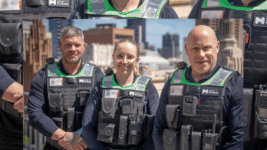
The City of Melbourne is employing Community Safety Officers (CSOs) to assist Local Law Officers in their duties whilst they patrol the council’s local government area, and these unarmed officers are being encouraged not to be too afraid to apply force towards homeless people on the streets, when they’re attempting to remove them from out the front of buildings in the city’s CBD.
The CSO program has always been controversial, but an 11 April 2026 article in The Age features a former CSO stating that officers are being encouraged to apply force if necessary, and he’s speaking out due the fact that whilst he and other officers were encouraged to use force whilst patrolling on Wurundjeri Woi-wurrung and Boon Wurrung land, he’d been sacked for shoving a homeless person.
The CSO program commenced with the council trialling the use of private security guards to accompany local law officers employed by council to enforce regulations. This was due to an initial request for two Victoria police officers to accompany local law officers and protect them, whilst they patrol Naarm-Melbourne, which resulted in the trial of private security in early 2025 instead.
But after community pushback about private security guards on the beat, the City of Melbourne determined to roll out a program of publicly employed CSOs to accompany local law officers last June, and on 31 October 2025, 11 CSOs commenced working the city streets, and it now seems that the number of CSOs out on the beat with permission to push around rough sleepers is set to double.
Punishing the poor
Issues around the City of Melbourne’s treatment of its homeless population, or those sleeping rough, are nothing new. Going back a decade ago, the council was considering passing a law to ban rough sleeping in the CBD. And bizarrely, the city always tends to treat its constituents most in need of assistance, with contempt, as if they are criminals for having no fixed address.
The Homeless Persons Union Victoria has been around since 2014. Union members have lived experience, and their work involves pushing back against the criminalisation of homeless people and the punishment the state metes out towards them. HPUV are currently running a petition to call for an end to the CSO program because pushing around the homeless is based on dumb logic.
Sydney Criminal Lawyers spoke to Homeless Persons Union Victoria spokesperson Patrick “Spike” Chiappalone about how the CSOs on the street are affecting Naarm-Melbourne’s homeless community, the fact that these officers are constantly permanently confiscating rough sleepers’ belongings and how an outreach approach by council would be more suitable than one of security.
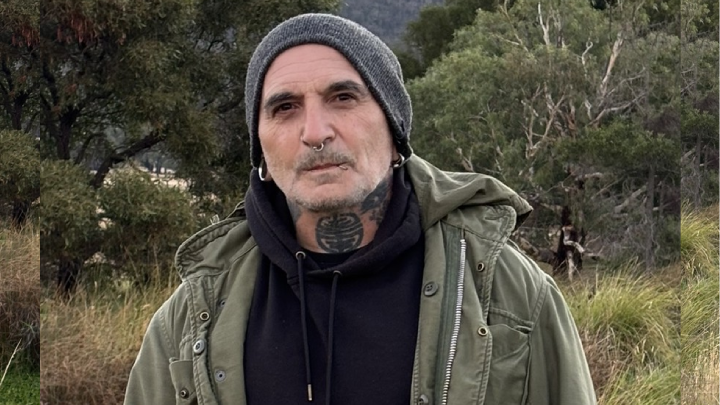
Spike, the CSO program has always been controversial. But an article in The Age on 11 April featured a former officer outlining that CSOs are being encouraged to use physical force to remove homeless people congregating outside CBD buildings.
The article outlines that dealing with rough sleepers involves violent confrontations, and it tends to infer this is due to those experiencing homelessness.
So, how would you describe what has been happening to people who are doing it tough on the streets, with the imposition of these officers who are empowered to apply force to homeless people when enforcing bylaws?
This wouldn’t happen to any other community, and I can’t think of any other community that would accept this sort of treatment.
We’ve been floored by the lack of comments from services, civil society, from the media and from the community in general.
You have got to remember, the people experiencing primary homelessness or sleeping rough or are unhoused are people who have experienced severe trauma, domestic violence or family violence and they’re dealing with inequality.
Twenty percent of our homeless population is Indigenous, even though they only make up 3 percent of the entire population.
One in seven homeless people are below 12 years old, and 25 percent are below 24. So, there are a lot of young people in the homeless community, and these are very vulnerable people.
The constant equating of homeless people as being a threat to public safety, to disorder and criminality is a constant City of Melbourne practice. And you have to remember that these CSOs are supporting Local Law Officers with throwing people’s belongings away and waking them up every morning.
So, that is where the confrontation begins. If you wake up choirboys after they’ve been asleep on the ground – sometimes by kicking them – then you throw out everything they own, then even choirboys are going to get narky.
You don’t treat people like that.
So, you’re saying CSOs are coming along and finding people sleeping out on the streets and then they’re waking them up and throwing out their belongings.
I worked with a homeless service in the CBD. I have seen people sleeping in alcoves, Local Law Officers have arrived, woken them up and then just taken their bedding and thrown it in the back of their van.
I haven’t seen the violence. But I have seen people have their belongings thrown out. This happens constantly and they never get it back.
So, they’re just throwing out the belongings that homeless people have?
Yes. They do it because they think that it is affecting the amenity of people who buy stuff and for retailers.
Why isn’t that a form of theft?
That’s a good question. That is something we have spoken about for a long time.
You have to remember that people who are experiencing this treatment don’t feel supported in the community, and they experience so much stigma. And they are conditioned to accept that sort of treatment.
They don’t feel like there is any support for them, and to go through the process of taking the City of Melbourne to court would be a hard thing for them to do.
I have heard that in Queensland, the people who were evicted from Musgrave Park were able to win a court case against the police or the local law officers.
How do you encourage someone who is already dealing with sleeping rough, that isn’t housed and is living on poverty line unemployment benefits, how do you encourage them to go through the court system against the City of Melbourne. It is really tough.
So, if you are a homeless person, you can’t go to the police and claim the council stole your belongings?
Well, you could, but if you have a look at the Homelessness protocol, it is part of the local laws that they can dispose of homeless people’s stuff if it is getting in the way – that is if they deem it is getting in the way of public traffic.
That could be anywhere and it could be anything.
The City of Melbourne explains that CSOs were needed to ensure the safety of local law officers, which followed a request to have two Victoria police officers accompany each of these officers, whilst they go about their work.
The HPUV has been around since 2014. So, why would you say that the city has turned to patrolling the streets with CSOs, who are sometimes referred to as “pseudo-cops”, at this point in time?
They’re scapegoating the homeless. They are using homeless people to take people’s eyes off systemic failures in housing, in health, in the mental health system and in the AOD sector.
They’re blaming homeless people for crime when there is no data that associates homelessness with public disorder and crime. They’re trying to take people’s eyes off their systemic failures by blaming homeless people for them.
Following through with these laws and doing things like throwing people’s stuff away is going to piss people off, because people need to feel protected in public space.
They are entitled to use public space. But they are constantly threatened by CSOs and then there are also PSOs on the street. There are private security guards and police officers, and you have the most vulnerable members of the community dealing with the whole phalanx of security, day-in, day-out.
Would you say this program has a particular focus on the homeless?
One hundred percent. Initially, they said it was to protect their local law officers in doing their job. That is what their initial argument was.
Then they said it was to connect people up to services they need. Then the argument was that it was to protect the public from unruly homeless people. Then it was to deescalate conflict on the street.
Their arguments change time after time after time. It has been a moving feast. But they have consistently equated homelessness with criminality and social disorder, when there is no connection.
The council is talking about acts that are happening in the city that aren’t related to street homeless people. They’re blaming them for crime that they’re not involved in. That is if it is actually happening.
I haven’t seen any data showing that there is this increasing crime in the City of Melbourne. The council hasn’t produced any. But they are constantly equating homelessness with it.
The City of Melbourne is set to double the number of CSOs it employs from 11 to 22, and it’s setting aside an additional $1.7 million to cover this in the 2026-27 budget.
There have also been CSO programs rolled out in other Victorian local government areas, like the City of Port Phillip.
So, in your opinion, what’s going to happen if more and more of these CSOs are being employed to patrol the streets, while also being encouraged to use force against homeless people?
There will be a tragedy. There will be some sort of tragedy. Someone will get hurt. People are already being impacted psychologically from this harassment.
We have testimonies from people who sleep rough, and it is clear that they’ve been threatened and intimidated, and it has impacted them. It is only a matter of time before somebody gets hurt.
In Maribyrnong, they’re considering another program. There was an announcement today that Maribyrnong council is going to consider what is called a ‘civic response’, or a welcoming team to welcome homeless people to Maribyrnong.
So, there are people who are thinking about what is happening: that you can’t treat people like they are dirt, and they don’t matter and they don’t have a right to civic space.
You have got to remember that all the services that people rely on are all in the CBD: the showers, the laundries, the food programs. These are all in the CBD.
What we need is more outreach workers that can support people, who know them by their first name, who aren’t taking their stuff and disposing of it, and who recognise the inequality in Victoria and that people are really doing it tough.
A private apartment is $500 a week? Who can afford that? And if you are escaping domestic violence, trauma and a bad situation, and you run to the CBD, where there are services, rather than being welcomed, you are being physically assaulted by these guys, and it doesn’t make sense. It is just wrong.
Victoria police officers get a lot of training to do the work they do. The police are armed but the CSOs are unarmed. The Age article, however, says that the CSOs are being encouraged to use force against homeless people.
So, in your understanding are these CSOs getting adequate training?
No. They say they have had trauma-informed training. But if you have trauma informed training, you do not dress like Rambo. You don’t look like a military officer.
People who have experienced trauma are not going to respond well to someone who looks like a Nazi or a police officer.
Council officers should be trying to build rapport with people and trying to develop a relationship with people on the street, because they are entitled to that space.
But they are going in with the attitude that the people who are homeless have no right to be there and they are a nuisance.
They are not taking into account what those people have been through, and that they should feel safe in public space. A lot of them go to these spaces because they feel safe there: because there are cameras and because there are lights.
So, this practice of using force is counterproductive to developing a relationship with people who are incredibly vulnerable.

The last time we spoke was in early 2017, the City of Melbourne was then considering passing a law to ban rough sleeping. This was in relation to a homelessness camp outside Flinders Street Station. And then Victoria police chief commissioner Graham Ashton was suggesting some people were pretending to be homeless.
In my understanding, the overwhelming majority of homeless people in Australia aren’t living on the streets by choice. Their life circumstances have usually led to this due to forces beyond their control.
Yet, in the vast array of times when Australian officials talk about the homeless, it’s like these people are criminals because they have no home, and the increasing laws and measures taken that involve them often seek to punish them for their homelessness.
Can you talk about the way the City of Melbourne and our society in general tends to punish the homeless for what is a societal fault?
Homeless people are stigmatised and criminalised. As I have already said, there are different styles of security that exist that deal with the homeless.
The PSOs are armed with tasers and guns. They are big and in uniforms. These Protective Service Officers patrol around Flinders Street Station.
The criminalisation of our homeless community is an absolute disgrace. Anyone that thinks that someone sleeps on the streets because they think it is fashionable or out of choice is wrong. No one decides to sleep on the streets. There is something else that is contributing to them being there.
No one decides to sleep in the cold, or to put themselves in danger, or to put themselves in the crosshairs of these CSOs and PSOs and other forms of security without good reason.
That is an outrageous statement that Graham Ashton made back then. People go to the street because they don’t feel safe where they are.
I was homeless for a long period of time. I never met anyone who had decided to be homeless or live on the street.
And lastly, Spike, the Homeless Persons Union Victoria is running a petition calling on the CSO program to be disbanded.
What sort of community support is there for getting rid of this program? And what would you say would be some easy, immediate changes the city could make to alleviate what it considers to be a need to have special officers employed to readily push homeless people around?
The city could employ outreach workers to develop a relationship with the homeless community. They could change their perspective and make sure that they feel welcome in public space, and not like they are a hindrance or a nuisance.
Melbourne is a major city. Just like any city there is poverty. We need to have spaces where people can go. We need to accept that homeless people can use public space, and we also need spaces where they can go.
We need spaces for them, where it is warm in winter and cool in the summer. They need places where they can do their washing, cook and shower. This would be a practical reality.
We don’t have a situation where we have housing available for people, but we should have the practical means to exist available to folks.
Outreach workers, AOD workers and workers with lived experience should be out there. Employing people who have been homeless would mean they know how to treat the homeless community.
The last thing we need is a security response. What we need is to wrap our arms around this community and not treat them like they are criminals.
Systemic failure has led to people living out on the streets, and these people have issues that they need to work through. Some people have drug problems, some have emotional issues and some have financial issues.
What these people require is support from us and not criminalisation.
Sign the Homeless Persons Union Victoria petition calling for an end to the City of Melbourne’s Community Safety Officer program
Paul Gregoire

Receive all of our articles weekly
Related Articles
 Council Confiscates and Destroys Homeless Woman’s Possessions During Lockdown
 QVB Rough Sleepers’ Camp Shines a Light on Sydney’s Homeless Crisis
 The Homelessness Crisis Is Growing
 A More Inclusive City of Sydney: An Interview With Greens Council Candidate Sylvie Ellsmore
 Rough Sleeping Surges Nationwide, as Authorities Continue to Criminalise Homelessness
 Council Kills Dogs Over COVID-19 Concerns