“Hey Commissioner, Stop Running Drug Dogs Through Pubs and Clubs”, Demand NSW Greens
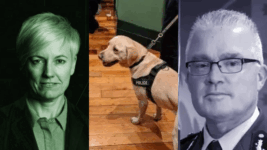
New South Wales Greens MLC Cate Faehrmann quizzed NSW police commissioner Mal Lanyon on the practice of running drug dogs through bars in Sydney. And as the local member pointed out to the top cop, during a 27 February 2026 budget estimates hearing, when this occurs it’s often one dog accompanied by a dozen officers and patrons are, at times, made to line up against the wall.
Lanyon replied that he is “unaware of the circumstances” that Faehrmann was referring to, which is a hard to believe, as he’s been in the force for decades, and most constituents at least have some awareness that at any given moment on a night out in a Sydney nightspot, the cops might appear with a sniffer dog and turn the venue into a crime scene, with every punter suddenly a suspect.
So, when Faehrmann further pushed the commissioner on this “ridiculous” and “unnecessary” practice, he could conveniently then claim ignorance to this long-time community gripe, and instead of addressing the member’s concerns, he determined to go away and be briefed about this matter at some point later down the track.
This raising of the issue of drug dogs by Faehrmann was hardly an anomaly. The NSW Greens have long been campaigning against the warrantless use of drug detection dogs in public. Many sitting Greens members can recall that in the 1990s, there were no sniffer dogs on the streets, and nor did a quiet drink, suddenly erupt into a shakedown.
Issues beyond drug dogs accosting foreign tourists in bars across Gadigal land in Sydney city are far from the only adverse impacts this flawed approach has, as with the expediting use of accompanying strip searches over the last 10 years, if police turn up no drugs after a false indication and pat down, officers often make punters strip to ensure these nonexistent drugs aren’t more privately secreted.
That’s just the way it is
“The way drug dogs are used in Sydney’s bars and nightclubs is extremely invasive and out of step with the rest of the country,” Faehrmann told Sydney Criminal Lawyers. “Nowhere else in Australia, indeed in any comparable city around the world, do you see police swarm venues with a drug dog in tow with the sole objective of catching patrons using or possessing drugs.”
“Let’s also keep in mind that nearly three-quarters of searches prompted by dogs have not resulted in an illicit substance found,” the NSW Greens harm reduction spokesperson added. “So, people who are out for the night are subjected to this intimidation and humiliation and sometimes even strip searched based on whether or not a drug dog indicates.”
These days, many consider sniffer dogs to be a regular part of life in Greater Sydney. However, the dogs were only introduced, after the unit was established specifically for the 2000 Sydney Olympics. Laws facilitating their warrantless use in public took effect on February 2002, and ever since, sniffer dogs have been appearing at ever-heightened rates at train stations, music festivals and in pubs.
The 2006 Ombudsman report was the first indication that the decision to launch a permanent NSW police dog unit wasn’t so simple, as it found that only 26 percent of dog indications turn up any illicit substances. Further, when sniffer dogs did turn up drugs, it was most often a small piece of cannabis. And since early last decade, NSW Greens monitoring has shown that nothing has improved.
“This is the very antithesis of a harm reduction approach to drugs,” Faehrmann underscored. “The evidence shows that heavy-handed and high visibility policing like this doesn’t stop people from taking drugs. It just leads to them engaging in riskier behaviour, like consuming larger quantities of drugs at once to avoid being caught and not asking for help if something goes wrong.”
Decades of statistics reveal a flawed program
“The NSW Police Force Drug Dog Detection program has been in operation for 25 years and unfortunately not much has changed at all during that whole time,” Faehrmann further explained. “The program directly targets people at music festivals, dance parties, concerts, train stations and licensed premises with the sole purpose of detecting illicit substances.”
The consistent collecting of the sniffer dog search success rate data by the NSW Greens over recent decades, has been key to revealing publicly just how flawed these operations really are. The now old adage that the drug dogs get it wrong “two-thirds to three-quarters” of the time is likely something Lanyon should consider, when reviewing dogs in licenced venues hassling visitors to Sydney.
On top of this, Faehrmann adds, there’s now “a growing body of evidence” that shows the dogs are being applied to teens and young people at events, which leads them to then partake in potentially deadly dangerous drug taking practices. The 2019 NSW inquest into the death of six patrons at NSW music festivals and the 2020 NSW Special Commission Inquiry into the Drug Ice are key examples.
Some of the data revealing the dogs don’t work is two decades old. Faehrmann recalls that NSW used to lead on harm reduction, or programs that lessen the adverse impacts of illicit drug use, when it held the 1999 NSW Drug Summit. Yet, after the Minns government’s failed 2024 drug summit, with its “politically palatable recommendations for a risk averse premier”, nothing has changed.
And when it was put to the Greens MLC whether the commissioner might be concerned with the idea of removing sniffer dogs use from licensed venues, as then no one would be patrolling pubs to police illicit drugs, she responded, “Frankly, it’s ridiculous considering the harms caused by alcohol, that there is such an over-the-top approach to other drugs.”
Faerhmann further pointed to the head of the ice inquiry, commissioner Dan Howard, as having determined that the “the current stance of our criminal law towards use and possession of drugs has failed to have any significant impact on the prevalence of illicit drug use”.
“So, you have to ask why the police continue to target the community in this way when the evidence shows the drug use isn’t decreasing,” she added.
Calling for an end to an unjustified approach
In terms of what to do about drug use in the NSW community, the Greens “want to see an end to the routine use of drug dogs in this way”. And rather than doubling down on anymore tough-on-drug policing methods, the focus should shift to harm reduction efforts to save lives. This would include interventions like pill testing, drug decriminalisation and heightened harm reduction education.
“I’ve sought a meeting with the police commissioner to discuss the issue of police targeting venues in this way,” said Faehrmann. And she went on to explain that as the top cop apparently has no idea of the extent of NSW police drug dog operations, she’ll “certainly be presenting him with examples of just how frequently this occurs”.
The NSW Greens drug law reform spokesperson also added that it’s curious to see how the NSW police has invested so much into the 25-year-long drug dog program, in a specific effort to tackle drug supply, yet, these days, as officers continue to hassle and strip search youths who might use drugs, the overall prevalence of those partaking in their use has been growing exponentially.
“Until there’s an end to the practice of police using drug dogs to target random members of the community going about their day, going to a concert or simply having a drink at their local pub, the Greens will continue holding the police and the government to account,” Faehrmann said in summing up.
“We’ll continue to force the release of police data and other information about drug dogs and strip searches, so that the cost and ineffectiveness is subject to ongoing scrutiny,” she ended.

Paul Gregoire

Receive all of our articles weekly
Related Articles
 Sniffer Dogs: False Positives and Limits to Police Powers
 NSW Police Use of Drug Dogs and Strip Searches Slammed as Ineffective and Unlawful
 NSW Police Are Strip Searching Around 100 Civilians at Public Train Stations Annually
 Drug Summit Recommends Prohibiting Sniffer Dogs and Strip Searches at Music Festivals
 NSW Police Are Still Using Sniffer Dogs to Arrest Over Tiny Amounts of Cannabis
 NSW Government Rejects Drug Law Reform Sought by the Community