The Australian Health Regulator’s Stance on Israel Will Erode Rights and Harm Patients
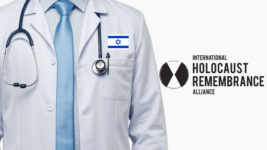
AHPRA, the Australian Health Practitioner Regulation Agency, announced last week, alongside Australia’s Special Envoy to Combat Antisemitism Jillian Segal, that the nation’s national healthcare watchdog has adopted the IHRA working definition on antisemitism, which will not only silence criticism of Israel’s war crimes, but, ultimately, it will result in lesser healthcare for some patients.
The IHRA (International Holocaust Remembrance Association) definition of antisemitism is notorious for conflating political criticism of Israel with religious prejudice towards those of the Jewish faith, as the majority of its eleven accompanying examples of antisemitism involve critiquing Israel. And Segal’s July 2025 released Plan to Combat Antisemitism aims for all Australian institutions to adopt it.
Yet despite this plan, the nation’s healthcare watchdog determining to incorporate the IHRA definition has shocked many because the regulator already has guidelines to prevent discrimination and racism and the adoption of IHRA rather involves AHPRA affirming a political position, while health professionals are further outraged by the lack of any consultations around the decision.
Recent rising antisemitism in Australia has been intimately linked to the Jewish state of Israel’s commission of an ongoing genocide against the majority Muslim Palestinians living in the Gaza Strip. The spike in Jewish prejudice has also been accompanied by increasing Islamophobic sentiment. Yet, AHPRA is prioritising one form of prejudice, and in turn, is curbing criticism of a foreign nation.
A similar move in the United Kingdom has resulted in healthcare professionals being silenced or else reprimanded for being critical of Israel’s human rights abuses, and whilst this can be expected in this country, what the adoption further does is embed anti-Palestinian sentiment in the system, which will result in lesser health outcomes for Palestinians, and likely for Arab and Muslim patients as well.
Healthcare professionals reject adoption
More than 2,000 Australian healthcare professionals and at least 40 organisations, have signed an open letter addressing AHPRA chief executive Justin Untersteiner, asking for clarification on what the IHRA definition adds to its existing antidiscrimination framework, and notes a difference as AHPRA’s code of conduct protects “attributes attaching to persons”, whereas IHRA also shields a nation.
“We are concerned that adopting the examples in full would, in effect, introduce into AHPRA’s regulatory work a standard reaching beyond discrimination against persons and into contested political expression, which is neither the purpose of the code nor a matter AHPRA is constituted to regulate,” the Australian health professionals underscore in the letter they produced this week.
Further, the open letter requests confirmation around whether AHPRA and the 15 national boards it oversees made the decision, or if it resulted from a September 2025 direction issued by all Australian health ministers to strengthen the health system’s response to “racism and discrimination, including antisemitism”, even though AHPRA had already provided a six-month update on that in April 2026.
AHPRA’s update cited its code of conduct and its commitment to prevent racism and discrimination, as well as its establishment of a new Racism and Discrimination Steering Committee. AHPRA advised it has further reviewed such complaints over the period 1 July 2023 to 28 February 2026, which tend to reveal comparable notifications relating to antisemitism and Islamophobia.
The open letter asks for clarification on the consultations undertaken that affect over 900,000 practitioners. It notes that the IHRA definition will be “a reference tool” and questions how this will be utilised, along with whether all examples involving Israel will apply, and if case managers will receive training to distinguish between political criticism of Israel and prejudice towards Jews.
A work in progress not dogma
The working definition is said to have been adopted by the May 2016 IHRA Plenary in Bucharest. It comprises of two straightforward lines expressing that antisemitism is “hatred towards Jews”, followed by eleven examples, seven of which involve Israel. And the definition has been repeatedly condemned, as it in results the silencing of criticism of the Israeli state for fear of being called racist.
The adoption of the IHRA definition was preceded by another that was developed and published by the European Monitoring Centre on Racism and Xenophobia in 2005. The EUMC definition involved two lines and eleven examples, and the IHRA definition is a variant of it. The EUMC definition was a “work-in-progress” that was ultimately abandoned in 2013 because it proved controversial.
One of the lead drafters of the original EUMC definition is US lawyer Kenneth Stern, who in 2019, published an article in the Guardian, outlining that in 2010, the definition had started to be weaponised by far-rights Zionists to be applied as a blunt instrument to shut down all criticism of Israel and its apartheid system and human rights abuses.
In his April 2021 report The Politics of a Definition, which is based upon his Oxford University doctoral research, PhD candidate Jamie Stern-Weiner outlines that not only is the IHRA definition problematic in its conflation of criticism of Israel with antisemitism but he reveals that not all representatives at the 2016 IHRA Plenary voted in favour of it, so it was never officially adopted.
Indeed, the adoption of the IHRA definition by AHPRA has been put on the nation’s political agenda by Segal, the Australian antisemitism envoy, which is a position that the PM created in mid-2024. Yet, Albanese didn’t announce that nation’s right across the west have been embracing the antisemitism envoy system going back to 2004, and he instead also appointed an Islamophobia envoy.
Embedding further prejudice in healthcare
The NSW Council for Civil Liberties and Liberty Victoria stated last week that they “strongly oppose the adoption of the IHRA definition of antisemitism on the basis that doing so would have an unjustified and improper chilling effect on freedom of expression and protest rights, including that it would impede legitimate criticism of Israel and/or the political ideology of Zionism”.
This silencing of the right to express political views will especially be felt by Australian health practitioners, and it will most prominently affect Palestinian, Arab and Muslim practitioners. As has been the case since the Gaza genocide commenced in October 2023, complaints have been made against health professionals who have vocally criticised the Israeli mass murder.
But the other aspect involved in adopting a definition of prejudice that serves to hide a settler colonial nation’s oppression and subjugation of the rightful owners of the land is that it will likely result in those peoples, whose identities are being erased by the process of colonisation, receiving lesser health outcomes from a system that fails to recognise them.
In the Australian setting, Aboriginal and Torres Strait Islander peoples not only known have poorer health outcomes than the rest of the population, but First Nations people receive worse care and treatment at the hands of the local health system, and this is because local institutions were established in a country founded upon terra nullius or the idea that the First Peoples didn’t exist.
AHPRA only just adopted an Aboriginal and Torres Strait Islander Antiracism Policy in 2025. This followed the establishment of the National Scheme Aboriginal and Torres Strait Islander Health and Cultural Safety Strategy and the Aboriginal and Torres Strait Islander Employment Strategy, which were both established in 2020.
The IHRA working definition of antisemitism is provocative as when it shields criticism of Israel, it is serving to conceal the ongoing colonisation, dispossession and genocide of the Palestinian people, so in effect, AHPRA is adopting a political position that rejects the understanding that Israel has been and continues to be established upon the historic lands of the Palestinian people.
So, in a similar way that racism against First Nations peoples is not dropped inside doctors’ surgeries or hospitals but instead results in lesser treatment and health outcomes, the adoption of a racist and prejudicial position against Palestinians will result in similar prejudicial approach towards them in the healthcare system.
“We must all be deeply concerned that AHPRA has decided to work with the special envoy and adopt the IHRA definition of antisemitism,” warned APAN (Australia Palestine Advocacy Network) executive member Jordana Silverstein.
“This embeds anti-Palestinian racism in our healthcare system and threatens medical professionals and patients,” the academic continued.
“Dealing with antisemitism in this way isn’t an anti-racism approach. It pits communities against one another and benefits those seeking to silence Palestinians and their allies.”
Main image: Photo of a doctor from Shutterstock. The Israeli flag and IHRA logo in the public domain.

Paul Gregoire

Receive all of our articles weekly
Related Articles
 The Envoy’s Proposal to Adopt the IHRA Antisemitism Definition Is a Threat to Free Speech
 Universities Australia Antisemitism Definition Regarding Israel: Ambiguous, Illogical and Flawed
 Envoy Pressures Australia to Adopt a Fraudulent Antisemitism Definition
 Antisemitism Interim Report Finds No Legislative or Systems Gaps, But the Stickler Is Still to Come
 The Antisemitism Royal Commission Will Further Suppress Criticism of Israeli Atrocities
 Federal Government’s Antisemitism Hate Bill Threatens to Further Erode Civil Liberties