Woman Faces String of Charges Over Bus Stop Crash
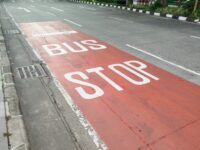
A woman has been refused bail after being charged with a series of alleged traffic and criminal offences following an incident in Sydney’s Lower North Shore that police say began with a vehicle crashing into a bus stop before escalating into assaults, property damage and resisting arrest.
The incident
According to NSW Police, at about 12.20pm on Saturday, 8 August 2026, a white Audi Q5 allegedly crashed into a bus stop on Longueville Road at Lane Cove.
It is alleged that several people waiting at the bus stop were forced to move out of the vehicle’s path and that an 18-year-old man suffered minor injuries.
It is further alleged the 29-year-old driver left the scene without exchanging details before attempting to enter a parked Mercedes on Phoenix Street.
Police claim that when the owner of the Mercedes intervened, the woman allegedly assaulted him and damaged his vehicle before running away again.
It is then alleged she entered a second vehicle parked nearby before police arrived and placed her under arrest.
Officers further allege she:
- resisted arrest,
- attempted to assault police,
- refused to undergo a roadside breath test, and
- was already serving a five-year licence disqualification imposed in May 2026.
She was taken to hospital for mandatory testing before being charged at Chatswood Police Station.
Police have said the woman was refused bail and appeared before the Bail Division Court.
The charges
Police have laid 11 charges against the woman, being:
- Driving whilst disqualified;
- Negligent driving;
- Failing to exchange particulars after a crash;
- Failing to provide particulars to an injured person;
- Common assault;
- Destroying or damaging property;
- Entering a vehicle without the owner’s consent;
- Refusing a breath test;
- Hindering or resisting police;
- Assaulting police; and
- Failing to disclose the identity of a driver.
Driving whilst disqualified
Driving whilst disqualified is an offence under section 54(1) of the Road Transport Act 2013 (NSW).
To establish the offence, the prosecution must prove beyond reasonable doubt that:
- You drove a motor vehicle, and
- You were disqualified from driving at the time, or your licence was suspended or cancelled at the time.
If it is your first major traffic offence in the last 5 years the maximum penalty is:
- 6 months in prison,
- A 6 month ‘automatic’ licence disqualification, which can be reduced by a court to 3 months, and
- A fine of $3,300.
If it is your second or more major traffic offence in the past 5 years the maximum penalty is:
- 12 months in prison,
- A 12 automatic licence disqualification, which can be reduced by a court to 6 months, and
- A fine of $5,500.
Negligent driving
Negligent driving is an offence under section 117 of the Road Transport Act 2013 (NSW).
To establish the offence, the prosecution must prove beyond reasonable doubt that your manner of driving fell below the standard expected of a reasonable and prudent driver in the circumstances.
The maximum penalties for this offence depend on factors including whether harm was caused as well as whether it was the driver’s first or subsequent major traffic offence within 5 years.
The maximum penalties can be summarised as follows:
| Relevant section | If you have been charged with… | The maximum penalty is… |
| S 117(1)(a) Road Transport Act 2013 | Negligent driving occasioning death | First offence: A fine of $3,300 and/or 18 months imprisonment. The ‘automatic’ period of disqualification is 3 years, but the court can reduce this to a minimum disqualification period of 12 months. The maximum disqualification is unlimited.
Second/subsequent offence: A fine of $5,500 and/or 2 years imprisonment. The ‘automatic’ period of disqualification is 5 years, but the court can reduce this to a minimum disqualification period of 2 years. The maximum disqualification is unlimited. |
| S 117(1)(b) Road Transport Act 2013 | Negligent driving occasioning grievous bodily harm | First offence: A fine of $2,200 and/or 9 months imprisonment. The ‘automatic’ period of disqualification is 3 years, but the court can reduce this to a minimum disqualification period of 12 months. However, the maximum disqualification is unlimited.
Second/subsequent offence: A fine of $3,300 and/or 12 months imprisonment. The ‘automatic’ period of disqualification is 5 years, but the court can reduce this to a minimum disqualification period of 2 years. The maximum disqualification is unlimited. |
| S 117(1)(c) Road Transport Act 2013 | Negligent driving NOT causing death or grievous bodily harm | A fine of $1,100. The court may also choose to disqualify you from driving for 12 months. |
It is important to be aware that having an accident does not automatically establish negligence, as there may be situations other than the driver’s actions which in fact cause a collision, such as:
- An unexpected medical episode,
- Mechanical defects, or
- Severe road conditions.
Failing to stop and exchange particulars
New South Wales road laws require drivers involved in certain collisions to stop and provide their details where required.
Failing to stop after impact causing injury or death is an offence under section 146 of the Road Transport Act 2013 (NSW) which carries a maximum penalty of 18 months in prison, or 2 years in prison if it was your second or subsequent conviction for a major traffic offence within a 5 year period.
To establish the offence, the prosecution must prove beyond reasonable doubt that:
- You drove or rode a vehicle, or rode a horse, on a road,
- The vehicle or horse was involved in an impact,
- The impact occasioned injury or death to another person,
- You knew, or ought reasonably have known, that the vehicle or horse was involved in an impact occasioning injury to another person,
- You failed to stop and give any assistance that may have been necessary, and
- That assistance was within your power to give.
Whether an offence has been committed often depends upon the precise circumstances, including:
- whether injury occurred,
- whether property was damaged,
- whether the driver knew an accident had occurred, and
- whether the statutory obligations arose.
Common assault
Common assault is an offence under section 61 of the Crimes Act 1900 (NSW) which carries a maximum penalty of 2 years in prison and/or a fine of $5,500.
To establish the offence, the prosecution must prove beyond a reasonable doubt that:
- You committed an act which caused another to apprehend immediate and unlawful violence, or struck, touched or applied force to the other person,
- The other person did not consent to the conduct, and
- Your conduct was intentional or reckless.
The following types of conduct may amount to a common assault:
- Striking another person without causing any, or any significant, injuries,
- Threatening immediate violence in such a way the other person believes the threat will be carried through; for example, saying ‘I’m gonna punch you in the face’ while raising a fist and/or moving towards the other person and/or displaying a threatening or angry demeanour,
- Striking at a person with a fist or object, whether or not contact is made,
- Throwing an object towards a person, whether or not contact is made,
- Spitting at another person, whether or not contact is made, and
- Pushing an animal or other conveyance that the other person is on and thereby causing the other person to fall off.
Intentionally or recklessly destroying or damaging property
Intentionally or recklessly destroying or damaging property is an offence under section 195 of the Crimes Act 1900 which carries a maximum penalty of 5 years in prison in the District Court.
To establish the offence, the prosecution must prove beyond a reasonable doubt that:
- You destroyed or damaged property,
- The property belonged to another person, and
- You intended to cause the destruction or damage or were reckless as to whether his or her actions would cause the destruction or damage.
You were ‘reckless’ if you foresaw the possibility of your actions possibly destroying or damaging property but went ahead regardless.
Refusing a breath test
Motorists in New South Wales are required to comply with lawful breath-testing requests made by police.
Refusing a roadside breath test comes with a maximum fine of $1,100.
Refusing a breath analysis is more serious – for a first major traffic offence within five years, section 16 (1) (b), Schedule 3 of the Road Transport Act NSW prescribes a maximum penalty of:
- 18 months imprisonment,
- Three years ‘automatic’ disqualification from driving, which can be reduced to a ‘minimum period’ of 12 months, and
- A $3,300 fine.
It is important to be aware that, in these cases, the prosecution must establish that:
- police made a lawful requirement,
- the accused refused or failed to comply, and
- all legislative requirements surrounding the request were satisfied.
In some cases, medical issues or procedural irregularities may become relevant.
Assaulting police
Assaulting a police officer is an offence under section 60 of the Crimes Act 1900 which carries a maximum penalty of 5 years in prison.
To establish the offence, the prosecution must prove beyond reasonable doubt that:
You assaulted, threw a missile at, stalked, harassed or intimidated a police officer.
An ‘assault’ is where:
- You caused the officer to fear immediate and unlawful violence, or you made unauthorised physical contact with the officer,
- The officer did not consent, and
- Your actions were intentional or reckless.
An act is considered to be against a police officer even though he or she is not on duty, if it is carried out due to:
- Actions by the officer while executing his or her duty, or
- The fact he or she is a police officer.
The maximum penalty increases to 7 years in prison where you inflicted ‘actual bodily harm’ on the officer which is harm that is more than ‘transient or trifling’ and includes lasting cuts or bruises.
The maximum increases to 12 years in prison where you inflicted ‘grievous bodily harm’ on the officer which is ‘very serious harm’ that includes, but is not limited to:
- Any permanent or serious disfigurement,
- The destruction of a foetus, other than by a medical procedure, and
- Any grievous bodily disease.
Resisting arrest
Resisting arrest is an offence under section 546C of the Crimes Act 1900 which carries a maximum penalty of 12 months in prison.
To establish the offence, the prosecution must prove beyond reasonable doubt that:
- You resisted or hindered an arrest, or you incited another to assault, resist or hinder a police officer, and
- The police officer was in the execution of his or her duties.
‘Hinder’ means to obstruct or otherwise interfere with.
Legal defences
In addition to having to prove each element of a criminal or traffic offence beyond a reasonable doubt, the prosecution must also disprove any general legal defence that arises on the evidence.
A person must be found not guilty if the prosecution is unable to do this.
General legal defences include duress, necessity, self-defence and mental illness.
There may also be specific defences and exceptions that apply to particular offences which, if present, entitle a person to an acquittal.
Innocent until proven guilty
The fact the woman has been refused bail does not mean she is guilty of the alleged offences.
Every person charged with a criminal or traffic offence is presumed to be innocent until and unless proven to be guilty in a court of law.
That said, bail laws have become increasingly strict in recent years which means a person may be refused bail and remanded in custody until their matter is heard but have their cases dismissed in court, whether that dismissal occurs by way of a not guilty verdict or withdrawal of charges by the prosecution.

Sydney Criminal Lawyers
Receive all of our articles weekly






RELATED LEGISLATION
- Section 54 Road Transport Act 2013 | Driving or Making Licence Applications while Disqualified or Licence Suspended or Cancelled
- Section 117 Road Transport Act 2013 | Negligent, Furious or Reckless Driving
- Section 146 Road Transport Act 2013 | Offence of Failing to Stop and Assist After Impact Causing Injury
- Section 60 Crimes Act 1900 | Assault Police
- Section 61 Crimes Act 1900 | Common Assault
- Section 546 Crimes Act 1900 | Abetting or Procuring an Offence Finalised in the Local Court