The NSW Police Drone Surveillance Trial Is Being Expanded Before Any Official Assessment
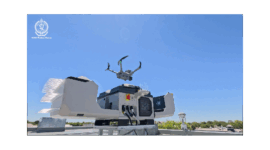
The Minns government confirmed in a 27 August 2026 press release that it’s continuing with the New South Wales police crime-related drone surveillance on Gomeroi Country in the NSW town of Moree for two more years, as well as looking to other regional areas for expansion of the ‘PolAir Remote’ program, with no assessment yet to be filed about how effective the drones have been.
NSW authorities notified the town of Moree that a six-month trial of the policing drones was about to commence in January 2026. And whilst flagging the pilot of this “world class, modern technology”, officials were already repeatedly suggesting that the drones would be rolled out across the state at trial commencement. And there was no prior warning or public consultation on this matter.
So, last week’s announcement was no surprise. But it was rather dubious, as the trialling of such a dystopian policing technique, with a prior determination that it was to be implemented statewide regardless of any assessment, means that as the NSW Police Force and NSW police minister Yasmin Catley have been announcing drone incorporation, the process has been more like a product launch.
The Aboriginal Legal Service NSW/ACT (ALS) is crying foul on the decision to continue and expand the police use of drone surveilling, as Catley just confirmed it would be expanded during 28 August 2026 budget estimates, and she too explained that the state is carrying out a “full evaluation”, which will be out next month, and it will then comprise “the business case” for expansion.
Indeed, ALS acting chief executive Sharif Deen has explained that the community has been advising that the drones, which are perched atop of Moree police station, are regularly being deployed over areas of the township that are predominately Aboriginal. And as one would expect, the imposition of drones hovering in the air overhead, is causing fear amongst the community.
Dubiously assessed as successful
“The Moree trial, certainly from the survey from the police—it is public information. I’m sure you have seen it—it has been very successful. In fact, I’m pleased that we’re keeping it there. I agree with you,” Catley said at a budget estimates hearing last week, in response to a question from Nationals MLC Sarah Mitchell, who is a big fan of drone surveillance.
“We’ll have to bring on more pilots. That will be a significant cost… The infrastructure itself, to be honest with you, Sarah, isn’t frightfully expensive. But operationally and making sure it is 24/7 will be a significant cost. That will all be formed in part of the evaluation. We will know more once they’ve done that,” explained the minister, as if it was stock standard to make a decision prior to evaluation.
The evaluation by NSW police, however, won’t be made public, and Catley further advised this is the norm. Although the NSW government press release does provide some supporting evidence for the rollout, taken from a survey of over 516 community members.
The survey found 85 percent of participants stating there was no negative impact from the drones, while 83 percent considered they improve safety. Eight two percent found drones hovering overhead to be a positive or very positive experience, 78 percent said they improved emergency response and 76 percent said they had high or very high trust in policing using the drones.
Yet, NSW Greens MLC Sue Higginson brought up during proceedings that several police officers reported that they’d been asked to partake in the public survey by senior police officers.
“This is the first time drone technology has been used in this way in Australian policing”, reads the press release announcing the continuation and expansion of this highly invasive policing technique. And the fact that the decision is being predicated upon an evaluation that is still “currently underway” and hence, unfinished, appears to pose no problem to the official reasoning.
Segregated surveillance
“We are blindsided by the premier’s decision to dig in his heels on this unproven, controversial technology,” ALS CEO Deen set out in a press release last Friday. “By piloting this intrusive technology in Moree, the NSW government and NSW Police Force have chosen to target a small community with a significant Aboriginal population and no power to object.”
“We have serious questions about whether this use of police drones is compatible with people’s right to privacy and whether current laws provide adequate protections amid this new form of surveillance,” the lawyer added. “These are questions that the government should consider before extending this program in Moree or expanding it to other areas.”
Deen made clear that the NSW state is imposing this invasive policing technique to hover over First Nations communities in Moree, who “live in a context of intergenerational, structural disadvantage and trauma as a result of the town’s extreme history of racist segregation, discrimination and overpolicing”. And this point cannot be lost upon the authorities, but it can certainly be ignored.
The chief executive too suggests that the imposition of the drones is harming the wellbeing of the communities, and “damaging an already fragile relationship with police”, which is entirely to be expected, as the globe has witnessed over recent years in Gaza, that Israel has not only been using drones to murder Palestinians, but it applies this technique to psychologically intimidate them.
Deen told NITV in July that while he was aware that this technology was set to be rolled out in regional areas in NSW, he did not think that the drones would be used any time soon on Gadigal land to surveil Sydney’s Eastern Suburbs. Yet, if these devices were used in these localities, one would expect complaints from the general public about feeling harassed, surveilled and being made fearful.
In line with traditional policing
As Deen put it, in choosing Moree, the NSW state has set upon a small regional town with a large Aboriginal population. But this is not the first time that this town has been served up special treatment, as the Minns government launched a law-and-order drive that legislatively targeted 14- to 17-year-old Aboriginal youths for bail denial and a community program for Moree specifically.
The $13 million targeted package was rolled out in March 2024, and it included provision of youth bail accommodation and support services, linking of Aboriginal youth to support networks, a plan to improve service delivery, extra police attention given to youths, along with joint council and Aboriginal community-controlled organisation provision of afterhours programs.
The acting head of the ALS further explained that there has been a drop in crime rates as a result of the community having actively mobilised in response to the targeted package in order to bring down crime rates since early 2024. Deen is concerned that the NSW police will now turn around to claim that the lower crime rates are a direct result of piloting the drones to justify the program.
The expansion of the drone program will be telling in terms of early reports of disproportionate use on Aboriginal communities. Overpolicing of First Peoples is a well-known occurrence. Deen has further suggested that the “first likely targets” for drone surveilling will be “places like Walgett, Bourke and Kempsey – places where there is a high proportion of Aboriginal people”.
The ALS too pointed to the imposition of the drones coming at a time when the NSW criminal justice system has incarcerated more Aboriginal prisoners than at any other time in history, which has too coincided with the highest number of Aboriginal deaths in custody since records started being taken in 1979/80. This occurred over the 12 months to June 2025 and numbered 12 individual deaths.
“The premier is presiding over the worst justice system failure we’ve ever seen in NSW – and he seems determined to make it even worse,” Deen further put it last week. “At the end of the day, police drones won’t do anything to prevent crime or make communities safer.”
Main image: A PolAir Remote NSW police drone on top of Moree police station. Photo credit: NSW police press photo
Paul Gregoire

Receive all of our articles weekly
Related Articles
 NSW Police Drone Surveillance Trial in Moree Is Set to Be Rolled Out Statewide
 The NSW Surveillance Bill Is Set to Impact Us All, Regardless of Any Guilt
 Questions Need Answering on Pine Gap and Gaza: Interview With Professor Richard Tanter
 Drones to ‘Manage’ Traffic on New South Wales Roads
 New Rules for Flying Drones
 The Use of Drones in Different Situations: Should There Be Greater Legal Clarity?