Indonesian Police Go on Killing Spree, as Crackdown Escalates in West Papua
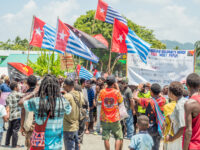
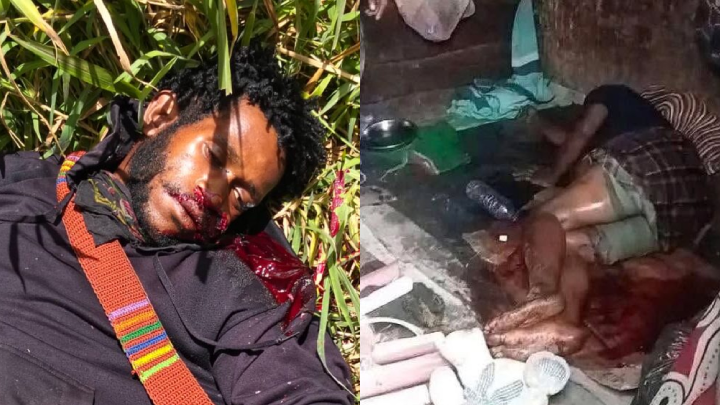
Members of the occupying Indonesian police went on a murderous rampage in the West Papuan village of Moanemani, located in Dogiyai Regency at around 10 am on 31 March 2026, which involved officers firing randomly into a local marketplace, prior to the police assault shifting to neighbouring Ikebo village, where officers started indiscriminately shooting upon Papuan houses.
The number of people injured is unknown, however, five West Papuans were shot dead. The Indonesian police commenced applying collective punishment to the villagers of Moanemani and Ikebo, after the body of a murdered police officer, who was an Indigenous West Papuan, was found in front of Ebenezer Church in Moanemani. And no one is sure who killed the officer.
This callous attack on villagers comes at a time when Indonesian president Prabowo Subianto has been cracking down on West Papuans within their own Melanesian homelands, particularly in the regencies of Yahukimo, Intan Jaya, Paniai, Maybrat, and now Dogiyai. This marks an escalation of attacks on villages that commenced in Nduga regency in 2018, under the former Jokowi government.
Indonesia commenced administering West Papua in 1963, following the former Netherlands colonisers exiting and the UN brokering a deal, which was to permit the West Papuans to hold a referendum on independence. But in seeking to maintain control of the resource rich region, Indonesia held a 1969 vote where 1,026 Papuans voted to remain with Jakarta at gun point.
The recent random shootings on the part of Indonesian police reveals the circumstances that West Papuans have lived under since the 1960s, and the escalation in violence against the locals is in keeping with a Prabowo presidency, as the former Suharto-era army general earnt himself a reputation for perpetrating war crimes against the East Timorese and West Papuans.
Escalating occupier aggression
Footage of the recent incident supplied by the United Liberation Movement for West Papua (ULMWP), shows armed and heavily uniformed Indonesian police emerging from a police van and chasing unarmed West Papuan civilians deeper into a residential area, shots can be heard and buildings can be seen ablaze in the distance.
Those gunned down and killed, included 19-year-old Siprianus Tibakoto, 20-year-old Yosep You, 60-year-old Ester Pigai, who suffered from paralysis, along with 14-year-old Martinus Yobee and 19-year-old Angkian Edowai. And on 1 April, 14-year-old Maikel Waine and 11-year-old Maikel Pekei continued to be in a critical condition, after being shot by Indonesian police.
“Indonesia’s actions in Dogiyai are both a crime against humanity – a grave act of colonial violence – and a breach of international law,” insisted West Papuan provisional government president Benny Wenda. “Shooting indiscriminately into homes and a public market is a form of collective punishment, while the intentional killing of civilians is a war crime.”
This latest incident comes after Jakarta had been dropping bombs upon a makeshift refugee camp in Puncak’s Kembru District, causing West Papuans, who were already displaced to have to relocate once more. And there are currently 105,000 West Papuan villagers displaced in the highlands, due to the ongoing attacks on these unarmed people living in the planet’s third largest rainforest.
“What the carnage in Dogiyai demonstrates is that Indonesia views all West Papuans as legitimate targets,” Wenda further set out. “Elders, women, and children: no one is safe from the murderous vengeance of the Indonesian security state. The massacre triggered a wave of internal displacement, as terrified civilians fled into the mountains and surrounding villages.”
EU priorities profit over rights
A key issue for West Papua achieving its independence is due to the reluctance of other nations to raise the issue of the occupied Melanesian peoples, so as to not rock the boat with Jakarta. And Wenda recently pointed to the International Parliamentarians for West Papua (IPWP) analysis of the September 2025 established EU–Indonesia Free Trade Agreement (FTA) as an example.
IPWP considers that in signing off on the FTA, the European Union has effectively approved the ongoing environmental destruction and rights abuses caused by Indonesia in the Melanesian region. The West Papuan environment and its people’s rights were not considered during negotiations, yet a fair amount of LNG, palm oil and metals are sourced from West Papua by EU nations.
Prabowo first paid a visit to West Papau after becoming president in November 2024, with a key part of his tour being a visit to Merauke district, which is the site of the world’s largest deforestation project, with the clearing of an eventual 2 million hectares set to take place in order to facilitate giant sugarcane plantations.
In its assessment of the EU-Indonesia FTA, IPWP pointed out that the sustainability impact assessment of the free trade agreement with Indonesia made no mention of West Papua whatsoever, and this is while unprecedented deforestation and environmental destruction are being perpetrated in the Melanesian region.
The IPWP further charged the EU with failing to take the plight of the West Papuan people into any consideration when finalising the trade agreement. The parliamentarians pointed to the fraudulent 1969 UN-brokered referendum, which saw a little over 1,000 Papuans vote to stay with Indonesia, and they wondered why this was not an issue for European negotiators.
United in denial of self-determination
Wenda questioned in February, why, despite the fact that Indonesia has been carrying out attacks on unarmed West Papuan villages for coming on eight years now, Indonesia’s permanent representative to the United Nations, Sidharto Reza Suryodipuro, was appointed to the position of president of the UN Human Rights Council in January.
The UN was further presented with a copy of the West Papuan People’s Petition back in 2019. This is a document that calls upon the UN to facilitate a new and legitimate vote on self-determination. The petition has been signed by 1.8 million West Papuans, or 70 percent of that Indigenous population. And yet, there has been no movement on this issue ever since.
“I reiterate our demand for Indonesia to allow the UN High Commissioner for Human Rights to visit West Papua,” said Wenda, who has been exiled from his homeland for decades. “Over 110 countries – a clear majority of the UN member states – have now demanded this visit, but Indonesia continues to refuse.”
“Dogiyai is not an isolated incident: every day brings a new atrocity,” the president of the West Papuan provisional government in waiting made clear in ending.
“How long will the world allow this to continue before Indonesia is made to suffer genuine diplomatic consequences for their refusal?”

Paul Gregoire

Receive all of our articles weekly
Related Articles
 Ecocide and Genocide Escalates in West Papua: Interview with ULMWP’s Benny Wenda
 Indonesian Government Enters a New Phase in the Occupation of West Papua
 Wenda Confirms West Papua is Readying to Gain Independence from an Indonesia in Chaos
 Benny Wenda Demands End to Indonesia’s Genocidal Attacks in West Papuan Highlands
  West Papua’s “Mandela” Filep Karma Dies Under Mysterious Circumstances
 The West Papuan Legislative Council Has Held Its Inaugural Meeting in Jayapura