Inmate Appeals Refusal to Release Him via Writ of Habeas Corpus
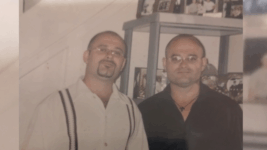
Elefterios “Terry” Fantakis is set to appeal the 2 September 2025 decision of then NSW Chief Judge at Common Law Ian Harrison to deny a writ of habeas corpus directing the Macquarie Correctional Centre governor to bring Fantakis before the court to consider the legitimacy of his incarceration, and in the case of his detention being found unjustified, to release him into the community.
Fantakis is currently detained in the Clarence Correctional Centre, after being found guilty of the murder of Elisha “Sam” Karmas by a NSW Supreme Court jury, with then presiding Justice Helen Wilson sentencing him in November 2018 to 24 years imprisonment, with non-parole set at 18 years. Terry’s appeal against his conviction to the NSW Court of Criminal Appeal (NSWCCA) failed.
An appeal for a writ of habeas corpus submitted to the NSWCCA will be heard on 9 February 2026 after being issued under section 71 of the Supreme Court Act 1970 (NSW).
A writ of habeas corpus calls on a court to review the circumstances around the detention of a prisoner, in which the detainer of the subject must show justification as to why this individual should remain in their custody.
The key point in the Application for Writ of Habeas Corpus produced for next month’s appeal asserts that the trial judge had advanced a second scenario relating to the circumstances of Karmas’ murder, and Fantakis claims that this was so significant a shift in the facts before the court that the indictment should have been amended at trial in order to reflect the new count of murder.
Not only was the second count that Fantakis was convicted in relation to not contained on the indictment, but the details pertaining to this second undocumented count had been propagated by the trial judge and these developments all emerged after both the defence and the prosecution had presented their cases, so there was no thorough testing of the new count of murder by the court.
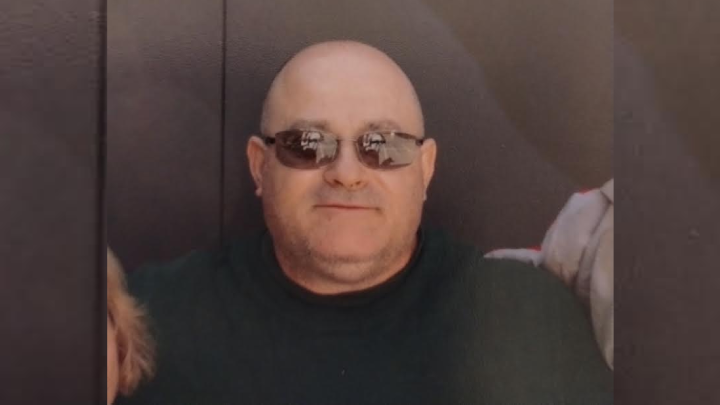
Tried for murder
The murder of Karmas allegedly took place at 37 Wilga Street in Punchbowl on 11 August 2011. Fantakis was said to be at the address with Derek Cheong, who, as a labourer, was helping Fantakis renovate two properties of which he owned, a duplex in Warwick Street Punchbowl, directly across the road from Karmas, and another at Wilga Street Punchbowl, a couple of streets away from Warwick Street.
Karmas was said to attend Wilga Street at close to 2 pm, and prior to Cheong leaving at 3.07 pm. Terry was initially alleged to have assaulted and killed Karmas during this timeframe.
Fantakis was charged with the murder of Karmas, while Cheong and an Andrew Woods were charged as accessories after the fact. The prosecution claimed that Cheong was present at the time of the murder and he’d assisted Fantakis with cleaning up over a period of days, while Woods was accused of sending texts messages from Karmas’ phone and assisting in concealing the body.
Karmas’ body has never been found. Cheong told NSW police in two interviews that Karmas did not enter the Wilga Street property that day and had left the place on foot at around 1.50 pm.
A witness at trial, Ms Nafla Rifa, testified that she’d seen Karmas outside his house on Warwick Street with some other men at around 2 or 3 pm on the day he was allegedly murdered. And no evidence, forensic or otherwise, of a murder was found at either property owned by Terry Fantakis.
The jury acquitted Cheong on the only case the prosecution ran at trial, finding instead that they believed Karmas had left Wilga Street and returned to this same address later that same afternoon when Cheong was not present.
This was a separate event advanced by Justice Wilson after the close of evidence. So, in effect, the jury found that Fantakis was considered to have killed Karmas around the timeframe of 3 to 5 pm. Uncorroborated evidence was also heard that Fantakis had threatened Karmas at an earlier date.
Woods was found to have helped Fantakis after the alleged offence and he was sentenced, as accessory, to 8 years prison time, with non-parole set at 6 years.
“Trial by way of ambush”
In a letter to Sydney Criminal Lawyers, Fantakis explained that he is legally and factually innocent of the single count of murder on the indictment. The issue that Fantakis is raising next month in court is that the original indictment involved three accused and an alleged murder not reflected on it, with the conclusion being that Fantakis was convicted on a second unindicted count.
The current habeas corpus writ outlines that the jury considered two mutually exclusive counts of murder during the Fantakis and Woods trial. The first count was the one that was consistent with the indictment and the Crown case, which involved Fantakis violently murdering Karmas at Wilga Street between 2 pm and 3.07 pm on 11 August 2011, whilst Cheong was present.
However, Justice Wilson gave orders to the jury that allowed jurors to consider a second murder scenario, which was again perpetrated by Fantakis but later in the afternoon at around 5 pm, after Cheong had left. Her Honour advanced this during closing submissions and after the close of evidence.
The submission claims that Justice Wilson basically advanced the Crown case to see a conviction.
According to the renowned Australian legal handbook Ross on Crime, “counts are mutually exclusive if the evidence is so contradictory that a conviction on one count requires an acquittal on another”. And in terms of the Fantakis case, a conviction on the second count that did not appear on the indictment meant that Cheong must be acquitted on the first count.
Fantakis did go on to appeal his 2018 conviction to the NSW Court of Criminal Appeal in 2023 based on multiple grounds, with all failing. And while Justice Wilson had considered that no discernible shift had occurred to the Crown case after the 5 pm timeframe had been progressed, the three-justice bench of the appeals court did accept that there had been a shift in the prosecution case.
Release the only option
On appealing the rejection of his habeas corpus writ next month, Fantakis asserts that if the NSWCCA does accept that an error around a second count has occurred, then he should be set free, as it is impossible to hold a retrial, as it would initially involve the original count of murder, of which three defendants are involved, yet one of them, Cheong, has already been acquitted in respect of it.
In terms of his initial habeas corpus hearing, Fantakis argued that the jurisdictional error involving two counts had rendered the trial void, that Justice Wilson had been in error when progressing a shift in the case, that her Honour failed to direct the jury to return a unanimous verdict, that a retrial would be an abuse of process and that he’d been sentenced over a failed count at trial.
Justice Harrison, however, made certain that a writ of habeas corpus is supposed to be progressed when someone has been unlawfully detained, and it is not supposed to be about attempting to challenge a judgement made by the court to find it void.
A writ of habeas corpus is available when it is found that a trial was a nullity, which is what Fantakis is claiming had happened by the advancement of the second count by Justice Wilson.
In his letter, Terry too set out that at the time of the alleged murder he was 36 and had no criminal record. Fantakis also claims that systematic corruption was involved in the police investigation into his case, which ultimately saw him convicted on a dubious second count of murder, and he further plans to launch a series of private criminal prosecutions against a number of NSW police detectives.
Main image: A photo of twins Nick and Terry Fantakis

Paul Gregoire

Receive all of our articles weekly
Related Articles
 Wrongful Convictions in Australia
 Wrongful Convictions in Australia: Less Likely to be Overturned than Other Countries
 What is a Quashed Conviction in Criminal Law?
 How the Innocence Project is Helping Those Wrongly Convicted of a Crime
 Imprisoning the Innocent: The Causes of Wrongful Convictions in Australia
 The Innocence Project Australia