“Justice Only Matters If the World Is Watching”: RMCN’s Noor Azizah on the ICJ Rohingya Genocide Case
The Rohingya Maìyafuìnor Collaborative Network has been running a social media campaign raising awareness to the fact that the case Gambia has brought against Myanmar for the commission of genocide against the Rohingya people is currently underway in the International Court of Justice. The public hearings were held in the Peace Palace in the Hague over the last three weeks.
The Gambia brought the case against the Myanmar regime in November 2019. Grounded in the provisions of the 1948 Convention on the Prevention and Punishment of the Crime of Genocide, the case revolves around targeted assaults upon the Rohingya population of northwestern Rakhine State in Myanmar by the Tatmadaw, or the Myanmar military, circa August 2017.
Communal tensions between the Rakhine Buddhist majority population and the minority Muslim Rohingya population of the region, which had officially been made stateless by the Myanmar junta via 1982 passed citizenship laws, have been escalating over recent decades. Riots targeting the Rohingya in 2012, left 140,000 without homes and living in internally displaced persons camps.
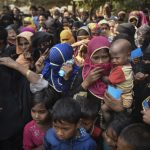
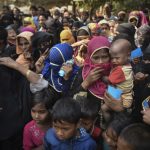
Around 700,000 Rohingya fled across the border and into Bangladesh in mid to late 2017. These people have been living in the sprawling Kaptalung refugee camp in Cox’s Bazar ever since. Kaptalung is a makeshift megacity of around 1 million people, living in what is the world’s largest refugee camp, and they’re living in a precarious situation that involves flooding, fires and lack of sustenance.
A Rohingya refugee down under
Noor Azizah is a spokesperson for the Rohingya Maìyafuìnor Collaborative Network. The Rohingya woman arrived in Australia with her family in 2003, after having fled persecution in Myanmar. And Noor’s advocacy on the part of her people over recent years has seen her presented with multiple awards, and she holds a master’s degree in Peace and Conflict Studies from Sydney University.
Azizah and the other women making up the ranks of the RMCN from across the globe are concerned that as the Rohingya genocide case is being progressed, that it is not receiving the attention that it warrants. And she also explains that without these attempts to bring transparency to the genocidal nature of Myanmar junta operations in Rakhine, they continue on hidden from the rest of the world.
Sydney Criminal Lawyers spoke to Noor Azizah about the importance of the case that Gambia has brought against Myanmar over its ethnic cleansing operations in Rakhine State, the outlook of the hundreds of thousands Rohingya refugees now living in Kaptalung, and the way the Rohingya genocide case laid the groundwork for South Africa’s Palestine genocide case to proceed.
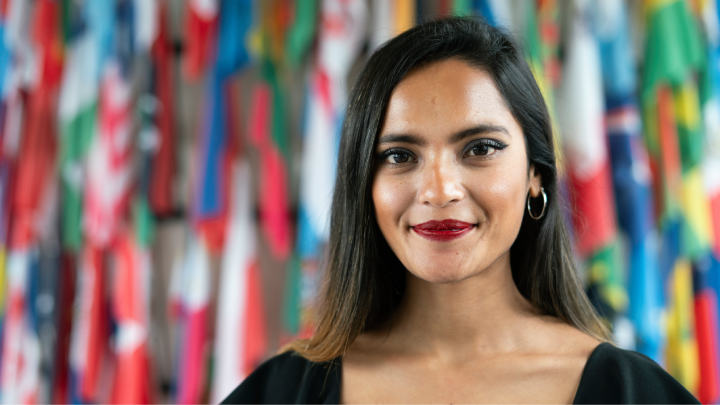
Noor, recently, the Rohingya Maìyafuìnor Collaborative Network has been running a social media campaign on Instagram, that’s been raising awareness about the November 2019 case that The Gambia filed against Myanmar, charging the nation with genocide against the Rohingya.
After a long wait, the case commenced on 12 January 2026, and its three weeks of hearings have just come to an end.
Can you tell us more about what the case involves? Why is it important for RMCN to ensure that more people are aware of it? And ultimately, what is hoped will be achieved?
This case is about accountability for genocide. The Tatmadaw’s so-called “clearance operations” involved mass killings, widespread rape, torture and the burning of entire Rohingya villages.
During the recent hearings, we’ve been sharing devastating survivor testimonies — including one where a man describes soldiers throwing Rohingya babies into fires. These are not isolated stories. They reflect a coordinated campaign of extermination.
Myanmar tried to argue that The Gambia had no standing to bring this case because it was a “non-injured state.” The ICJ rejected that argument.
This decision changed international law by confirming that any state party to the Genocide Convention can seek accountability.
That precedent later enabled other genocide cases globally — including Palestine. This pathway would not exist without years of advocacy by Rohingya survivors and human rights defenders pushing for accountability, not just for our people, but for all communities facing genocide.
At RMCN, we are raising awareness because most people still don’t know this case is happening. Justice only matters if the world is watching.
Ultimately, we hope this leads to accountability for perpetrators, protection for Rohingya still inside Myanmar and global recognition that what happened — and what is still happening — is genocide.
The Rohingya are a majority Muslim people from Rakhine State in the far northwest of Myanmar. After centuries of living alongside the Rakhine Buddhist majority in the state, communal tensions have been escalating over recent decades.
The news cycle in Australia turned to the plight of the Rohingya in mid-2015 because many were stranded in boats in the Andaman Sea, after being displaced by attacks upon their villages in Rakhine State in 2012.
Why has the situation in Rakhine become increasingly dangerous for your people over recent decades? And what is life like there now?
What we are witnessing is decades of systematic persecution: denial of citizenship, severe movement restrictions, segregation and state-backed hate campaigns.
Since 2012, Rohingya have been forced into camps and ghettos under apartheid-like conditions. Over the last few years, violence has escalated again.
The Arakan Army — an ethnic armed group seeking control of Rakhine State — has carried out recent genocidal violence against Rohingya civilians, including killings, forced displacement and village destruction.
At the same time, massive geopolitical interests are unfolding in Rakhine, including China’s Kyaukphyu deep-sea port project, which expanded during periods of intense violence.
Rohingya lives have been treated as disposable in the pursuit of military power and economic gain.
Today, Rohingya still inside Rakhine face starvation, arbitrary arrests, forced recruitment and attacks from both the Myanmar military and armed groups. Life there is defined by fear and survival.
The assault on the Rohingya people by the Tatmadaw in August 2017, saw around 700,000 Rohingya flee across the border into Bangladesh. Today, almost a decade later, these people continue to live in the world’s largest refugee camp, Kaptalung, in Cox’s Bazar, Bangladesh.
Kaptalung is a sprawling makeshift refugee camp that was not designed for permanency, but the Rohingya refugees have now been there for a long time.
You have been to Kaptalung. How is the camp nine years since it commenced? What is life like for the people there at present? And how do the people generally consider the prospect of continuing on there or returning to Rakhine?
I visited the camps again last year following global humanitarian funding cuts. Since then, over 6,500 learning centres have closed, affecting more than 500,000 Rohingya children.
Cox’s Bazar was never meant to be permanent, yet more than a million Rohingya have now lived there for close to nine years.
Families survive in fragile shelters vulnerable to fires and floods. Food rations are shrinking. Education is disappearing. Women face high risks of gender-based violence.
With no future in the camps, more women and children are making perilous journeys to Malaysia and Indonesia in search of safety and dignity.
Most Rohingya want to go home — but only with safety, citizenship and dignity. No one wants to return to persecution.
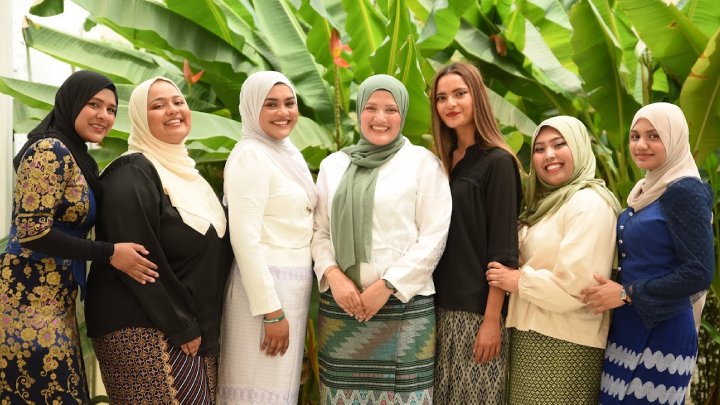
Your family arrived in Australia in 2003 and was granted asylum after fleeing violence in Myanmar. But it looks like some of the other members of the RMCN live in other parts of the world.
Can you tell us a bit about the Rohingya Maìyafuìnor Collaborative Network and what you’ve been trying to achieve with your recent social media campaign, and also, what is the group further out to achieve?
RMCN is an international feminist, refugee-led human rights organisation — Rohingya-led and women-led — made up of 15 Rohingya women genocide survivors working across multiple countries.
Our work centres survivor leadership, advocacy, education and narrative change.
Through our social media campaign, we are pushing back against the idea that Rohingya are simply “forgotten”. The truth is we are neglected — deliberately excluded from global attention and political solutions.
Visibility matters deeply. Many people still don’t even know the word “Rohingya”, or where Myanmar is, let alone understand that an active genocide is unfolding. That invisibility is dangerous.
When a people are unnamed, unseen and unheard, violence becomes easier to ignore.
We use social media to tell the truth about what is happening, to counter misinformation and to ensure Rohingya voices are present in international conversations about justice and accountability.
For us, this campaign is about more than awareness — it’s about humanising our people, breaking decades of silence, and demanding that the world recognises Rohingya lives as worthy of protection, dignity and justice.
Longer term, RMCN works to centre Rohingya women in policy spaces, support displaced communities, challenge harmful narratives and advocate for accountability and safe, dignified return with full rights.
We are building a future where survivors are not spoken about but are leading the conversation themselves.
And lastly, Noor, with the ICJ case now underway at The Hague, what is the outcome the Rohingya people are seeking at this point, in terms of the case and in terms of moving forward?
Right now, Rohingya people are waiting for the ICJ’s next announcement on provisional measures and the direction of the case.
Beyond the legal process, we are seeking accountability, protection for those still inside Myanmar, and the right to return home safely with citizenship and full rights.
We want the world to recognise our genocide, to hold perpetrators responsible and to stop treating Rohingya displacement as a permanent humanitarian problem instead of a political failure.
Moving forward means justice, sustained international pressure on Myanmar and long-term solutions that restore dignity to our people.
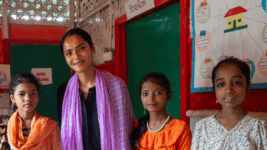
Main image: Rohingya Maìyafuìnor Collaborative Network member Noor Azizah with some Rohingya refugee children at the Kaptalung refugee camp in Cox’s Bazar, Bangladesh. They are standing in one of the camp’s threatened learning centres.

Paul Gregoire

Receive all of our articles weekly
Related Articles
 Rohingya Genocide Case Against Myanmar Continues in International Court
 Inside the World’s Largest Refugee Camp: Conversations With Rohingya Refugees
 Explaining the Rohingya Crisis: An Interview with the ARNO
 Myanmar Cuts Off Aid to Devastated Rohingya Populations
 Rohingya Muslims Face Humanitarian Crisis
 Post-Coup Myanmar Mobilises for Democracy. But There’s no Respite for the Rohingya