The Blanket Ban on Protests in NSW Has Been Lifted, But the Damage Has Been Done
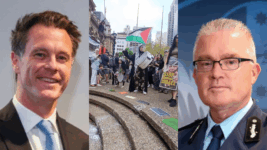
The public assembly restriction declaration (PARD) or the blanket ban on authorised protest marches that’s covered parts of Greater Sydney since 24 December 2025 was lifted on Tuesday, 17 February 2026, after being in place for eight weeks, as the NSW police commissioner Mal Lanyon found it no longer necessary. However, the right to protest has been seriously undermined in New South Wales.
“I made a decision that I would not extend the declaration and accordingly, the current declaration lapsed at 9:52 am this morning,” commissioner Lanyon told the press on Tuesday.
“Public assemblies will be continued under the Summary Offences Act. We will consider Form 1s that are submitted, work with organisers, and where we are concerned about public safety, take those matters to the Supreme Court as we have done previously.”
But the situation regarding protest in NSW does not remain the same as it had prior to the enactment and application of the PARD on Christmas Eve, as the state has shown that public protest is something that should be shut down at certain times due to safety concerns, and the NSW government has since sanctioned a police beating of politically inconvenient demonstrators.
The incident involving mass police brutality meted out against pro-Palestinians protesters, who legally assembled on Gadigal land at Sydney Town Hall on Monday evening, 9 February 2026, in order to protest the official visit of Israeli president Isaac Herzog, who was here to mourn with local Jewish people and build bilateral alliance, at a point when Israel is genociding the Palestinians of Gaza.
The bipartisan push to stamp out inconvenient protest commenced under a Coalition government in 2022 and that targeted climate defenders. The ongoing NSW Labor crackdown further restricting protest and in particular, the pro-Palestine movement, involves this Australian state attempting to deflect attention from the Israeli perpetrated Gaza genocide by eroding constituents’ rights.
The state has sent a message
Three thousand-odd NSW police officers attacked the crowd of 20,000 pro-Palestinian protesters, who’d assembled on Gadigal at Sydney Town Hall at 5.30 pm on 9 February to protest Herzog. The police brutality included charging horses and officers’ bodies into kettled in crowds, the use of shoving and wrestling, the casual use of fisticuffs and the liberal application of pepper spray.
Protesters mobilising for Palestine since the October 2023 beginning of the Gaza genocide, which has annihilated more than 70,000 Palestinians, have been demonised and othered in an ever-heightened manner by the local Israel lobby, and more drastically, by the NSW premier Chris Minns and Australian prime minister Anthony Albanese.
And while Minns’ descent into authoritarianism has been in keeping with his general approach to rights issues since he took the top office in March 2023, when it comes to Albanese, whose been in federal parliament since 1996, he’s distinctly turned his back upon the upholding of basic human rights for oppressed peoples: a position he once held.
Minns, NSW police minister Yasmin Catley and commissioner Lanyon had all warned protesters that they should not gather at Sydney Town Hall to protest a president charged by the UN with incitement to genocide. However, constituents did not know this meant excessive force applied to their bodies. And all three senior NSW officials have since repeatedly refused to condemn the police violence.
So, the NSW constiuency now understands that the state is willing to permit police officers to mete out excessive force on the public to contain nonviolent protesters, any officers partaking in such actions will be provided with impunity in doing so, the state will pick and choose which political issues it resists with the use of force, and that political expediency trumps the upholding of rights.
Stamping out a basic right
Human rights are not protected in NSW law, which includes the right to protest. This has become exceedingly apparent since April 2022, when the Perrottet government rolled out laws that ban unauthorised protests obstructing major roads, tunnels and bridges in Greater Sydney, Newcastle and Wollongong, as well as at major facilities, via threat of 2 years in prison and/or a $22,000 fine.
These laws then appeared to embolden state law enforcement to take a more forceful approach to unauthorised climate defence actions, which involved a raid on Dharug and Darkinjung land at a Colo property, prior to excessive force being applied to Blockade Australia protests in Sydney in June 2022 that involved arrests before and after the main actions, and even a raid on an activist picnic.
This antiprotest regime then saw the addition of places of worship protest restrictions rolled out in February 2025, under the guise of combating antisemitism or in actuality, attempting to stamp out mention of the Gaza genocide in the public sphere. This included an initial unconstitutional move on power that appeared to lead to a vicious police assault upon protester Hannah Thomas last year.
The PARD law made its way through parliament over 22 to 24 December 2025, when legislation was progressed in response to the ISIS inspired Bondi massacre that involved a mass shooting targeting a Jewish religious event. The law allows the police commissioner to blanket ban protest marches in certain areas of Greater Sydney for up to 90 days post an incident being declared an act of terrorism.
The right to protest is under attack
Lanyon has announced that the process contained in the Summary Offences Act is back on the table. It provides that NSW protest organisers submit a notice of intention to march, or a Form 1, with the NSW police commissioner, and if no opposition is raised to it, then demonstrators are understood to be allowed to march. However, authorisation doesn’t appear so certain anymore.
The police commissioner underscored that if the authorities are concerned about public safety, they are willing to challenge these protests. Over the years of the Minns government, attempts to challenge the right of specific protests to proceed and ruminations on how arrangements could be made to establish further protest restriction have become commonplace.
In the lead up to the official Herzog visit to this city, the NSW government declared the Israeli president’s tour a “major event”, which unleashed all pervasive policing powers to direct people to leave the major event zone. However, neither these extraordinary powers, nor the protest ban, made it illegal for tens of thousands of protesters to gather at Town Hall on the evening of 9 February.
The Herzog protesters continued to desire to march after their one-hour-long assembly had come to a close, and rather than facilitate these constituents in marching in violation of the protest ban but in line with preserving public safety, the NSW police decided to kettle the pro-Palestinians in on themselves, forcefully push them out of the area, or in many cases punching on with them.
And since the NSW government has repeatedly rubber stamped this method of dealing with a protest that the premier doesn’t approve of, all constituents have been put on notice that given the right set of circumstances, police officers will be ordered to apply excessive force to silence dissent, and if the force applied appears illegal, well, impunity can solve that situation.
Paul Gregoire

Receive all of our articles weekly
Related Articles
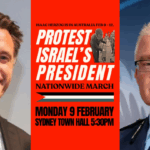 NSW Protest Ban Extended for Genocidal Israeli President’s Visit
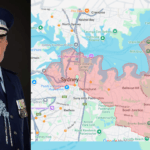 Police Commissioner Reduces Scope of Protest Ban Pending Court Appeal
 NSW Government’s Blanket Protest Ban: A Massive Gifting Away of Our Basic Rights for Xmas
 Sydney Rallies Against Trump’s Imperial Assault on Venezuela, Despite Protest Ban
 The Ban on “Authorised” Protest and Suppression of Political Dissent Continues in NSW
 NSW Police Commissioner Bans Protests, Suppressing Fundamental Democratic Rights