The Laws that Apply to Firearm Ownership in New South Wales
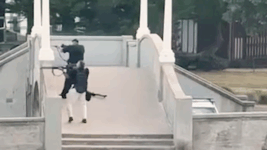
The appalling antisemitic mass shooting that killed 15 people on Gadigal land at Bondi Beach on Sunday, 14 December 2025, is to be deplored.
The heinous crime is being investigated as an act of terrorism and represents the deadliest mass shooting in Australia since the 1996 Port Arthur massacre. Of concern to many are reports that one of the alleged perpetrators – 50 year old Sajid Akram – was a licensed firearm owner with lawful ownership of six firearms, including at least one rapid-fire long arm firearm, in accordance with the National Firearms Agreement.
Mr Akram reportedly resided in the Western suburbs of Sydney. He was not a farm owner, nor does he appear to have had any other ‘good reason’ to own the said number or type of firearms; a situation that has reignited debate about firearm ownership laws in Australia.
The National Firearms Agreement
The 1996 National Firearms Agreement has long been hailed as putting an end to the rising Australian mass shootings of the 1980s and 1990s. Although the 2017 updated NFA has received less praise. The original was made by Australian police ministers in the immediate wake of the Tasmanian massacre that killed 35, and it required all jurisdictions to implement the gun control regime.
The two Bondi Beach gunmen were father and son. The now deceased father Sajid Akram, shot dead at the scene, was a licensed firearm owner.
NSW police commissioner Mal Lanyon has since told the press that Akram had been a licensed firearm holder for the past 10 years. The man, who lived on Dharug land in western Sydney, legally owned six firearms that were retrieved by NSW police at the scene of the mass murder.
New South Wales gun ownership laws are set out in the Firearms Act 1996 (NSW) and its accompanying Firearms Regulations 2017 (NSW). The Firearms Bill 1996 was passed in June that same year, and it accorded with the May 1996 released NFA.
PM Anthony Albanese and NSW premier Chris Minns have suggested tougher gun laws are needed.
Indeed, Gun Control Australia told Sydney Criminal Lawyers in August 2017, that the updated NFA released earlier that year had weakened the original and GCA’s audit of gun laws published two months later, noted how jurisdictions had been undermining the original over the two decades prior.
Gun ownership in NSW
The Firearms Act 1996 (NSW) contains a framework of strict firearm controls and licensing laws, which were said to reflect that gun ownership is a privilege in NSW, and not a right. These laws were also enacted to prioritise public safety. The legislation too contains numerous firearm offences related to breaches of these laws governing gun ownership in NSW.
In accordance with the NFA, the Firearms Act established a strict licensing and registration scheme, which requires individuals, clubs and dealers to apply for one of the various categories of gun license in NSW, which comprise of categories A, B, C, D or H, along the Firearms Dealer license and the Firearms Collectors licence.
An individual can apply to obtain a gun licence in NSW, if they are over 18 years of age and have not been convicted of a criminal offence for the 10 years prior or been the subject of an apprehended violence order over that period.
The NSW police commissioner must further consider an individual fit and proper, that they’ve completed sufficient firearm training and satisfied firearm storage requirements, along with ascertaining that they’re a legitimate resident of the state of NSW.
Category A gun ownership licences involve permission to own the least powerful rifles with a limited firing capacity, such as air rifles and shotguns. Category B is the next step up, while category D contains the most powerful firearms, with the greatest ownership restrictions imposed upon them, while category H licenses cover handguns and pistols.
Categories A and B apply to target shooting and recreational hunting, while people with an occupational requirement for a firearm hold a category C licence, which is what primary producers hold, and category D firearms are prohibited, except for use by the military, contract shooters and in vertebrate animal control.
The Firearms Act places no official cap on the number of guns a person can own under categories A, B and D. So, Akram held permits for his six separate firearms, although he had the capacity to own an unlimited number under the likely category B licence that he held.
Category C licensees are permitted to obtain one registered self-loading rimfire rifle and one registered shotgun, while category D licensees have a cap of three registered firearms when vertebrate pest control is involved.
Along with the one gun licence a firearm owner is required to possess in NSW, a licensee then needs to apply to the NSW police commissioner for a permit for every firearm they seek to obtain. Each firearm sold to a licensed gunowner in NSW must then be logged on the NSW Register of Firearms.
Strict laws also govern the storage of firearms in a residence, and these differ in respect of each category of firearm. Noncompliance with these requirements can see a licensee who fails to adequately store a category A and B firearm imprisoned for up to 2 years and/or fined $2,200, or if a category C, D or H firearm is not stored properly, 5 years prison and/or a $5,500 fine can apply.
Law enforcement officials are yet to confirm what sort of firearms Akram and his son Naveed used at the Bondi Beach massacre. ASPI (Australian Strategic Policy Institute) national security program director Dr John Coyne told The Age that among the firearms used during the Bondi Beach massacre were likely a bolt action high-powered rifle and shotguns.
The suggested lever-action and bolt-action firearms used by the Bondi Beach father and son mass murderers reveal that Sajid held a gun license permitting category B firearm ownership. The firearms available to these licensees are said to be used in sports shooting, hunting, pest control and farming.
Prohibited firearms
The 1996 NFA established a federal ban on “the importation of all semiautomatic self-loading and pump action longarms, and all parts, including magazines, for such firearms, included in licence category D, and control the importation of those firearms included in licence category C”.
Schedule 1 of the Firearms Act specifically prohibits a 17 item list of firearms or related parts that are prohibited in NSW, which include machine guns, submachine guns, Uberti or Armi-Jager brand firearms with a revolving ammunition cylinder, firearms silencers and firearms “made up in the form of a stylographic or propelling pen or pencil”.
Section 7 of the Firearms Act contains the offence of unauthorised possession or use of a pistol or prohibited firearm, unless authorised by licence or permit, and it carries up to 14 years prison, while section 7A holds the offence of unauthorised possession or use of a firearm in general, which carries 5 years.
A general weakening of restrictions
After the 2014 Lindt Café siege in Sydney, the Turnbull government determined to review the NFA, and the updated version was quietly released in 2017. In fact, its release was unannounced and the document was simply posted to the Attorney General’s Department website.
Then Greens Senator Lee Rhiannon warned that the updated version of the NFA watered gun restrictions down and paved the way for the importation of the Adler A110 lever action shotgun, which carries seven shots in the magazine and one in the chamber, instead of the regular five. Post the updated NFA release, the Adler A110 has been available for category D licensees.
Then Gun Control Australia chair Sam Lee told SCL in 2017 that the updated version of the NFA “failed to address the emerging problem of the modification of firearms by the extending of a firearm’s magazine,” and she further explained that lever action shotguns were being raised from category A to category B because technology had improved over the two decades since the first NFA.
“Almost 30 years after Port Arthur, there are more guns in Australia than ever before, and the Howard government’s landmark National Firearms Agreement is falling short of its stated aims,” the Australian Institute set out in a May 2025 report. “There is no National Firearms Register and minors can use firearms in every state. Eight OECD countries have lower gun homicide rates than Australia.”
The report outlines that as of May this year, there were “over four million registered, privately-owned firearms in Australia, and nearly one million firearm licences”. The Australia Institute further outlined that there is at least one registered gun for every seven Australians, and NSW had the most guns, with 1,125,553 registered.
So, while it is safe to say that the Akrams would have had the potential to be more destructive under the laws governing guns prior to the current 1996 established firearm regime now operating in NSW, it too appears that over the three decades since NFA rollout, the state gun lobby has applied enough pressure to weaken it to the point that cold-blooded killing is much easier right now.

Paul Gregoire


Ugur Nedim
Receive all of our articles weekly
Related Articles
 Firearm Offences that Apply to Mass Shootings in New South Wales
 Firearms in Australia: The Tension Between Ownership and Control
 The Ease With Which Criminals Acquire Firearms Renews Calls for Additional Safeguards
 The Massacres That Led to Tighter Gun Control in Australia
 Horrific Australian Crimes: Massacres, Serial Killings and Persistent Child Sexual Assault
 Sovereign Citizens: A Burgeoning Breed of Domestic Terrorist