UN Demands Australia Halts Its Intensification of the Funnelling of First Nations Kids into Prisons
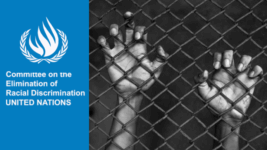
Recent years have seen multiple Australian jurisdictions pass laws that ultimately target First Nations children to ensure more end up in prison and remain there longer. This flies under the radar, as the term “youth justice reform” is colourblind. However, the UN has cottoned on to Australia’s racially charged, long-term and intensifying practice of targeting Indigenous kids and it’s ordered it to stop.
The United Nations Committee on the Elimination of Racial Discrimination (CERD) issued a statement on the Overrepresentation of Indigenous Children in Australia’s Criminal Justice System on 5 May 2026, under its early warning and urgent actions procedures, calling on Australia to stop its system of funnelling Indigenous kids into child prisons, including the “institutional and systemic dimensions”.
The overincarceration of Aboriginal and Torres Strait Islander children is a long-term practice but its intensified recently. The Queensland Palaszczuk government hinted it was coming in 2023, the New South Wales Minns Labor government clearly put it on the agenda with legislative reforms in early 2024, and this was mimicked by Victoria later that year.
However, it was the late 2024 incoming Northern Territory Finocchiaro ministry and the Queensland Crisafulli government that really went hog-wild in drafting laws to punish Aboriginal children.
Much of Middle Australia is unaware this is happening, as the mainstream reports on single jurisdictions cracking down on “rising youth crime”. But the CERD is currently on Canberra’s case on this issue, due to academics Professor Megan Davis and Associate Professor Hannah McGlade, with assistance from the Human Right Law Centre, having lodged an April 2025 complaint.
The other aspect to this issue is that despite a UN body calling out the institutional racism involved in this nationwide practice of disproportionately imprisoning kids based on race, is that these jurisdictions consider their laws are bearing fruit in the form of First Nations kids on prison beds, and ministers will simply dismiss calls to end these inhumane practices as a headache that will soon pass.
A secret country
The CERD released its early warning and urgent response statement last week following its having received the Davis/McGlade complaint and then issuing its own statement to the Australian state about what the issues identified in this country are in regard to Indigenous kids, and the Australia government responded last November, only missing its deadline by three months.
The UN body quoted 2023-2024 statistics, which included 65 percent of kids between 10 and 17 in gaol over that time being First Nations children, which is despite their only accounting for 6.5 percent of the overall population in that age bracket. In terms of kids being locked up between 10 and 13, First Nations children were 46 times more likely to be detained than non-Indigenous children.
“Indigenous children in custody suffer from long-term adverse impacts, including on their health and well-being, due to extensive trauma, cruel, inhuman and degrading treatment, particularly owing to the use of solitary confinement and not separating children from adults in detention places, and the exclusion from their society, community and culture,” explained the CERD.
The overrepresentation of Aboriginal and Torres Strait Islander children in prisons is due to “systemic and structural racial discrimination”, meaning that Australian police officers target Indigenous kids, whilst legislative frameworks are designed to detain Indigenous youth on remand and after sentencing, and as per the above figures, the extremely low age of criminal responsibility aids this.
The CERD then addresses the fact that despite obligations and programs, such as Closing the Gap, being in place, the government is doing nothing to address the locking up of one targeted race of children, and instead, states and territories are legislating tougher laws and even reintroducing spit hoods for kids in detention.
The states at play
NSW premier Chris Minns launched a crackdown on regional youth crime in March 2024, commenting he wouldn’t be raising the age of criminal responsibility from 10, but rather, he would be passing a law ensuring 14- to 17-year-olds committing motor theft and break and enter crimes while on bail would be remanded, and 88 percent captured by the laws were Aboriginal teens.
Victoria took this as a cue to revoke its move towards raising the age of criminal responsibility in a staggered manner from 10 to 14, and instead it would remain at where it then sat at 12. This was accompanied by a stricter bail regime for youths passed in August, and by March 2025, there had already been a 300 percent rise in the number of Aboriginal kids on remand.
But then major crackdowns on Indigenous youth came in the form of the election of the Finocchiaro Country Liberal ministry in the Northern Territory in August 2024, followed by the Crisafulli Liberal Nationals government in Queensland two months later.
The NT Finocchiaro government immediately set about cracking down on the entire First Nations population with five law-and-order bills on its second sitting day in office. And it has since lowered the age of criminal responsibility back down to 10 from 12, it’s imposed a stricter bail regime for youths, has reinstated spit hoods for children and removed a law that deterred imprisoning kids.
For years now in the Northern Territory, Indigenous children usually account for more than 90 percent of the number of children in prison.
The Crisafulli government then took the nation into the colonial twilight zone, when it implemented its key policy in late 2024. Known as “adult crime, adult time”, it means that children who commit serious crimes face adult sentences. So, it is possible for a 10-year-old in Queensland to be facing life imprisonment. This policy began with 12 offences, but after two expansions, it now covers 45.
Spitting into the wind
The CERD said in its 5 May released findings on how Australia is operating its criminal justice system in relation to the children of First Peoples that it is gravely concerned with the structural racial discrimination that tends towards First Nations children not being part of the broader social system, while law enforcement racially profiles and overpolices them, and then throws them in gaol.
The UN body welcomes established programs to promote lowering prison rates of Indigenous kids, however it found a lack of information about how any of these initiatives are progressing.
The statement further notes that the UN Special Rapporteur on torture and other cruel, inhuman or degrading treatment and the Special Rapporteur on the rights of Indigenous Peoples provided a report to Australia last year, that outlined Indigenous children are being disproportionately incarcerated and are then subjected to harm, like solitary confinement and corporal punishment.
The CERD is calling on Australia “to intensify and accelerate its efforts to eliminate racial discrimination against Indigenous children, including its institutional and systemic dimensions, in the administration of criminal justice and to address the persistent overrepresentation of Indigenous children in the criminal justice system.”
These reforms should include revoking laws that aren’t human rights compliant in terms of discriminating against Indigenous children, and to further ensure that such laws stop being passed. And the statement further underscores that the age of criminal responsibility urgently needs raising, whilst noncustodial alternatives to locking up these kids needs to be prioritised and guaranteed.
The CERD further asks our government to provide detailed information on measures taken in response of its early warning and urgent actions statement, along with the impacts these have had on concerns raised, and it has suggested this be detailed within the responses our nation provides to the UN bodies 21st and 22nd periodic reports, which have been overdue since October 2020.

Paul Gregoire

Receive all of our articles weekly
Related Articles
 Second First Nations Youth Death in Custody in WA in Less Than a Year
 NSW Government Targets First Nations Youth Through Toughened Bail Regime
 First Nations Youth Suicide: Our Nation’s Shame
 New South Wales Launches Yet Another Crackdown on Youth Crime
 “A Kick in the Guts”: Higginson on Minn’s “Retrograde” Crackdown on Youth Crime
 Youth Crime: Prevention and Diversion Produce Better Outcomes than Punitive Measures