Aboriginal Death in Custody Occurs at Nation’s Largest Prison, as the Crisis Continues
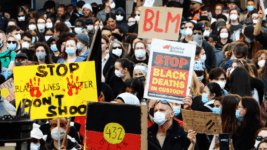
A 21-year-old First Nations man died in prison custody on Gumbaynggirr Country on 15 July 2026, whilst detained in Australia’s largest prison, Clarence Correctional Centre, located close by the New South Wales Northern Rivers town of Grafton.
Privately-run by the notorious British multinational Serco, the Clarence facility has not released any further details about this latest Aboriginal custody death, but it’s referred the incident to the NSW Coroners Court as per protocol.
This death comes amidst a crisis in Aboriginal deaths in custody. Thirty-three Aboriginal and/or Torres Strait Islander people died in police or corrections custody over the last financial year, according to the Deaths in Custody in Australia 2024-25 report, which is the largest number of deaths since records commenced being collected in 1979-80.
The 12 months to June 2025 also marked the highest number of Aboriginal deaths in custody in New South Wales. This amounted to 12 First Peoples dying in custody. This too occurred as the NSW Minns government currently lords it over the largest prisoner population ever in this state’s history, which includes the highest number of First Nations people ever held inside.
Prisoner numbers had been rising over 2025, but it was the March 2026 quarter custody figure report released in May, which found that numbers had hit a record high of 14,070 inmates.
This included the most Aboriginal individuals ever locked up together in NSW, that being 4,834, which means that First Peoples account for 34 percent of the NSW prisoner population, whilst only making up 3.7 percent of the entire state populace.
On releasing the March 2026 figures, the NSW Bureau of Crime Statistics and Research (BOCSAR) further explained that the “extraordinarily sharp rise” in prison numbers occurred over the four months of summer, and rather than any surge in crime rates, what occurred was a distinct rise in policing activity, with more determination to arrest and charge people and then deny them bail.
Rising numbers, rising risks
“We are in the midst of a deaths in custody crisis,” the Aboriginal Legal Service NSW/ACT made certain late last week. “A record number of Aboriginal people died in custody across NSW last year, and we’re on track to repeat that shameful record this year – if not break it.”
“The blame for this crisis must be placed firmly on the Minns government,” the legal service added in a statement. “This government is presiding over the highest Aboriginal imprisonment in NSW history. Prisons are full, the system is on the brink of collapse, and we are terrified about the consequences for our clients.”
The ALS had already warned in February 2025 that a greater number of First Peoples were being locked up than ever before. And this “new record for imprisoning Aboriginal people”, the legal service further insisted, created an “unprecedented risk of death in custody” and on release of the 2024-25 custody deaths report, these fears were confirmed.
The service further stressed last week that one out of every 23 First Nations men living in the state of NSW is currently incarcerated in the local prison system. Since the 1 January 2026, 21 Aboriginal and/or Torres Strait Islander individuals have died in the custody of police or corrections, and the ALS further cautions that this year is on track to match, and perhaps top, last year’s record numbers.
The largest correctional facility
The Clarence Correctional Centre was built by the Northern Pathways consortium over 2017 to 2020. Clarence had been one of three privately run prisons in this state, however by October this year, it will be the only one as Junee prison has been returned to Corrective Services NSW administration and this too will happen to the Parklea prison facility later this year.
Released in April, the NSW Inspector of Custodial Services report on the Clarence Correctional Centre 2024 found that its 2023/24 data shows that the facility produced “poor outcomes against a number of indicators including assaults, noncompliant incident reports and illicit drug use”. The report found there have been three deaths in custody at Clarence, which are thought to have been suicides.
The recently released inquest into the death of 29-year-old Dictor Dongrin at the Clarence facility condemned the centre for having neglected to check on the man for 21 hours, after he’d arrived at the prison in a heavily intoxicated state, and he was found to have died in his cell due to “cardiac arrhythmia in a state of alcohol withdrawal”.
The Inspector of Custodial Services further found that there had been a rapid spike in the remandee population at Clarence, which was a facility that was supposed to hold only a small number of remandees. Remandees are people charged over crimes who have been denied bail and are awaiting their trialling and sentencing whilst they are incarcerated.
The report underscores that rising remand numbers have led to a more volatile environment, as remandee populations are less settled than those of the convicted. This unsentenced population has been blamed for the “higher levels of assault, increased drug use, pressure on health services at the centre”, along with a lack of legal resources, professional visits and unmet welfare needs.
“A measure of success”
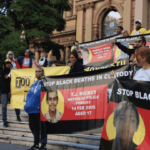
A rally marking the 10 year anniversary of the death in custody of Dunghutti man David Dungay Junior was held on Gadigal land in Sydney’s Hyde Park in January. Organiser Paul Silva, Dungay’s nephew, told the crowd that Aboriginal deaths in custody are one of the key ways in which the Australian state is continuing its attempt to “wipe First Nations people off the face of the Earth”.
UTS Jumbunna Institute Associate Professor Padraic Gibson told the same crowd that the Minns government is “presiding over the highest number of Aboriginal people behind bars in the history of this state”. And he added that the “prisons are bursting” because the government has passed specific laws that result in many who are arrested being bail refused.
While NSW Greens MLC Sue Higginson asserted that NSW premier Chris Minns has literally been “priding himself on the number of First Nations people getting thrown in bars across this whole state every day”, adding that he takes it as “a measure of success”. Higginson was one of the main opponents of 2024 laws specifically targeting First Nations youths aged 14 to 17 for bail refusal.
Creeping accountability
But a major shift in terms of the crisis in Aboriginal deaths in custody did eventuate towards the end of last year in this state, and that was that the first ever NSW police officer was convicted in relation to a First Nations custody death. And in truth, this is likely the first time ever any Australian police or prison officer has been held to account in terms of a custody death.
NSW police sergeant Benedict Bryant was convicted over the death in custody of dangerous driving causing death. NSW state coroner Teresa O’Sullivan brought the coronial inquiry into 16-year-old Wright’s death to an end early, considering that the case should be sent to the NSW Director of Public Prosecutions for potential charging.
Bryant received a 2 year intensive correction order (ICO), which means he gets to serve his time at home. But his conviction did cause much shock in the public sphere, which included disbelief that an officer was actually being held to account for the death of a First Nations person, along with an equal measure of incredulity around this only being the first time such a conviction has occurred.

Paul Gregoire

Receive all of our articles weekly
Related Articles
 The Crisis in Aboriginal Deaths in Custody Continues at Record Levels
 Recent Aboriginal Deaths in Custody Highlight Surging Crisis
 The Australian System Is Designed to Deny Accountability for Aboriginal Deaths in Custody
 Still No Justice for Aboriginal Deaths in Custody 35 Years After Royal Commission
 Rally Against Aboriginal Deaths in Custody, as NSW Reaches Deplorable Record
 Lethal Prejudice: First Nations Deaths in Custody Continue, Despite Royal Commission