Still No Justice for Aboriginal Deaths in Custody 35 Years After Royal Commission
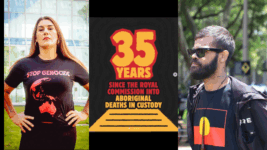
Wednesday, 15 April 2026, marked 35 years since the Royal Commission into Aboriginal Deaths in Custody handed down its 339 recommendations on how to curb the crisis. Yet, all these years on, and it’s only worsening with 630 First Peoples having died in the custody of police or corrections since the final report was released, and the 12 months of 2024-25 were the worst year on record.
The Deaths in Custody in Australia 2024-25 report revealed 33 Aboriginal and/or Torres Strait Islander people had died in police or corrections custody, which was the highest number since 1979, when records started being kept. The state of New South Wales also recorded its highest number of First Nations deaths in custody over that same year, which involved the deaths of 12 individuals.
Numerous coronial inquiries into First Peoples dying in custody reveal that these fatalities are caused by either neglect or straightout abuse. But despite this long list of deaths involving suspicious circumstances only one police officer has ever been convicted in relation to an Aboriginal custody death, whilst no prison guard has ever been. And only a handful of any officers have ever stood trial.
The Royal Commission is still of grave significance as its 339 recommendations were so comprehensive and to move past them is difficult because most have never been implemented.
Senator Lidia Thorpe points out that this is no accident but it’s “a political choice”. Take recommendation 165, for instance, as it advocates for the removal of hanging points in cells, yet inmates continue to successfully use identified points that remain.
Thorpe, a Gunnai, Gunditjmara and Djab Wurrung senator, further pointed out on Wednesday that despite decades passing and the crisis only worsening, Australian prime minister Anthony Albanese has refused to meet with some of the relatives of the 99 Aboriginal persons whose custody deaths the inquiry investigated, as they want to raise the lack of progress on this continuing crisis.
Political decisions, tangible fatalities
“Thirty five years after the Royal Commission, our people are dying at the highest rates on record, and the prime minister is refusing to even meet with the families. That tells you everything you need to know about this government’s priorities,” Thorpe said on Wednesday.
“The vast majority of those 339 lifesaving recommendations have not been properly implemented. That is not an accident, it is a political choice.”
Thorpe further explained in her 15 April 2026 statement that almost half of First Peoples dying in custody at present are on remand, which means individuals are losing their lives whilst detained on charges they had not been and may never have been found guilty in relation to. And she added the new laws being enacted nationwide that involve a presumption against bail “are killing our people”.
The senator too claims that “governments know” that tougher bail is leading to First Peoples dying in custody, but the major parties are passing them anyway.
A few years ago, this claim by Thorpe would have been more controversial, but when coupling stricter bail laws with the plethora of other criminal laws recently passed that target Indigenous youth, along with major party attitudes towards the Gaza genocide, her claim certainly flies now.
“The prime minister refuses to meet with grieving families who have been waiting 35 years for action. Albanese refuses to show leadership and refuses to use the powers he has to stop these deaths” Thorpe continued. “Ending deaths in custody is not complicated. We know exactly what needs to be done. The solutions have been there for 35 years.”
“What’s missing is the political will to stop our people being killed.”
The devastation of families
Dunghutti man Paul Silva made a statement online regarding it being 35 years since the handing down of “a roadmap, 339 recommendations that were meant to save lives but instead were watered down or never properly implemented”. And he set out, that “today, people are still dying in custody, people are still murdered”, and he added that this is not something in the past, as it’s happening now.
Silva is the nephew of Dughutti man David Dungay Junior who was killed by five specialist prison guards in the hospital ward of Long Bay Gaol in late 2015, because the diabetic refused to stop eating biscuits. Dungay cried out that he could not breathe over and over, but the guards persisted.
Aboriginal inmates suffer systematic racism in the criminal justice system, including in correctional centres, which is leading to their pronounced deaths.
The Dungays fought for justice for their loved one, but footage of five specialist guards holding him down in the prone position, whilst he insisted he couldn’t breathe, along with the findings of the coronial inquest, only resulted in an official apology from Corrective Services NSW for “organisational failures”. And all other determined attempts to see justice brought were officially refused.
Silva and Elizabeth Jarrett, a Gumbaynggirr, Dunghutti and Bundjalung woman, continue to support Aboriginal families who have lost someone to a death in custody by attending the coronial inquests with them. Silva, a 26-year-old member of the Blak Caucus, spoke on Wednesday of the “pain, anger and exhaustion” that these families have to go through as a result of these inquiries.
“The work is not easy, and it takes a toll,” Silva made clear, “but we do what we do because we have to: because our people deserve to live, because our people deserve justice and our people deserve to be protected on land that is ours.”
“To the families that lost a loved one in custody. I stand with you today and every day,” Silva continued. “Your voice matters, your fight matters, your family matters, your loved one matters, and I will continue to walk beside you to ensure that your family’s loved one does not go in vain.”
Targeting Indigenous kids
NATSILS (the National Aboriginal and Torres Strait Islander Legal Service) presented PM Albanese with an open letter undersigned by over 200 civil society organisations last week, calling on the Labor leader to hold “a national emergency summit on youth justice”, which would be a First Nations community-controlled meeting of experts to discuss the crisis in criminalising Indigenous children.
“Right now, there are more Aboriginal and Torres Strait Islander people in prison than ever before.
From coast to coast across our lands, Aboriginal and Torres Strait Islander children are being criminalised and imprisoned at alarming rates,” the open letter to Albanese reads.
“This is happening because state and territory governments are more concerned with political point-scoring than evidence-based reforms.”
Uncle Wayne “Coco” Wharton explained at the 14 February 2025 rally to mark 21 years since 17-year-old Gomeroi boy TJ Hickey died in police custody on Gadigal land in the Sydney suburb of Waterloo, that it’s state policy to attack First Nations kids, to break their will, that of their families and the wider community. The Kooma man added it was “no different to what’s playing out in Gaza”.
The Minns government passed laws to crack down on Aboriginal youth in March 2024, this was followed by the Victorian government tightening youth bail in August. But it was the coming of the Finocchiaro government in the Northern Territory and the Crisafulli government in Queensland that same year that really resulted in some extreme and abhorrent laws to punish Indigenous kids.
Yet, despite Thorpe continuing to call on Albanese to intervene at the national level to ensure minimum standards for kiddie prisons and the treatment of child inmates, the PM continues to feign powerless to do anything from the federal jurisdiction, when the Justice and Equity Centre released the expert advice of barristers last year, stipulating that the federal government could intervene.
The Gunnai, Gunditjmara and Djab Wurrung senator has even produced a plan to guide the PM in how he might carry out such a national justice overhaul, which would include a national oversight body, a framework of penalties for state and territories that continue to criminalise First Peoples, especially youth, along with legislated national minimum standards for child prisons and bail reform.
“The Commonwealth cannot keep hiding behind the states and territories. The Albanese government has the power to legislate national minimum standards, to attach conditions to funding, and to force change, but Albanese refuses,” Thorpe made clear on 15 April.
“At this point, after 35 years, we need to get back on the streets, start shutting down cities, and demand that these deaths are stopped,” the senator added in conclusion. “Every day of delay will mean more deaths, and those deaths will be on Albanese’s hands.”
Paul Gregoire

Receive all of our articles weekly
Related Articles
 Black Deaths in Custody Continue Decades After the Royal Commission
 Death in Custody Protesters Vow to Take to the Streets on Invasion Day
 NSW Police Officer Charged Over Jai Kalani Wright’s Death in Custody
 Another Teen Death in Custody, Despite 30-Year-Old First Nations Advice to Parliament
 Still No Justice for David Dungay: Family Rallies at Long Bay Eight Years On
  Six Years on, Still No Justice for David Dungay Jnr, Says Dunghutti Activist Paul Silva