NSW Extends Its Youth Bail Crackdown, Despite Claims of Rising Youth Crime Being a Fallacy
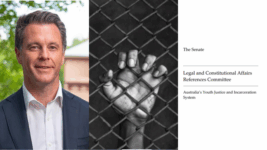
The Minns government announced on 15 September 2026, that it’s extending its 2024 established youth bail crackdown in regional New South Wales, which targets 14- to 17-year-olds for bail refusal if they’ve been charged with a serious motor theft or break and enter crimes, and they’re on conditional release for one of these specific crimes, because it results in more minors in gaol.
The Justice Legislation Amendment (Miscellaneous) Bill (No 2) 2026, which was introduced on 15 September, is an omnibus bill containing the amendment to section 22C of the Bail Act 2013 (NSW), which would extend the regime from sunsetting currently on 1 October 2026, so that it is extended until 4 April 2028, which will mean the law will have been in operation for four years on ending.
The Aboriginal Legal Service NSW/ACT has called out the extension of the bail regime, deeming it discriminatory, as it targets First Nations youth, and that it “will only entrench them in a cycle of crime and disadvantage”. And after less than year in operation, the ALS confirmed that over 80 percent of alleged youth offenders had been refused bail, with 90 percent of them being Aboriginal.
The Minns government announced the youth justice crackdown in March 2024, and it was followed by similar severe youth crime measures being rolled out in Victoria, the Northern Territory and Queensland that same year. However, a federal parliament inquiry report just last week asserted that the so-called youth crime crisis, that these laws are predicated upon, is basically a fallacy.
The extension of the youth bail law for a second time is in keeping with a general shift across the nation to targeting youth crime, with a particular focus on Indigenous kids, and whilst the federal youth justice and incarceration inquiry has called for the implementation of national youth justice standards, there is a general trend towards tough on crime lawmaking and beefed-up policing.
Bail refusal, tailored programs, drones
The Minns government 15 September presser explains that it had always sought to extend the law until 2028. It highlights that it “requires a judge to have a high degree of confidence the accused will not offend while on bail”, prior to granting it. Section 22C also stipulates that “to avoid doubt, the requirement under this section to establish that bail should be refused” is up to the prosecution.
A statutory review of the law was tabled in parliament that same day, and it recommended extending the section 22C law, as youth crime rates have stabilised in regional NSW. The report further sets out that the commission of the specific crimes has dropped as well. And the review also recommends extending the law to accompany “a voluntary diversion pilot in Tamworth”.
The pilot is set to be rolled out on Gomeroi Country in Tamworth in early 2027 and is supported by $8.4 million in the 2026-27 Budget. This will comprise of a “wraparound support to children between the ages of 8 and 13 with complex needs who are engaged in, or at risk of engaging in concerning or high-risk behaviour”. A second pilot program is set to be announced in the coming weeks.
When the section 22C law was unveiled in early 2024, it was accompanied by a $26.2 million youth justice “early intervention and prevention program” for the NSW town of Moree, also on Gomeroi Country. Almost two years after the program roll out, the NSW police then tested drone surveillance policing in Moree as well, with the suggestion being they’re mainly deployed to Aboriginal areas.
The Minns government then announced late last month that it is extending the six-month drone trial in Moree for another two years, and it further suggested that it will be rolled out to other regional areas as well. And with the new focus on Tamworth for the diversion program, perhaps that will be the next regional area that NSW police subjects to harassment from the sky.
The rising youth crime fallacy
The Legal and Constitutional Affairs References Committee final report on Australia’s Youth Justice and Incarceration System was released on 18 September 2026. It arrives after two and a half years of mounting youth crime laws in all four aforementioned jurisdictions, with steps being taken in the Northern Territory, having appeared alongside a general government turn against First Peoples.
The committee heard that various media outlets have been pushing the youth crime crisis narrative. However, over that same period as the laws were being rolled out, there has been a 5 percent decrease on crime on the year prior, which is in line with a general decrease in youth crime right across the continent over the past 15 years.
The first recommendation made by the committee is that the Australian attorney general work with state and territory counterparts establish national youth justice minimum standards. And it then sets out that all the authorities should get together and collaborate with the nation’s chief lawmaker on how the Australian youth prison system should be reformed.
The measures that the parliamentary committee suggest ought to feature is any established minimum standards include the minimum age of criminal responsibility set at 14 years old, that detention or imprisonment of a child be a measure of last resort and a prohibition on harmful practices, like the use of spit hoods, solitary confinement and detaining of youths in adult prisons.
Further standards that one might expect would already exist in Australian child prisons that have been recommended are access to health, education and other supports, systems that promote continued connection with community and culture whilst in detention and that youth justice officers have adequate training.
The report also recommends the implementation of the OPCAT system, which is a UN based preventive prison inspection regime that serves to uphold human rights. Australia moved to implement the OPCAT in the wake of 2016 Don Dale child prison abuse revelations. However, the nation simply toyed with implementing OPCAT and then ran its inspectors out of the country.
Prime minister Anthony Albanese has repeatedly knocked down Senator Lidia Thorpe’s suggestions that his government intervene to establish minimum prison standards for kids, in light of this shift by the states towards the mass incarceration of youths. The PM has insisted that the federal government has no power to interfere in state law-and-order issues.
However, legal advice from senior barristers sought by NATSILS (National Aboriginal and Torres Strait Islander Legal Service) last year revealed that the external affairs power contained in section 51(xxix) of the Australian Constitution empowers Canberra to intervene in state and territory matters.
Producing recidivist inmates
“There is clear evidence the premier’s legislation is having a discriminatory effect: 80 percent of children imprisoned under the laws he introduced in 2024 are Aboriginal,” said Shariff Deen, acting CEO of the Aboriginal Legal Service. “Because of failed NSW youth justice policy… the vast majority of children in NSW gaols have not had their day in court or been found guilty of a crime.”
“Why does the premier think it’s okay for gaols to be full of unsentenced Aboriginal kids?” the lawyer further questioned.
The latest NSW Bureau of Crime Statistics and Research (BOCSAR) figures show that in June 2026, the NSW child prison system contained 208 youth inmates. And of these, 107 were First Nations youths, meaning they make up 51 percent of the NSW child prisoner population, whilst Indigenous young people only account for 8 percent of the overall NSW populace aged between the ages 10 and 17.
Of those 107 Indigenous kids who were locked up midyear, 77 of them were on remand, which means they were yet to have been found guilty or were yet to be sentenced. This means that these youths may be released at the time a verdict is progressed or sentencing takes place.
Indeed, data from the NSW Children’s Court finds 92 percent of child remandees are not sentenced to time in prison, after spending time in detention on remand. Yet, it’s readily understood that if an individual does spend time in prison, they’re more likely to return to it, regardless of whether they were ultimately convicted or sentenced to time in a child prison.
“The premier knows that gaoling children just increases the likelihood they will go on to reoffend,” Deen made certain. “It’s clear he is more concerned with perceived political point-scoring than with what actually works to make the community safer – which is investing in community services that address the root causes of crime.”
“State and territory leaders are in an appalling race to the bottom, and this is yet another example,” the lawyer added, in terms of the multijurisdictional process that continues.
“It’s time for the prime minister to step up and show national leadership.”
Image: Chris Minns by NSW state is licensed under CC BY 4.0. Children’s hand from Shutterstock. Inquiry title in the public domain

Paul Gregoire

Receive all of our articles weekly
Related Articles
 False Reports to Triple-Zero Putting Lives at Risk
 Punishing Asylum Seekers: An Interview With Refugee Action Coalition’s Ian Rintoul
 Beijing Imposes Draconian Laws to Stamp Out Dissent in Hong Kong
 “Frankly Fed Up” With Unjust Drug Driving Laws, Says Legalise Cannabis’ Bernard Bradley
 Students from Prestigious Sydney School Suspected of Animal Cruelty
 Action for Public Housing’s Rachel Evans Explains the Growing Support for Save Waterloo Encampment