“Bad Faith Lawmaking” in the NT: Justice Not Jails on the CLP Crackdown on Indigenous Youth
Since taking power in the Northern Territory in August 2024, the Country Liberal Finocchiaro government has been progressing a law-and-order drive, with a focus on youth crime. And this drive, which started at apace, has only been accelerating. And to label its primary objective as “youth crime” obscures the targeted approach these policies take to First Nations children.
The NT has the largest percentage of its populace being made up of First Peoples on the continent. This comprises 26 percent of the overall populace. And how this translates in terms of incarceration under the Country Liberal Party (CLP) is that 88 percent of the adult prisoner population is Indigenous, whilst in NT child prisons, 92 percent of the kids inside are First Nations youths.
The Territory is currently imprisoning 1 percent of its population, which is to the point that if the NT was a country, its prison rate would be number two globally. The Australian jurisdiction comes in second only to chief incarcerator El Salvador.
The CLP conducted four rounds of tough-on-youth-crime reforms over 2024 and 2025, and it has continued on with this process into the current year. So-called reforms have included tougher bail laws, lowering the age of criminal responsibility from 12 to 10, and the reinstatement of spit hood use on youths at police stations and child prisons.
But the CLP took this crackdown on Indigenous youth one step further in 2026, when it removed the Aboriginal Child Placement Principle from the laws governing the forcible removal of Aboriginal children in the Territory, which opens up the prospect of another Stolen Generations.
Justice Not Jails is a community-led organisation that formed on Larrakia Country in early 2025, in response to NT premier Lia Finocchiaro’s law-and-order drive. Sydney Criminal Lawyers spoke to Justice Not Jails Jonothan McDonald, a Nhanta Yamatji and Balanyu man, who works in youth services on the ground, along with academic Stephen Enciso.
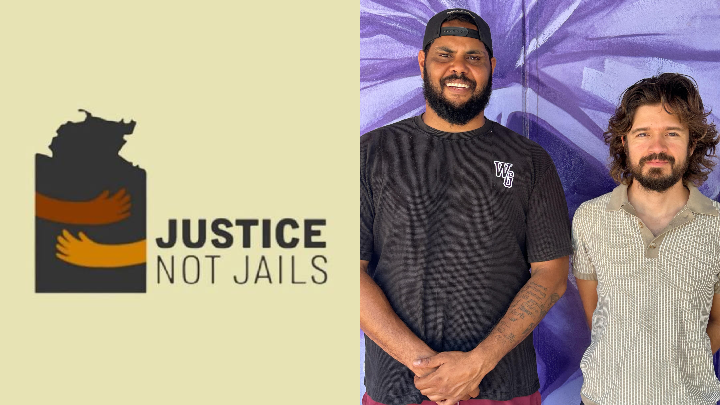
Jonathon and Stephen, the NT Finocchiaro government is continuing its law-and-order drive into its third year in office in the Territory. Much of this crackdown has focused on youth crime, and in particular, its targeted First Nations children.
But July this year saw the Country Liberal Party (CLP) take its overhaul in administrating the Northern Territory to a whole new level, when it removed the Aboriginal Child Placement Principle from the laws governing care and protection in the jurisdiction.
The principle aims to ensure that Indigenous children who are removed from their families are then placed with relatives or kin, with the suggestion to place a child with non-Indigenous peoples being of last resort.
So, how has the removal of the Aboriginal Child Placement Principle been taken by the community? And what will it mean going into the future?
McDonald: As an Indigenous person who has grown up around Darwin, I have relatives who are in care, both nieces and nephews, and I know many other people whose children are in care. We have conversed quite a lot about what’s occurring.
We look at the move as essentially going to cause another Stolen Generations with the First Nations people in the Territory. I also look at it as the targeted demonisation of Indigenous people as well.
This is happening by the telling of this story, this narrative, that young people are often unsafe when they are with their family, or when they are in culture, or when they’re connected to Country and people.
This is targeted demonisation and dehumanisation of Indigenous people, and this takes place by the way the story is told.
Also, this avoids having to have the hard conversations about what families actually need to Close the Gap, to develop self-autonomy and develop the tools to better parent.
This is about where the need is to actually apply therapeutic interventions that break the cycles of poverty, domestic, family and sexual violence, and abuse and neglect within families.
What the CLP is going to achieve long-term through the further marginalisation of First Nations young people and families is further disconnect from cultural practices and another generation of young people, who are lost in a world that does not acknowledge the harm that has been done to them by a hardline government.
Enciso: The government used incredibly dangerous rhetoric in pushing through the child removal of laws. It pit children’s safety against culture. And it said safety has to come before culture. It was a way of framing the debate that lent itself to the demonisation of Aboriginal people and cultures.
There was an inquiry into this bill, and over 100 of the 150 submissions to the inquiry, said this bill would weaken protected mechanisms for Aboriginal children.
They said safety is already at the heart of the existing legislation, and while there was a lot of problems with it, people said the way that the government was pushing through the bill was out of bad faith, because the only effect it would have is to dramatically increase removal rates, and institutionalisation of children at even younger ages, which traps them in a vicious cycle of incarceration for life.
The NT Children’s Commissioner told the inquiry that while 90 percent of children in out-of-home care are Aboriginal, only 16 percent of them are placed with relatives or kin.
So, the Aboriginal Child Placement Principle that this law removed, wasn’t even being properly implemented in the first place.
So, this was incredibly racist and bad faith lawmaking by the Territory government.
The Finocchiaro government passed further youth justice reforms in July this year, to allow police to question minors without a parent or guardian present in emergency situations.
This follows two earlier crackdowns on youth justice in 2024 and 2025, which included the age of criminal responsibility being dropped and the reinstatement of spit hood use in child prisons.
Overall, what has this meant for First Nations youths in the Territory, in terms of getting around in public?
McDonald: The policies that allow police to question minors without parents or guardians present in those emergency situations, when taken together in conjunction with the lowering of the age and the reinstatement of spit hoods, sounds a loud and clear message to First Nations young people from the CLP government.
That message is that we at the CLP don’t care for your rights, and nor do we believe that you deserve rights as a people.
We are talking about the right to feel safe, the right to bodily autonomy and the right to be free from restraints.
What it means for the young people when they move around the community is that they’re expected to make hard decisions about their livelihood, and whether it’s safe to step out of doors or to attend services that support them. Because all it takes is crossing a police officer that is having a bad day.
So, now they are not only expected to manage their own behaviour, but they are also expected to manage the behaviour of another person – an authority figure – who has been given a very wide berth in terms of questioning, and they can now essentially go down any line they want. So, it’s all coming down to the young person.
If the young person says or does the wrong thing on being questioned, it is now “he said-she said”, and we’ve already got a tough culture here in terms of young people not being believed when it comes to their interactions and engagements with authority figures and police in the community.
I know from my work on the ground, the amount of work I have had to do to reinforce in the young people that they still have rights and that they are able to exercise those rights whilst out dealing with police in the community.
Police are allowed to ask certain questions. They are allowed to ask your name and your address. The minors are allowed to ask whether they are being detained or whether they are free to go.
We have had to do constant work revisiting those ideas just to make sure that the young people know that despite what the policy and the legislative reform says, you still do have rights and one of those rights is being able to move about your community in a safe manner.
This comes back again to these historical ideas that young people don’t respect authority or respond to it, so they’ve given police officers free range to question these kids however they like.
Then we have the introduction of public safety officers in Darwin. They can now carry guns onto public transport and into public housing. This is a recipe for disaster.
We are going to see more cases of young people being harmed by police and as a result of the CLP government’s ignorant racist policies.
Enciso: This government is knowingly criminalising and torturing children with disabilities and complex needs. That came out very clearly in the recent Senate report into youth incarceration that toured Australia and had public inquiries.
The inquiry came to the NT and had public hearings in Darwin and in Alice Springs, and the message that came through loud and clear was that children have incredibly complex needs and that is why they are ending up in a cycle of incarceration and criminalisation.
There is no appropriate specialist support being provided to these kids with needs, and instead, we have a CLP government that is setting a really cruel tone from the top, which is emboldening people in our community at different levels to look at children with suspicion.
This is instead of recognising these children need support and care and assistance over time. So, we are seeing a lot of children being brutalised by the system.
Spit hoods have been used in quite public and humiliating ways inside detention centres. We know that it has repercussions for a child’s health over time, and this government has made it easier to harm children at earlier ages.
McDonald: Furthermore, there are going to be young people coming into contact with the youth justice system much earlier.
Evidence shows that the earlier people come into contact with the youth justice system, the longer the impact it has on their lives. So, they tend to stay engaged with the youth justice system longer as well.
On top of that, places where they’re supposed to be sending these people to be “rehabilitated” involved 47 percent of those in detention having two or more mental conditions that they have to manage.
These conditions weren’t developed in detention. These kids had these conditions long before coming into contact with these systems and these conditions are exacerbated by being inside facilities where they don’t focus on rehabilitative or therapeutic intervention or even use that time wisely to try to get assessed as young people and receive strategies to assist these young people in managing their lives outside of youth detention.
In mid-2018, the Guardian reported that 100 percent of the kids in NT detention were at that point Indigenous children. Sydney Criminal Lawyers has kept an eye on these figures ever since, and it appears at all times, at least 90 percent of kids in jail in the NT are Aboriginal children.
So how have the recent changes in the laws affected the child prisoner population in the NT? And could you further fill us in about how this issue involves watchhouses and kids in the Territory?
McDonald: Between March and September 2025, there was a surge in youths being taken into custody and being put in watchhouses. Ninety percent of these kids were Indigenous.
That speaks for itself. That means more young people are coming into contact with the justice system. They are being kept in watchhouses on remand, and that means they don’t get any clear answers about what is going to happen next.
I know from personal experience and from other people who have worked in youth detention in a number of different roles that there are instances of young people being held in detention for up to 2 years without any clarification on what their future held, even before all these changes.
So, they were on remand for 2 years?
McDonald: Yeah, on remand in youth detention. They can’t hold them in the watch house for 2 years. But they can take them to youth detention and do it. And again, the funding that they have to run this place could be used to provide actual therapuetic supports for them.
Enciso: Most prisoners in the Territory are on remand. About half of the prisoner population is on remand.
Remand is a mechanism for punishing people before they have actually been tried or found to warrant punishment by the courts, and its increasingly being used to put a lot of people behind bars.
There are record prisoner populations following the CLP being elected. That is because of the spike in the remand population. It is because of the harsher bail laws that have been passed.
In response to your specific question, I would add that there is only one youth detention centre in the Territory at the moment. It’s in Darwin.
So, what that means for children in Alice Springs, for example, is they get arrested, get flown to Darwin, and they are sometimes on commercial flights and shackled in front of people, or other times they’re on a charter flight.
If these kids are released on bail, that means sometimes they have to find their own way back to Alice Springs. Sometimes we have had reports that families have not be notified when children have been arrested and relocated over 1,000 kilometres away to Darwin, where the youth detention centre is.
This kind of approach that the CLP, in allowing children potentially as young as 10 to be taken, is not designed to support the child or to support their families.
McDonald: The system is designed to hurt you and make you feel like less. And when you look at the answers that Stephen gave about young people being moved up from Alice Springs, when you factor in those new powers to question minors without parents or guardians present, this essentially means that they can take a young person off the street down in Alice Springs and there is no official or moral obligation to even notify families.
I have had conversations with friends and family, and the way we look at it is it’s akin to trafficking.
Last weekend, the 400-bed YiSSA shelter located in Garramilla-Darwin was closed due to funding. YiSSA was Darwin’s largest crisis and short-stay accommodation facility. The closure came despite the federal government attempting to provide the extra finances needed to keep it afloat, because the NT ministry refused to take up the offer.
Finocchiaro instead told those vulnerable people who were staying at the short-stay centre that they had to move 100 kilometres away to a new centre located in the much smaller town of Batchelor.
Can you further fill us in on why the government is moving the YiSSA centre and its residents on?
McDonald: Justice Not Jails is opposing the closing of YiSSA for a number of reasons. This includes it being a violation of these people’s rights to safety and housing.
If you look at the demographic who are currently at YiSSA, these are our most vulnerable people. It is an elderly demographic in dire need of dialysis and essential healthcare services, so that they continue to have quality of life.
If you look at the younger residents, their parents are trying to seek out a better opportunity for education by having them living in town close to schools, where they can attend and develop socially.
The other key group at YiSSA are people fleeing domestic and family violence.
The CLP, in allowing it close, has shown that the centre is a waste of taxpayer money. They consider the residents as essentially being away at a holiday camp.
So, they don’t consider that the centre is providing a vital social service while it’s been operating during an accommodation crisis that has existed in Darwin and Palmerston for ages.
Enciso: What it shows is the CLP government’s priorities. It will spend seemingly limitless amounts for new prisons or on weapons, it delivers recorded law-and-order budgets year-on-year, but when it comes to affording people their most basic needs, including housing, they are not willing to fork out just a few million dollars to stop hundreds of people from being relocated over 100 kilometres away to Batchelor, where there is no public transport and little services, jobs or opportunities
The students will have to reenrol in new schools and start again. But this town itself only has a few hundred residents, so there is going to be a huge influx of people into this small place.
This government is willing to do that instead of having the few million dollars paid and keeping these people in town and connected with services, transport and their support networks, which is where they want to be.
It’s really hard to believe that the YiSSA shutdown is happening for any reason other than this government’s disdain for Aboriginal people and their organisations.
And lastly, Jonathon and Stephen, there have been a number of Aboriginal officials resigning from their jobs because they can’t go along with the racist and authoritarian shift in the manner in which the CLP government is dealing with the First Peoples of the region.
One of those officials to resign has been Independent NT MP Yiŋiya Guyula.
These shifts over the last two years in the NT under the CLP government have almost been unbelievable to watch from down south. Those who have been fighting for progressive reform within the system are giving up.
So, in the minds of Justice Not Jails, what could bring about a shift towards a more just approach to governing in the Territory at this point?
McDonald: Along with the resignation of Yiŋiya Guyula, we have also had the resignation of Shahleena Musk from her position as NT children’s commissioner and Dr Richard Fejo from the Darwin Waterfront Corporation.
All of these people have been elders and leaders in the community, not just in their positions but long before, going back decades in the Territory.
These people held a wealth of knowledge. They have a wealth of experience. And they were asked to come to the table to use that knowledge and experience to create a Territory that is inclusive of all voices, but what’s been demonstrated by the CLP government is that they only wanted them at the table as a matter of ceremony.
These people were put there because they were Black and they are a leader, but the CLP did not attempt to listen to their voices, or what they had to add.
As a Black person, I can see why they’re stepping away, because they hold a massive cultural load in a space where you’re not given any authority or opportunity to provide feedback or criticism.
To be in that position that Musk was, as the NT children’s commissioner, you’re supposed to be an independent observer, the person who looks over everything to do with children in the Territory and then provides feedback to improve the system.
So, for her to resign from this position speaks volumes about the CLP’s lack of willingness to work with people, or their ability to disregard the voices of highly educated Indigenous people and the reality of how people are living in the Northern Territory, in favour of their own ideas about the situation.
Enciso: In terms of what is required to bring about justice in the Territory, the final report into the parliamentary inquiry into Australia’s Youth Justice and Incarceration System, which was released last month, was very clear that the idea of the “youth crime crisis” has been overstated by the media and government.
Further, governments and the media need to stop working on this together to produce this racialised tough-on-crime panic, that really just leads to children becoming caught up in the justice system at a younger age.
This is partly our responsibility as a grassroots group: to be challenging this narrative whenever we see it. We are getting out and talking to people about it. That is something that we are committed to as a group.
We want to put to people the idea that you have all of these injustices that make people’s lives really hard.
The social housing waiting list in the NT is between 6 to 10 years. So, if you’re on the waitlist for housing then it might make it hard to have your children returned, or have them with you, there are so many systemic barriers in placed in front of people, stopping them from being able to thrive.
The Australian Medical Association told the inquiry into the child removal bill that the NT has eight detox beds across the whole Territory, and that is the only free service of its kind, and if you are waiting for that, then that may affect your ability to maintain stable employment or keep your children.
One of our tasks as a group is bringing it back to people’s basic needs to ensure that we are meeting those needs, which should be the point of the government.
This government has shown itself to be heartless and callous to the most vulnerable people in the community, and that’s not sustainable.
It is our duty to put to the people that they should consider that if they get into some trouble, whether they expect this government would look out for them.
McDonald: It has proven it will not. So far, it’s proven that its stance on creating a stronger Territory and better Territory is nothing more than a catchcry.
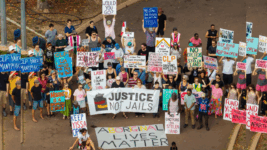
Main image: Justice Not Jail demonstrating against the closing down of YiSSA in Garramilla-Darwin last weekend. Photo by Wayne Maggs
Paul Gregoire