The New Laws, Offences and Penalties Relating to Illegal E-Bikes in NSW
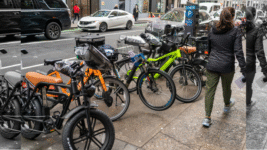
Dozens of cyclists in New South Wales have had their illegal e-bikes seized and destroyed over recent months, during two NSW Police Force blitzes on illegal e-bike use in the state, which have been carried out under the provisions of the newly legislated illegal e-bike confiscation and destruction regime.
The most recent operation occurred across multiple police area commands running down from southern Sydney to the Illawarra on 16 October 2026, with 22 allegedly illegal e-bikes seized.
The state government announced a crackdown on illegal e-bikes in February 2026, with the stated aim of seizing, confiscating and destroying electronic bikes that fail to reduce power to propel the bike once a speed of 25 kilometres an hour has been reached.
Passed in May 2026, the Road Transport Amendment (Non-Registrable Motor Vehicles) Bill 2026 facilitated this regime, which took effect on 21 August 2026.
The initial police blitz on e-bikes occurred in the Northern Beaches region on 11 September 2026, involving the seizure of 36 allegedly illegal e-bikes. And after waiting two weeks for owners to notify whether their bikes had been stolen or someone else was riding it, the authorities then destroyed 23 of these bikes on 1 October, with return applications regarding 13 more still being processed.
Officers from the NSW Police Force have been equipped with roadside dyno-testing units that can determine whether e-bikes have been illegally modified. And illegal e-bikes are being seized in public places, including those being use on roads and road-related areas, including footpaths.
Central to the reform is the reclassification of illegal e-bikes as “non-registrable motor vehicles”, relying on existing “unregistrable motor vehicles” laws contained in the Road Transport Act 2013 (NSW) (RTA).
Justification for the new regime
“This bill proposes amendments to the Road Transport Act 2013 and regulations to provide clear powers for police and authorised officers to seize, impound and dispose of illegal unregistrable motor vehicles from our roads, footpaths and other public places,” said NSW roads minister Jenny Aitchison in her 27 May 2026 second reading speech on the Non-Registrable Motor Vehicles Bill.
“The bill introduces a streamlined, targeted framework specifically designed to deal with the new category of vehicle: non-registrable motor vehicles,” the minister added. “This is intended to include high-powered e-bikes, e-scooters, e-unicycles, other e-mobility devices and illegal—that is, not compliant with the Australian Design Rules—dirt bikes.”
Illegal e-bikes in NSW
Rule 15-1 of the Road Rules 2014 (NSW) sets out the meaning of a bicycle in terms of NSW roads, and according to subrule 15-1(4), electrically power-assisted cycles, or EPACs, are classified as bicycles when they comply with EN 15194, which is the current European Standard for e-bikes.
Clause 15 of schedule 1 of the Road Transport (Vehicle Registration) Regulation 2017 (NSW) outlines that legal e-bikes are not vehicles required to register for road use with Transport for NSW.
So, if motorised e-bikes exceed the legal limits, they’re automatically classed as a “non-registrable motor vehicles”, as defined in section 4 of the RTA, which includes motor vehicles not exempt from registration, that don’t have a marked vehicle identification number, which means they don’t abide by Australian Design Rules, and neither meet statutory standards, which makes them unregistrable.
Seizing non-registrable motor vehicles
A key new power to seize non-registrable motor vehicles is contained in a new section 79A of the RTA. This law permits NSW police officers to seize motor vehicles, including illegal e-bikes, if they have a reasonable suspicion that a motor vehicle in question is non-registrable and a person has used it on a road or in a public place within the last 28 days.
The section further stipulates that the owner can then request that the officers seizing the non-registrable motor vehicle return any items attached to it that are not part of its original design, and officers must endeavour to comply with such requests.
Such seized non-registrable motor vehicles may then be impounded on the order of the NSW police commissioner or Transport for NSW. A notice of impounding must then be given to the owner, or to their parent or guardian if they are under 16 years of age. The section further clarifies that the impounding of a bike belonging to a child under 16 can be done without an adult being present.
Such a notice must specify reasons for impounding, as well as the address where it is to be stored, identifying details of the vehicle, time and date of improper use, any other reasons for seizure, the name of the person whose use led to seizure, and information about how to “apply for the return of a seized motor vehicle”, as well as details about “the forfeiture and disposal of motor vehicles”.
New section 79B of the RTA provides 14 days for the owner of a vehicle seized under section 79A to apply to the impounding authority for its return. This permits the owner to apply for return if they were not the user of the device leading to the impounding of it and neither was that person their immediate family, as well as that the owner was unaware that the device was being used illegally.
Subsection 79B(8) of the RTA further serves to empower the impounding authority with the ability to dispose of the forfeited non-registrable motor vehicle by way of selling it, whether that be through a public auction or public tender, or otherwise, by way of destroying the vehicle.
Sanctioning of non-registrable motor vehicles
In addition, the Non-Registrable Motor Vehicles Bill inserted a new section 255A into the RTA, which permits officers to issue individuals with surrender notices in respect of motor vehicles they suspect on reasonable grounds are non-registrable motor vehicles used on a road or in public place within the last 28 days.
Failure to comply with such notices amounts to a traffic offence which carries a fine of up to $3,300.
Further, a new section 255B of the RTA empowers police officers to direct a driver they suspect on reasonable grounds to be using a non-registrable motor vehicle, including an illegal e-bike, to stop and allow its inspection, include by way of the use of a testing device. Failure to comply comes with a fine of up to $2,200.
NSW authorities who seize such devices are protected from theft or damage liability, under new section 255C of the RTA, while new section 255D provides that statutory rules prescribe the fees relating to the movement, towage, storage and disposal of vehicles seized, impounded or surrendered, as well as the ability to decide upon who might be responsible for paying them.
Offences pertaining to illegal e-bike use
Despite overhauling the specific laws relating to the seizure of non-registrable motor vehicles to avoid the prior reliance on cracking down on illegal e-bike use via the preexisting regime that deals with ‘unregistered registrable motor vehicles’, the criminal offences that apply to the earlier laws are those relied upon by the new regime.
The latest NSW Police News article on the recent illegal e-bike blitzes reveals that the three main offences being pressed against illegal e-bike users remain the same.
The main charge being pressed against illegal e-bike users is the prohibition on using unregistered registrable vehicles, contrary to section 68 of the Road Transport Act. This offence carries a maximum penalty of a $2,200 fine. However, on the street at the moment, people who break this law are being issued with on-the-spot fines of $867.
Driving a motor vehicle without a licence, contrary to subsection 53(1) of the RTA, is another offence illegal e-bike users are being charged with. The maximum penalty is a fine of $2,200. And this applies despite the fact that one can’t obtain a licence for an e-bike.
But if a driver is found to be using a motor vehicle when they have never been licensed, or they haven’t been licenced for the past 5 years, then this is a more severe crime under subsection 53(3) of the RTA.
The subsection 53(3) offence carries a fine of up to $2,200 for a first offence, and for second and subsequent offences within a five-year period, it carries a fine of $3,300, up to 6 months imprisonment and an automatic licence disqualification of 12 months, which can be reduced to 3 months. Although, a first offence can be dealt with by way of an on-the-spot fine of $1,045.
The final offence being applied to those found riding illegal e-bikes is the crime of using an uninsured motor vehicle on the road, contrary to section 2.1 of the Motor Accident Injuries Act 2017 (NSW). The also applies to a person who causes another to use an uninsured motor vehicle. And it carries a fine of up to $5,500. However, this can be dealt with by way of an on-the-spot fine of $818.
Image of e-bikes from Shutterstock

Paul Gregoire


Ugur Nedim
Receive all of our articles weekly
Related Articles
 Is it Legal to Ride a Power-Assisted Bicycle in New South Wales?
 E-Scooters Likely to Be Made Legal on New South Wales Roads
 Calls to Legalise eScooters and to Increase Power and Speed Caps for eBikes in NSW
 Is it Legal to Ride an eScooter in New South Wales?
 New South Wales Traffic Offences: Recent Updates to Road Rules
 Food Delivery Riders Face Fines for Not Wearing High-Visibility Vests