Antisemitism Envoy Continues to Overhaul Australian Institutions to Provide Cover for Israel
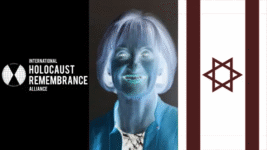
ASECA Priorities is the latest report from this nation’s most powerful unelected official, Australia’s Special Envoy to Combat Antisemitism (ASECA) Jillian Segal. And her priorities involve all Australian governments, institutions and organisations adopting the IHRA working definition of antisemitism, which is a mechanism that serves to shield Israel’s genocidal apartheid regime from criticism.
One does have to ask what forces foisted the imposition of appointing an ASECA onto Australian PM Anthony Albanese, less than a year into the heinous Gaza genocide and the international instability it’s rort. Indeed, Segal appears to have been chosen as envoy due to her ability to belligerently insist that the Australian polity undertakes this transition, despite its highly spurious nature.
The 40-page report released on 30 October 2026 continues the concept of “shapeshifting” antisemitism that Segal and New South Wales premier Chris Minns have both warned about.
Under this ruse, anti-Jewish sentiment isn’t “immediately recognisable” to the untrained eye, and the envoy reveals that “contemporary, progressive antisemitism comprises a combination of “Islamic extremism, far-right and far-left antisemitism”.
Segal reintroduces the reader to the IHRA (International Holocaust Remembrance Alliance) working definition of antisemitism, which is a mechanism that conflates criticism of Israel with anti-Jewish sentiment to deflect critiques of the Israeli setter colonial project. And Segal is part of a two-decade-old antisemitism envoy regime that seeks to insert this device into western government institutions.
Appointed in July 2024, Segal outlines that she’s two years into her mandate, and while her plan has seen victories, most notably the AHPRA adoption of IHRA, the AESCA is now embarking on further institutional incorporation of IHRA, whole-of-society education run by a new purpose-established national centre, business adaption of codes of conduct and entire Australian Public Service training.
The Israelisation of the Australian polity
Part Four of ASECA Priorities sets out what the envoy’s office is focused on at present. The report’s content page then lists the Australian sectors and other areas that Segal has slated to incorporate IHRA, the device that conflates antisemitism with criticism of Israel, which includes universities, schools, education, health, care, art, sport, media, public broadcasters, migration and public safety.
In the unelected official’s opinion, Australian universities are hostile to Jews, there is an issue with antisemitic healthcare staff and prejudice against Jewish doctors and patients, the Australian Broadcasting Corporation (ABC) and Special Broadcasting Service (SBS) have been biased in reporting on the Gaza genocide and the online environment has become a space of “heightened hostility”.
Initiatives already underway include an ASECA university report card system, which all institutions are failing, whilst the Australian health regulatory, AHPRA, has adopted IHRA. The ASECA is also prioritising Albanese’s digital duty of care to prevent antisemitism online. And an identified migration problem involves “a minority of migrants” bringing to Australia “ingrained antisemitic views”.
Segal wants unis to adopt the IHRA, not simply the 2025 Universities Australia developed definition. Schools need to adopt a layer cake approach to ethics, then the World War II Holocaust and bespoke antisemitism education. A 12-to-18-month national Healthcare Antisemitism Taskforce must be rolled out. And public funding of arts and sports should be dependent on adherence to the plan.
Further, an expert advisory panel must be made to monitor the media for antisemitism. Another priority is the implementing ASECA’s overhaul of the online environment. Visas have already been made dependent on recipients not harbouring antisemitic views, via amendments to the Migration Act 1958 (Cth), although greater understanding of “indicia of antisemitism” must be progressed.
Finally, Segal raises the need for the legislating of guardrails in terms of public safety. This should include antisemitic criminal offences, community impact statements, safe access zones where protests would be limited, which is neither a “draconian or antidemocratic” step, and the Australian Attorney General’s Department needs to establish a taskforce to consider the criminal justice system.
Modern, progressive antisemitism
“Modern, progressive antisemitism is the most pervasive manifestation of antisemitism facing Australia today. It is often not a standalone hatred like the other sources,” the antisemitism envoy’s new report continues. “Rather, it serves to justify and legitimise antisemitism, providing it with intellectual and cultural credibility and, ultimately, making it fashionable.”
The modern form of antisemitism differs from that of historical Nazism or other forms present prior to World War II. And according to Segal, this contemporary form comprises of three varieties of anti-Jewish sentiment.
The initial modern form of antisemitism addressed by Segal is “Islamic extremism, a distorted and literalist interpretation of Islamic doctrine”. The envoy posits that this involves the idea of infidel Jews standing in the way of “Muslim power”. This form of prejudice, Segal insists, is being laundered alongside leftwing antisemitism to produce a prejudice seen as progressive and rights-forward.
In terms of leftist antisemitism, Segal outlines that this group creates a binary division between the “oppressed” and the “oppressors”, which then considers Israel an inherently racist colonial project that represents whiteness, privilege and imperialism. This further involves the intellectualising of “longstanding antisemitic motifs” to legitimise the portrayal of Israel as “morally evil”.
The casual casting of this political opposition to Israel’s apartheid regime and ongoing genocide in Gaza, as a form of antisemitism espoused by actors with leftwing political leanings is a key example of how the IHRA definition of antisemitism serves to conflate hatred of Jews with legitimate political criticism of Israel. In this example, calling out Jewish prejudice towards Palestinians is antisemitic.
The final cohort of antisemitic actors are the far-right. This involves a mix of neo-Nazi, white supremacist and ultranationalist ideologies that tip their hat to mid-20th century Nazi prejudices about Jewish people. This rising form of antisemitism, which has been clearly critical of Jewish Australians and not Israeli operations in Gaza, has been grossly ignored by Segal over recent years.
The con job
“The role of the special envoy is not to solve antisemitism single-handedly. It is to identify problems, bring the relevant stakeholders and policymakers together, develop practical solutions, provide impetus and momentum, monitor progress, assess effectiveness and maintain focus,” ASECA Priorities sets out in its section on Coordination of the Role of Special Envoy.
The IHRA working definition was initially developed by the European Monitoring Centre on Racism and Xenophobia (EUMC) in 2005. It was then adopted by the 2016 IHRA Plenary, despite the vote not being unanimous. The definition provides eleven examples of antisemitism, seven of which involve the state of Israel. And these seven examples are enough to progress the problematic conflation.
The envoy provides a summarised version of the eleven examples, which comprises “traditional conspiracy theories about nefarious Jewish power and control, classic antisemitic tropes (eg deicide and blood libel), accusations of national disloyalty, Holocaust denial and distortion, Nazi inversion, denial of the Jewish people’s right to self-determination, holding Jews collectively responsible for the actions of others or the state of Israel, the application to Israel of standards that are not applied equally to other nations”.
The practical outcome of the IHRA definition and its dissemination is that those people aligned with Israel, or Zionists, are able to easily shoot down any criticism of Israeli’s settler colonial project that dispossesses and destroys Palestinian life, because being labelled antisemitic carries with it the weight of the World War II Holocaust that involved the genociding of 6 million Jews.
Zionists are adherents of Zionism, which is the 1880s-established European doctrine advocating for the establishment of a Jewish state, Israel, on historic Palestine. This project has involved mass murder, humiliation and oppression. Segal posits that “Jewish identity is inherently linked to the land of Israel”, so criticising Zionists is a direct attack on Jews, but she hesitates at deeming it antisemitic.
Segal’s mandate is to propagate this conflating mechanism to prevent criticism of Israel from circulating in the public sphere. On appointment in 2024, Segal’s first task was to fly to Argentina to attend a meeting of the Special Envoys and Coordinators Combating Antisemitism conference. Yet, the Australian public was not made aware that this position existed beyond local borders.
Instead, PM Albanese informed the public that an Islamophobic envoy would too be established alongside the antisemitism envoy. This was a unique development in this country compared to others where the system exists. Appointed three months later, the Islamophobic envoy does not have a blank cheque to overhaul the Australian polity in a plan of their own creation, like the ASECA.
The antisemitism envoy system was founded in 2004, when the United States appointed its own envoy. This has been followed by Canada, Greece, Israel, Romania, the United Kingdom and the European Union all appointing envoys. The Organisation of the American States has one too. And these unelected officials are charged with recommending policy within their democratic nations.
The antisemitism envoy system predating Albanese’s appointment of Segal tends to suggest that someone pressed federal Labor to appoint the unelected official with such a broad and sweeping mandate. Indeed, the PM left Segal’s initial July 2025 Plan to Combat Antisemitism unactioned until 18 December 2025, four days after ISIS-inspired terrorists targeted a Bondi Beach Jewish event.
Image: Official photo of Jillian Segal from the Antisemitism Envoy website. IHRA definition logo and the Israeli flag are in the public domain.

Paul Gregoire
Receive all of our articles weekly
Related Articles
 Envoy Pressures Australia to Adopt a Fraudulent Antisemitism Definition
 Antisemitism Envoy Plans to Make All Australians Complicit in Gaza Genocide
 Antisemitism Envoy’s Refusal to Criticise Neo-Nazis Reveals Her Role is a Ruse
 Envoy’s Antisemitism Plan is Manifestly Lacking in Substance
 The Antisemitism Envoy’s Call to Ban Antigenocide Protests in Cities is Undemocratic
 The Envoy’s Proposal to Adopt the IHRA Antisemitism Definition Is a Threat to Free Speech