The Australian Needle and Syringe Program Has Been Saving Lives for 40 Years
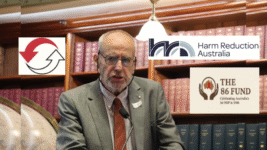
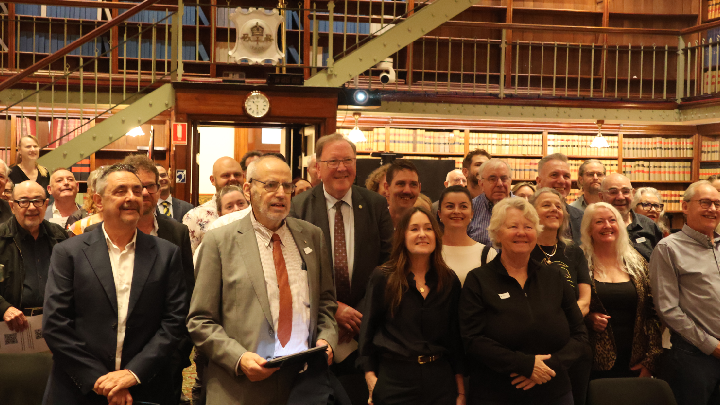
The 40th anniversary of the New South Wales needle and syringe program was marked by an event at NSW parliament on 12 November 2026, which saw key figures recalling the staging of the first NSP, which was an illegal setup run out of a shopfront on Gadigal land in Sydney’s Darlinghurst in 1986. And the occasion further involved the launch of a new harm reduction initiative called The 86 Fund.
Dr Alex Wodak initiated this act of civil disobedience that comprised a makeshift needle exchange on 12 November 1986. Wodak, then director of the Alcohol and Drug Service at St Vincent’s Hospital, understood that the HIV/AIDS crisis was about to hit NSW, and people who used drugs intravenously would be a key community for transmission of the virus, and that clean equipment would allay this.
NSW authorities weren’t impressed with the stance Wodak had taken. Handing out clean syringes to people who use drugs was considered way too permissive. But when NSW police detectives visited Wodak to arrest him and shut down the site, the doctor explained the crisis for the community if the exchange did not proceed. And the detectives determined to leave him be and not press charges.
“Congratulations on the wonderful program,” said NSW Greens MLC Cate Faehrmann as she addressed the room. “But 40 years on, you would think that we would be celebrating a little bit more movement, wouldn’t you? What about needle syringe programs in prisons in NSW? And, of course, the wonderful medically supervised injecting centre and the fact that there are no more.”
As the first manager of ADIC, which is today NUAA (the NSW Users and AIDS Association), Julie Bates played a key role in organising the first pilot NSP in Darlinghurst, and she recently told Sydney Criminal Lawyers that The 86 Fund will be financing “new and innovative” initiatives in order to reinvigorate harm reduction in Australia, which is a nation that once led the globe in this area.
Civil disobedience to save lives
“Australia’s HIV epidemic started with three groups thought to be at highest risk,” recalled Dr Wodak. “Men who have sex with men, sex worker providers… and people who inject drugs…. The highest priority had to be trying to prevent a calamitous epidemic. The greatest risk of a generalised epidemic was the extensive spread of HIV by, among and from people who inject drugs.”
“Remember, there was at that time, no proven HIV prevention and no proven HIV treatment,” Wodak, the “godfather of harm reduction”, added. “HIV threatened catastrophic health, social and economic costs to the whole community of Australia. Australian citizens who injected drugs hadn’t waited for our governments to act. They started distributing sterile injecting equipment early on.”
Wodak recalled that the then NSW Unsworth government was reluctant to amend legislation to allow NSPs. The question for NSW Labor was whether to publicly appear to be permissively handing out needles so people could use drugs or to take action and avoid a major health epidemic, and the party choose not to act. So, Wodak and his team choose to take on the responsibility themselves.
And the decision of this group to launch the pilot NSP served to avert a much more devastating HIV crisis nationwide. Once the illegal Darlinghurst operation made its point, NSP roll out became NSW and then federal policy. So, 40 years on and the public understands the value of NSPs. And the doctor added that the “evidence is now crystal clear” that NSPs are a cost-effective way to save lives.
“Last year, Australia provided over 64 million needles and syringes to people who inject drugs,” Wodak further explained. “HIV prevalence in Australian citizens who inject drugs has been below 2 percent for the last four decades. And 93 countries around the world now provide needle syringe programs.”
NSP roll out tales
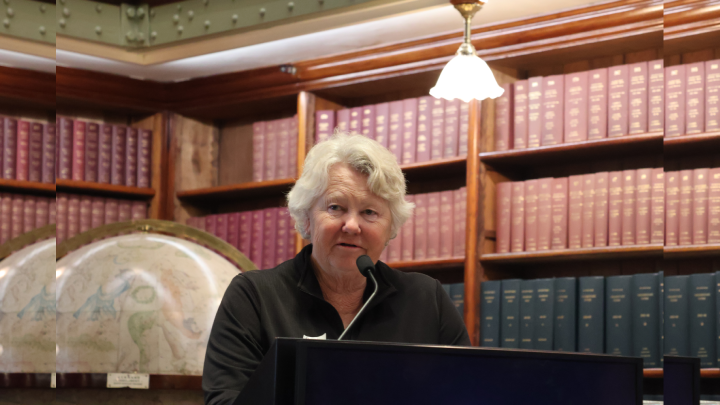
National Drug and Alcohol Research Centre Professor Kate Dolan recalled that Sydney was awash with drugs in the mid-1980s. She remembered purchasing the first syringes that the illegal NSP handed out, and that via the testing of exchanged used syringes, the rise in HIV could be tracked. Since that time, Dolan has been involved in establishing such interventions around the world.
“In 1990, an inmate stabbed an officer with a blood-filled syringe, and the officer contracted HIV and subsequently died,” Dolan recalled. “When I returned to Sydney, I knew there wasn’t much chance of introducing NSPs into prison. So, I focused on studying the prison methadone program… that led other countries to introduce or expand methadone for inmates.”
“Around the mid-80s, we started hearing about this thing called AIDS that was affecting people who injected drugs,” recalled Harm Reduction Australia executive director Dr Annie Madden. “We knew that people were starting to adovcate for needle and syringe programs.”
“But even when we did get NSPs across the line, out in the community, we never kidded ourselves that the Australian government had allowed the needle exchanges because they cared about people who injected drugs,” the harm reduction advocate went on.
Madden explained that the government was progressing the NSP program to prevent a wider epidemic amongst the broader community. And she further recalled that for that particular moment, the authorities had to rely on the assistance of the community of people who injected drugs in order to prevent a communitywide health issue.
Reinvigorating harm reduction
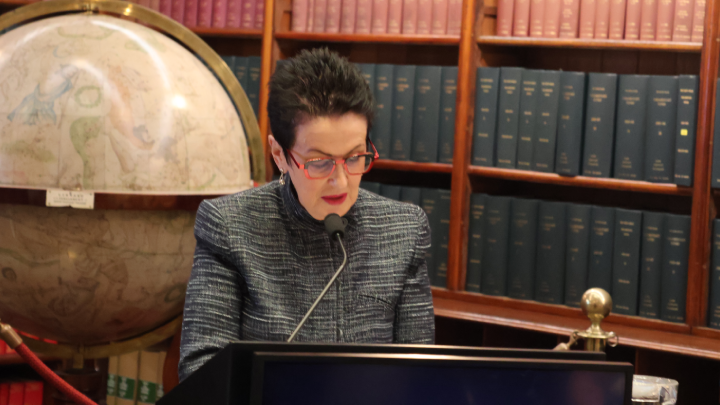
Sydney lord mayor Clover Moore explained that the illegal NSP led to “Australia becoming a world leader in harm reduction”. But NSW had refused to go the next step to create a safe space for people to inject drugs. However, in 1999, then premier Bob Carr held a drug summit, and Moore, then an independent NSW MP, moved a motion for a safe injecting facility, which later opened in Kings Cross.
“For decades… I have been advocating for a more compassionate approach to policies and policing of people who use illicit drugs. It’s the least a civilised society can do for its people,” the Sydney mayor added. “I advocated strongly for premier Chris Minns to set up his drug summit, because of the urgent need to reduce the risks of drug-related deaths.”
The City of Sydney’s submission to the 2024 NSW Drug Summit called for “a pill testing trial, the end of sniffer dogs and strip searches at festivals and for drugs to be treated as a health and harm minimisation issue, rather than a criminal issue,” Moore set out. “Well, we got pill testing, and we will continue advocating for the further reforms.”
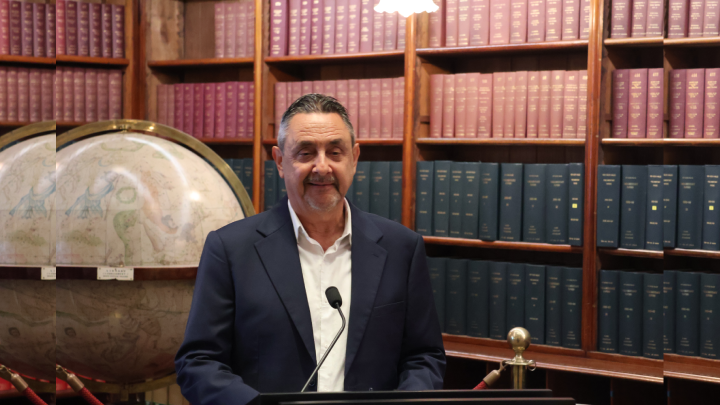
Harm Reduction Australia president Gino Vumbaca hosted the event marking forty years of NSPs. He is well known for his long career in harm reduction. But back in 1986, Vumbaca was working for Wodak, straight out of university and he volunteered to assist with the pilot NSP. Vumbaca also encouraged those who were around in 1986, and those who weren’t, to donate to The 86 Fund.
Vumbaca called on the crowd to scan a QR code, which linked to The 86 Fund page, where it’s explained that the initiative “has been established to celebrate the establishment and operation of Australia’s first overt and fixed” NSP and the fund will be assisting “young people, students and frontline workers to help develop their ideas and efforts to advance harm reduction in Australia.”
All photos by Paul Gregoire
Main image: Dr Alex Wodak addresses the 40th anniversary of the NSP event. Harm Reduction Australia and The 86 Fund logos were supplied. The circle of arrows is the official symbol for NSPs
Paul Gregoire
Receive all of our articles weekly
Related Articles
 Needle Exchanges Are Desperately Needed in Australian Prisons
 Melbourne Needs an Injecting Room: An Interview with Australian Sex Party Leader Fiona Patten
 Supervised Injecting Rooms Save Lives. Why Are Councils Turning Their Backs on Them?
 Medically Supervised Injecting Centre to Open in Melbourne
 Should Injecting Rooms Be Open to Pregnant Women?
 Richmond’s Safe Injecting Room Saves Lives: An Interview With NRCH’s Demos Krouskos