Plibersek Pledges to Remember Forgotten Australians: Interview with Alliance of Forgotten Australians
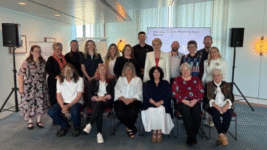
The Alliance of Forgotten Australians (AFA) roundtable was held on Ngunnawal and Ngambri land at Australian Parliament House on 26 October 2026. The met involved Australian social services minister Tanya Plibersek and Forgotten Australians discussing whether federal Labor will commit to ongoing assistance for these people after the National Redress Scheme deadline next year.
The Forgotten Australians are around 500,000 Australians who, as children, were subjected to sexual abuse, physical abuse, neglect and emotional deprivation, when they were being raised in state care or out-of-home care, over the 20th century. And the government formally apologised to these people for the suffering they endured under state care on 16 November 2009.
The 2004 Senate Community Affairs References Committee inquiry into Children in Institutional Care identified this cohort and it produced Forgotten Australians: A report on Australians who experienced institutional or out-of-home care as children. The inquiry made 39 recommendations around acknowledging these people’s plight and the provision and improvement of services to them.
And at the meeting, AFA chair Suzanne Burke and her colleague’s raised concerns around the pending deadline related to the National Redress Scheme, which is a 2018 initiative, established in response to the Royal Commission into Institutional Responses to Child Sexual Abuse, and it provides compensation to those who suffered child sexual abuse in Australian institutional settings.
Meeting with Plibersek
In speaking with minister Plibersek, Burke and the other participants raised the fact that the 2004 senate committee inquiry recommended various forms of assistance to and compensation for Forgotten Australian adults, who as children suffered in state care. But up until now, the only Forgotten Australians who’ve been able to seek redress are those who suffered sexual abuse in care.
And further, many Forgotten Australians are now in their 70s and 80s and are facing circumstances where they may be forced to enter into age cared settings. For these people who were abused in institutional settings as a child, this outcome at the end of life would be retraumatising and most of Forgotten Australians don’t want to be placed in institutional settings again.
The final date to submit an application to the National Redress Scheme is the 30 June 2027, and the final date for matters to be finalised by the scheme is the 30 June 2028, while a recent joint standing committee inquired into the deadline and considered whether it should be extended for victim-survivors of child sexual abuse.
But the Forgotten Australians continue to raise the concern that many of their cohort remain without any assistance or compensation, as the abuse they suffered in institutional settings was not that addressed by the National Redress Scheme. So, the ultimate goal for AFA is to see the scheme or something similar be extended but also expanded to cover other forms of abuse against kids.
Sydney Criminal Lawyers spoke to Alliance for Forgotten Australians chair Suzanne Burke about who the Forgotten Australians are, that many of them are now elderly yet have still not been provided any form of redress, along with the fact that Australian social services minister Tanya Plibersek has determined to assist these people moving forward.
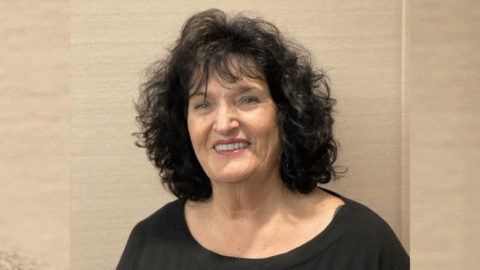
Suzanne, the 2004 Senate Community Affairs References Committee inquiry into Children in Institutional Care produced Forgotten Australians: A report on Australians who experienced institutional or out-of-home care as children.
The report uncovered widespread physical and sexual abuse against, along with neglect and emotional deprivation of, around 500,000 children brought up in institutional or out-of-home care, during the 20th century.
The Forgotten Australians who experienced child sexual abuse in these settings have been able to apply for compensation via the National Redress Scheme, which was established in 2018, in response to the Royal Commission into Institutional Responses to Child Sexual Abuse.
The Alliance for Forgotten Australians is highlighting that the application deadline for the redress scheme is 30 June 2027.
So, can you remind us of who the Forgotten Australians are and what the Senate inquiry uncovered two decades back?
The people who identify as Forgotten Australians are now adults. Some of them are in their 50s and some are elderly.
They are victim-survivors of institutional care, with the standard form being out-of-home care in Australia for most of them over the 20th century.
The 2004 Senate Community Affairs References Committee inquiry estimated that about 500,000 children suffered abuse in institutional settings.
This figure of 500,000 children includes child migrants, Indigenous Australians, those who experienced care in an orphanage, children’s home, foster home, gaol, training school, hospitals and other forms of out-of-home care.
These children are now aging. These children were placed in state care for a myriad of reasons when they were younger.
These reasons included being orphaned, being born to single mothers, family dislocation, forms of domestic violence, divorce, separation, family poverty and parent’s inability to cope with their children often due to forms of crisis or hardship.
The Senate inquiry made many recommendations, a lot of which have never been fulfilled.
We are worried that by mid-next year, when the deadline to that National Redress Scheme closes, then it will all be closed and we won’t be able to get any ongoing help with our trauma situations, or our aged care situations or anything like that.
So, the National Redress Scheme has been compensating the Forgotten Australians who experienced child sexual abuse in state care. You are raising that all the issues for these people won’t be settled by mid-next year.
So, do you mean beyond just child sexual abuse, which is being dealt with by the redress scheme?
Yeah, beyond that as well. We need compensation for those who have not been sexually abused but have suffered physical abuse and neglect as well.
Should that be via the National Redress Scheme?
Well, however it comes through will be adequate. Maybe they need to realign the scheme and continue it on, because so many Forgotten Australians are going to miss out, and so many of them don’t even know about it.
On Monday, 26 October 2026, a national roundtable was held at Australian Parliament House, which was organised by the AFA, and it was attended by government representatives, including social services minister Tanya Plibersek.
This was organised out of rising concerns about Forgotten Australians being left without specialist support, as you have just mentioned? So, can you outline what was covered at the roundtable?
We spoke about the caring of aging Forgotten Australians, as well as better access to health and mental health services, better dental care for Forgotten Australians, reducing homelessness amongst them, along with their housing and security, and the need to find sustainable future funding for Find and Connect, and Find and Connect services, along with continuing and reforming the National Redress Scheme and discussing Forgotten Australians Awareness Week.
Now, these are the topics that we covered. And Tanya Plibersek said, in her own words, that her government will endeavour to continue to help us.
We want to know if the minister’s pledge is going to happen or not.
When I was doing my research, I did come across the Find and Connect program. Can you tell us what it does?
The Find and Connect program provides services that are run by Services Australia. They look after nearly every state with the funding of these services.
Find and Connect provide small gatherings, where people can feel safe, once or twice a week, which is like a family away from family, because most Forgotten Australians don’t have any family.
Forgotten Australians have often not connected with any family. So, Find and Connect is a way of helping these people. However, Find and Connect don’t provide a lot of services. They deal mainly with the records of Forgotten Australians.
The national roundtable was held a fortnight after the Joint Standing Committee on Implementation of the National Redress Scheme released its report Their Courage, Our Responsibility: The continuing operation of the National Redress Scheme and Australia’s commitment to survivors.
This was a yearlong inquiry into the ongoing redress scheme that made 31 recommendations. So, what sort of recommendations did the inquiry come to?
They did recommend that they would take care of us in all sorts of areas. In those areas, however, they really have not performed.
So, are the government going to broaden the scope of the redress scheme, so that it covers areas where Forgotten Australians have been left uncompensated?
I not sure about that. They are looking at whether the National Redress Scheme should be ongoing, after its application deadline in mid-2027. But I am not sure if they are going to extend what it does as well.
We know that the redress scheme is ending in 2028, but I don’t know if it will be extended.
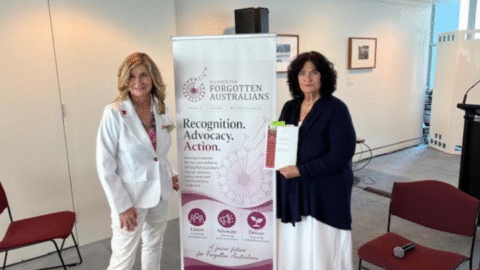
Another important issue that the Alliance for Forgotten Australians is raising is that as the National Redress Scheme is coming to an end, many of the survivors are now at the age where they might be entering into aged care.
Entering into an aged care setting may pose issues for many Forgotten Australians. Can you elaborate on why this is the case?
This is a very big issue, because for the sexually abused children and those children who suffered abuse, there are many things in aged care that we don’t trust.
We don’t want to be manhandled in aged care. We are really worried about privacy. We are worried about being locked into a small room.
And because we don’t have any family, we are worried that aged care is going to be institutionalisation all over again.
Most Forgotten Australians want to stay at home as they age.
So, they don’t want to re-enter an institutional setting?
No. We are trying to establish some alternatives with aged care providers, or we are trying to work with them.
There is an aged care provider called Wintringham Housing. There is one in Victoria and one in Tasmania. The one in Victoria is just like a home. They have privileges. They are allowed to have a smoke or go outside. They have a garden there.
So, it is more like a home. And while the one in Tasmania is fabulous and new, it is more institutional. So, they are working with that one to make it more homely.
Suzanne, following last week’s meeting in Canberra and the outcomes of the Joint Standing Committee on the National Redress Scheme, what is the Alliance for Forgotten Australians focused on now? How will the AFA ensure that the longstanding gaps in support for Forgotten Australians are met?
We just have to keep working on it. We have to go to government. We have to ask them to continue the national redress beyond 2028.
We are all old people fighting for this. Myself, I am nearly 75. Many of these people are 75, 80 and 85. We are Forgotten Australians from the 1960s and the 1970s.
We are in for the fight of our lives now. But we can’t continue this forever. And what is going to happen to our children and our children’s children who come after us.
Institutional abuse isn’t going to go away. There are going to be children traumatised for many, many years to come. And then they too will become Forgotten Australians.
We don’t want to be Forgotten Australians. We want to be Remembered Australians. The state should remember what it put us through.
We need help now. I am sitting here and I can hardly see out of my glasses. We need help with little things that would go a long way.
We need a lot of help with aged care.
After last week’s meeting with the minister, are you expecting federal Labor and Plibersek are going to follow through on the initiatives that have been discussed.
That is their job. That is what we are expecting. These politicians get paid to do these things, so they should be stepping up to do this.
The government has heard about the Forgotten Australians for a very long time. They know that we are aging and what we have gone through.
So, did the government then give you its commitment at the roundtable last week?
Tanya Plibersek did give the commitment that her government would continue to look after us. I do hope that she keeps her word.
Main image: The Forgotten Australians roundtable featuring minister Tanya Plibersek. All images supplied by the Alliance of Forgotten Australians

Paul Gregoire

Receive all of our articles weekly
Related Articles
 Stop the Stolen Generations: Repeal Biased Forced Adoption Laws
 The Ongoing Stolen Generations: An Interview With Grandmothers Against Removals
 Open Adoption of Indigenous Children: Another Stolen Generation?
 End the Stolen Generation: An Interview with GMAR’s Aunty Hazel Collins
 New Adoption Laws Will Intensify Stolen Generation in NSW
 Join the National Walk for Truth: Travis Lovett on the Need for a National Truth-Telling Process