Renewed Calls to Ban Chokeholds Highlights the Colonial Nature of Australian Policing
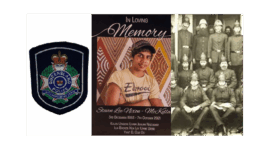
The choking to death of 27-year-old Gunggari man Steven Lee Nixon-McKeller by Queensland police in 2021 is being given fresh attention as a result of his mother, Dr Raylene Nixon, having launched a campaign to have chokeholds banned in that state, as well as the fact that many are only learning of the details of this death right now. This renewed attention highlights the broader issue of police brutality towards First Peoples, including the use of dangerous tactics and force which all too often result in the loss of life.
As the Queensland Corners inquest report explains, Queensland police officers were responding to a call out about “quite a young Aboriginal man” getting out of an SUV and “it didn’t quite look right”. The initial two officers who arrived, smashed out the driver’s window where Steven was seated, with their batons, and when he got out of the vehicle, they struggled with him for five minutes.
Body worn video and expert opinion explain that by the time senior constable Colman turned up on the scene, the young man who’d managed to not topple over during the struggle was no longer breathing properly, and after, one of the initial officers called on Colman to “choke this cunt out”, Steven “became unresponsive and limp” strangely soon after the officer applied the chokehold.
Also known as the lateral vascular neck restraint, the chokehold involves blocking blood flow in the neck to cause unconsciousness. Queensland is the only state that permits its use. Steven’s death led to a review of the practice, which saw former Queensland police commissioner Katarina Carroll ban it in 2023, but then overturn the prohibition a month later at the behest of the police union.
But this resistance on the part of Australian police to see reforms progressed that might prevent future deaths in custody, or the widespread, unchallenged use of the prone position, which is a common way that law enforcement officers cut lives of First Peoples in custody short, tends to reflect the settler colonial roots of these institutions and the way they perceive their mandate.
Revolving reforms
Dr Nixon told Amanda Porter writing in the National Indigenous Times last week that her campaign to see the Queensland Police Service permanently end chokehold use has been born out of “rage, grief, loss and love and a refusal to accept that there are no consequences for the death of my son, no responsibility, no accountability”.
But for some reason, the QPS insists that unlike other jurisdictions it needs to maintain the chokehold, so its officers can defend themselves. The other death in custody that led to the initial QPS review of chokehold use was the 2018 death of First Nations man Trevor King, which occurred during a welfare check, where struggle led to a chokehold and then cardiac arrest whilst restrained.
Resistance to the life-threatening use of restraints is not solely confined to Queensland police however, as since the Finocchiaro Country Liberals government came to power in the Northern Territory in August 2024, that administration has been proactively working with NT police and corrections to bring back the use of potentially deadly spit hoods on children.
The current NT ministry took office with an axe to grind, it would seem, against the 26 percent of the population that are First Peoples. Five tough-on-crime bills were introduced into parliament on the government’s second sitting day in office, and by February last year, 40 Aboriginal people were being taken into custody on average by NT police every day.
The decision of the Finocchiaro ministry to reverse a 2022 ban on the use of spit hoods on children by NT police was progressed the same month as the bills were, and a 2025 legislative reversal of a 2017-imposed ban on spit hoods in child prisons is further proof of its prejudicial agenda, as over 90 percent of the NT child prisoner population is always made up by First Nations kids.
The potentially deadly prone position
Another practice that Australian police use liberally is the prone position, or the holding of people face down on the ground and it’s not uncommon for those in custody to lose their life because of it. Dr Dixon last week recalled that chokeholds were banned in other states following the 2020 death of US Black man George Floyd at the hands of Minnesota police, which also involved the prone position.
Being restrained in the prone position can lead to positional asphyxia, which means the person dies because they can’t breathe. The use of the prone position restraint is considered to have played a part in ten recent deaths in custody. However, police continue to tackle suspects to the ground and then pile their bodies up on top of the detainee often until they can’t breathe properly.
Deaths considered linked to the prone position do not always involve First Peoples but there is a prevalence of them, which include the 2015 death of David Dungay Junior in Sydney’s Long Bay gaol, the 2016 death of Wayne ‘Fella’ Morrison in Adelaide’s Yatala prison, and the 2017 death of Mr Riley and the 2019 death of Ms Wynne both at the hands of WA police.
The 27 May 2025 death in custody of Kumanjayi White, a 24-year-old Warlpiri man with disabilities, took place when two plainclothes police officers retrained him to death apparently over suspected shoplifting. However, no one is sure whether this fatality involved the prone position because the NT authorities are refusing to release the details surrounding his death to his family.
Maintained by force
Wiradjuri and Badulaig woman Lynda-June Coe put it to the crowd at the Gadigal Invasion Day protest 2026 that as First Nations people never ceded sovereignty to the British invaders, therefore, her people are continuing to survive an undeclared war, and she further explained that the country was occupied by force, and this is today maintained by Australian police forces.
Coe’s assertions certainly ring true when the brutalisation with which Australian police continue to approach First Peoples is considered. Six hundred and twenty six First Peoples have died in custody of Australian police or corrections since the Royal Commission into Aboriginal Deaths in Custody handed down its final report in April 1991.
The disparities in the manner in which Australian law enforcement polices First Peoples have long been recognised and over the past decade attempts to reform these systems has been a major focus of civil society campaigns. However, since early 2024, a majority of Australian jurisdictions have been enacting tough-on-youth crime measures that specifically target First Nations youths.
And these shifts against Aboriginal kids have made it hard not to draw a correlation between Israeli targeting of Palestinian youth in the ongoing Gaza genocide era, while recent months have seen a rise in racism specifically targeting First Peoples, and none of this bodes well for those particular long-term efforts to reform Australian policing practices towards First Peoples.

Paul Gregoire

Receive all of our articles weekly
Related Articles
 Canada Set to Legalise Recreational Cannabis
 Preventing Violence Against Women: An Interview With Our Watch CEO Patty Kinnersly
 Sydney Criminal Lawyers® Weekly Rundown – Articles from 27 April to 3 May 2020
 Berejiklian’s Drug Depenalisation: A “Modest” Step Towards “Inevitable” Decriminalisation
 New Year’s Eve During COVID-19: Restrictions on Gatherings and Movements
 “The Time Has Come for Full Disclosure”: Former Senator Rex Patrick on the Timor-Leste Files