The Criminal Offence of Supplying a Prohibited Drug in New South Wales

At 5pm on Wednesday, 31 December 2025, NSW police officers from the New England Police District, executed a search warrant on Gomeroi land at a property on Hall Street, in the small New South Wales town of Gilgai. This raid was part of an ongoing crackdown into prohibited drugs in the local area.
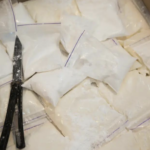
The search turned up an amount of cocaine, some cannabis, cash and unauthorised fireworks, whilst several knives were seized by NSW police, as they were considered potential prohibited weapons.
A 19-year-old woman and a man of the same age, along with a 27-year-old male, were located at the Gilgai residence and were arrested and taken into Inverell police station for questioning.
The young woman was charged with several serious drug offences and one explosives offence, whilst the 27-year-old man is facing similar charges, and the 19-year-old male is accused of drug possession and selling explosives.
Two of the three offenders whose New Years Eve was cut short by the NSW police raid, the 19-year-old woman and the 27-year-old man, have been refused bail and are currently set to appear in court at the end of January 2026, whilst the 19-year-old male was released on bail and is set to appear in court around the same time.
The two 19-year-olds will be appear in Inverell Local Court at different times in late January, whilst the 27-year-old will appear in Moree Local Court around the same time.
Drug supply in NSW
Both the 19-year-old woman and the 27-year-old male on remand have been charged with one count of supply more than an indictable but less than a commercial quantity of a prohibited drug, specifically cocaine, contrary to section 25(1) of the Drug Misuse and Trafficking Act 1985 (NSW) (DMT).
The elements of this offence of which the prosecution must prove beyond a reasonable doubt to see the 19-year-old woman and man of 27 convicted, include their having supplied drugs, or had knowingly taken part in supply and that they knew what was being supplied were prohibited drugs, while in terms of the amount, it must be shown that it was indictable but less than commercial.
Section 33 of the DMT maintains that this offence carries up to 15 years imprisonment and/or a fine of $220,000. This penalty stands for all types of illicit substances involved in supply, unless the drug involved is cannabis leaf, and then the prison penalty drops to a maximum of 10 years inside, while the same fine of $220,000 continues to apply.
NSW drug supply laws carry more serious penalties the larger the quantity of drugs involved. State law recognises five different quantities of drug – small, traffickable or indictable quantities, as well as a commercial amount and a large commercial supply – and the quantities vary from drug to drug.
Schedule 1 of the DMT lists the various quantities for different outlawed drugs, plants, drug precursors and reagents.
As for cocaine, a small quantity is 1 gram, while 3 grams is considered to be a trafficable amount. An indictable quantity of cocaine consists of 5 grams. An amount of the drug that is said to be of commercial quantity is at least 250 grams in weight, while 1 kilogram of the drug, which is produced with the coca leaf in South America, is considered to be a large commercial supply of cocaine.
Defences against drug supply
When defending a client against a charge of drug supply, a criminal defence lawyer would be required to show that supply of the prohibited drug did not take place, or the accused didn’t know what the prohibited drug was that they were involved in the supply of, or in terms of smaller amounts of drugs, it can be argued that the substances were for personal use and not distribution.
The defences of duress and necessity are also open to argue against a charge of drug supply. The defence of duress involves an accused arguing that they perpetrated a crime due to a threat that had been made against them or a loved-one. The suggested harm posed by the threat must be serious enough to warrant the action.
While the defence of necessity suggests the accused undertook the illegal action as they were trying to avoid more dire circumstances that would stand if the criminal offending had not taken place.
The Carey defence is also open to those facing a drug supply charge. This involves a situation where “a person has drugs under their physical control but always intends to return them to the owner or the person reasonably believed to be the owner”.
Other charges faced
The 19-year-old woman is also facing one charge of drug possession, contrary to section 10 of the DMT, which is a crime that carries up to 2 years imprisonment and/or a fine of $2,200. This offence applies to any detectable amount of an illicit drug that a civilian is found in possession of.
The woman was also charged with one count of cultivate less than a small quantity of a prohibited plant, contrary to subsection 23(1) of the DMT. In terms of cannabis plants, which she was found in possession of, less than a small quantity is under 5 plants. Under section 32 of the DMT, this crime carries up to 10 years imprisonment and/or a $220,000 fine.
The young woman is further facing one count of possess, supply or make explosives, contrary to section 93FA of the Crimes Act 1900 (NSW). This offence carries up to 3 years imprisonment.
Cocaine dealing on the rise
The NSW Bureau of Crime Statistic and Research (BOCSAR) reported that the NSW crime statistics for the September quarter continued to be in decline for the majority of major categories of crime. The report highlights that this holds for crime across Greater Sydney and in regional parts of the state as well.
As for the major types of drug offences listed in the report most remain stable when compared with 10 years prior. Detection of cannabis and ecstasy possession are down over this period, as is dealing in cannabis, ecstasy and amphetamines, along with the cultivation of cannabis, which is a crime that has more than halved over the last decade in this state.
In terms of dealing or trafficking in cocaine, this type of drug crime is on the rise, however. Over the 12 months to September 2025, there had been 995 arrests in respect of supplying cocaine, which was compared with 443 arrests over the 12 months to September 2016.
Cocaine possession is also on the rise with 1,930 people arrested in relation to this crime over the 12 months to September last year, compared with just 1,252 over the 12 months to September 2016.

Paul Gregoire

Receive all of our articles weekly
Related Articles
 What is the Offence of Drug Supply in New South Wales?
 The Law, Defences and Penalties for Drug Supply in New South Wales
 Ongoing Drug Supply Charges Can Remain in the Local Court
 The Law, Defences and Penalties for Large Commercial Drug Supply in NSW
 Drug Supply Charges Brought Over Alleged Supply of Fake Cocaine
 The Various Offences of Drug Supply in New South Wales