UN Condemns US Terror War on Cartels and Calls for Drug Legalisation
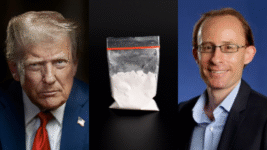
Prominent United Nations special rapporteur Ben Saul has submitted a report to the UN General Assembly, in which he decries the recent shift in certain member states – think Trump’s America – classifying drug cartels as terrorists, when they should maintain an organised crime approach, and rather, look to harm reduction alternatives, like decriminalisation, that reduce crime and violence.
Released on 22 October 2026, the Special Rapporteur on the promotion and protection of human rights and fundamental freedoms while countering terrorism notes that nine states designate organised crime groups as terrorists. This is mainly in the Americas, where 37 cartels are involved, and the primary culprit is the US. But El Salvador started this in 2015 and Ecuador followed in 2024.
US president Donald Trump laid the groundwork for this process in signing executive order 14157 on 20 January 2025, which permits the US to designate overseas drug cartels as foreign terrorist organisations or specially designated global terrorists. US secretary of state Marco Rubio then designated eight South American, majority Mexican, drug cartels as terrorists on 20 February 2025.
The recent shift to targeting drug cartels as narco-terrorists differs from calls to do so in the 1980s, as these days, such designations unlock post-9/11 established counterterrorism frameworks. This trend further involves the US pressuring South American states to follow suit, via threats of tariffs or invasion. And these steps are occurring as the global “supply of illicit drugs is at record highs”.
Saul’s findings appear following the MAGA White House’s March 2026 launch of the Shield of the Americas initiative, also known as the Americas Counter Cartel Coalition (A3C), which is a multilateral military initiative, involving the US and 18 Latin American and Caribbean nations, preparing to fight drug cartels in the west, which is linked to Trump’s reinvigoration of the Monroe Doctrine.
The trouble with narcoterrorism
Saul explains that while “serious violence is a core feature of terrorism, it is not inherent in organised crime, most of which can be committed without violence”. Trump’s war on drug cartels is predicated upon an estimated 100,000 US deaths attributed to organised crime annually. However, it is not the scale of violence that leads to a terrorism designation, as it is rather, the type and aim of it.
Terroristic violence usually aims to coerce or intimidate governments or the public, and whilst most drug trade related violence doesn’t have this purpose, at times, in Latin America cartels have used violence to intimidate these entities. Yet, Saul maintains organised crime violence is missing one other key factor, and that is “a political or ideological purpose” behind it.
Drug cartels instead are primarily focused on profits, and therefore, are not terrorists. Saul outlines that cartel involvement in politics or violence to secure territory doesn’t constitute an organisation seeking alternative governance. The special rapporteur states that it is because of these differences that separate frameworks of approach are needed for organised crime and terrorism.
Saul raises Trump’s ongoing lethal strikes upon civilian boats in the Caribbean and Pacific, which has seen 243 people killed and 80 boats struck since 2025, on the pretext that they were smuggling drugs to the US, which constitute extrajudicial murders. And the White House has also undermined international law by threatening to strike Cuba, Colombia and Mexico in respect of their cartels.
These examples of US crackdowns upon civilians and states in the name of countering drugs undermine human rights frameworks and permit heightened powers available specifically to combat terrorism. However, a full-scale terrorism approach to organised crime risks undermining the state’s key role in combating such crime, which is to maintain the rights-based order of a society.
Securing the Americas
The Shield of the Americas coalition is intimately linked to Trump’s vision of a new age of American imperialism and the two-century-old Monroe Doctrine, which under Trump’s patronage has now morphed into the Donroe Doctrine. The Shield of the Americas Summit was held in March in Florida, with a raft of western hemisphere leaders, and it sought to reassert US dominance in the region.
Now involving 19 nations, the Americas Counter Cartel Coalition was launched as a means of wielding lethal force against narco-terrorists. The list of Trump aligned nation’s present spoke of the new order. Rivals Brazil and Mexico were not present. Colombia, which has long been key to US drug war efforts in the Americas, joined the fray in August after a local election returned right-wing players.
US secretary of war Pete Hegseth told an August 2026 conference in Panama that the Americas Counter Cartel Coalition was coordinating its strategic plan, while an A3C meeting in the Dominion Republic in October saw ministers reviewing a military plan outlining the group’s operational strategy and governance charter. The A3C made clear it would be targeting cartels and narco-terrorists.
The Monroe Doctrine is a strategy to wield US influence over the western hemisphere first progressed by then US president James Monroe in 1823. It ostensibly sought to prevent foreign interference, but it further shored up US influence in the region. The 1904 Roosevelt corollary saw then US president Theordore Roosevelt assert a right for US intervention in Latin American nations.
Various other US presidents have shifted the focus of the doctrine over time, whilst Trump’s toying with it has seen it relabelled the Donroe Doctrine. The Trump corollary involves American dominance in the western hemisphere, which is ensured by a heightened focus on the region, and use of military force, if necessary, as seen with the January 2026 intervention in Venezuela.
Legalise it, don’t criticise it
Saul points to the 2000 United Nations Convention against Transnational Organised Crime (UNTOC), as providing a more adequate framework to approach such crime globally, as it permits for information-sharing, mutual assistance, extraterritoriality and extradition. This is a better way to approach the drug trade and can be applied alongside the 1961, 1971 and 1988 UN drug treaties.
Such organised crime fighting frameworks already share some of the approaches of terrorist combatting frameworks, such as group designations, prohibitions on dealing with groups, enhanced penalties, targeting of financial flows and enhanced investigative techniques. Organised crime frameworks, however, don’t erode the rights of targets and all others, like terrorism frameworks do.
The other key way to deal with “extensive substance abuse” and the international drug trade in general, Saul posits, is to turn away from the punitive drug measures of the past, and move towards harm reduction approaches, like decriminalisation, and health and development-based approaches, that prioritise the human rights of people who use drugs.
“There is now greater acceptance of the domestic discretion available under the drug control conventions to decriminalise drug use and reduce harm,” the UN special rapporteur underscored, and he added that the “traditional focus on suppression” by UN bodies has evolved towards the 2025 established first independent expert panel to review the international drug control treaties.
The UN Commission on Narcotic Drugs rolled out the 2025 Multidisciplinary Expert Panel on Strengthening the International Drug Control System, which is a body of 19 experts charged with refocusing the international drug control treaties, so that there is room for approaches beyond the punitive drug war towards harm reduction, which would lower demand for drugs.
Saul advocates for investments in drug-substitute medications, rehabilitation and treatments, safe drug consumption spaces, drug checking services, health interventions in prisons and public education campaigns. The UN expert further posits that UN member states should consider the roll out of drug legislation and regulation, which would, ultimately, end the need for a black market.
“States should not only decriminalise personal possession of drugs but consider legalisation and responsible regulation. So far, legalisation has been limited to cannabis,” the respected UN special rapporteur insisted. “However, legalisation is ultimately the only tool that could seriously reduce drug profits… and thus weaken groups and reduce violence and drug-related deaths.”
Image: Ben Saul official UN image. Donald Trump is in the public domain. Cocaine from Shutterstock

Paul Gregoire

Receive all of our articles weekly
Related Articles
 Trump and Hegseth Have Been Mass Murdering Foreign Nationals in the Caribbean
 Trump’s Extrajudicial Killings Signify a Further Erosion of International Law
 Sydney Rallies Against Trump’s Imperial Assault on Venezuela, Despite Protest Ban
 Colombia Is Leading Progressive Drug Law Reform: Interview with Greens MLC Cate Faehrmann
 Former Philippines President Faces Trial Over Drug War Killing Spree
 Legalise Drugs to Reduce Violent Crime: An Interview With LEAP’s Greg Denham