Pride in Protest Runs All Trans Women Ticket for Mardi Gras Board: Interview with Iris Street

Pride in Protest has just announced that it’s running an all trans women ticket for the 2026 Mardi Gras board election to be held at this year’s annual general meeting on 28 November 2026. This announcement comes after a turbulent year for the Sydney Gay and Lesbian Mardi Gras that came to a head in July, when an extraordinary general meeting saw two PiP board members stood down.
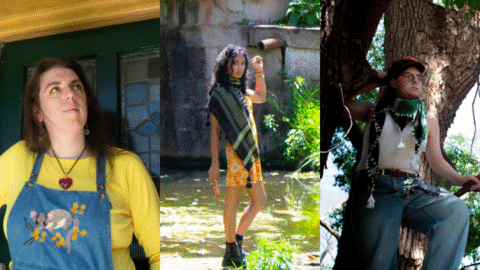
The four candidates making up the all trans women Pride in Protest ticket are Iris Street, Erin Moroney, Nikki Naidu and Jean Maxine. SGLMG members are to elect four candidates to sit on the Mardi Gras Board of Directors for a two-year term at the end of this month.
“We are running with the vision of a Mardi Gras that is unafraid to be a protest, that fights meaningfully for trans rights,” lead Pride in Protest candidate Iris Street explained on announcement of the all trans women ticket last week. “I am honoured to continue the proud tradition of trans people fighting for our rights when many would rather we stay silent.”
The PiP board members removed earlier midyear, Damien Nguyen and Luna Choo, had both taken out the most votes at their respective elections.
Progressive change
Forming in 2018, Pride in Protest has always had a focus on re-radicalising the Mardi Gras, which it asserted back then was a festival that had become overly corporatised, partnering with companies with dubious attitudes and rights records, it further pandered to both major parties despite their questionable stance on queer rights, as well as railing against New South Wales police involvement.
After eight years of campaigning Pride in Protest has had a significant impact on these areas of concern that it’s called out the LGBTIQA+ festival organisation on. And the support for the left-wing queer and trans rights advocacy group has grown so strong that their candidates have secured the most votes at the two last AGM elections.
Yet, this year commenced with an unexpected January email from Mardi Gras cochairs Kathy Pavlich and Mits Delisle, informing the SGLMG membership that they had decided not to progress three motions PiP successfully moved at the 2025 AGM, which comprised trans rights being central to the 2026 festival, ending discrimination against LGBTIQA+ people and shifting to a public funding model.
This caused PiP to call for an extraordinary general meeting of the SGLMG membership, which was held in July. PiP was calling for the two co-chairs to be voted down. However, Pavlich and Delisle teamed up with relatively new conservative group Save Mardi Gras. And a motion was successfully passed calling for Nyugen and Choo to be removed from the board.
Sydney Criminal Lawyers spoke to lead candidate on the 2026 Pride in Protest ticket, Iris Street, about the significance of running all trans women this year, the motions that PiP will be progressing at the annual general meeting and that increasingly marginalised members of SGLMG are turning away from the event, so organisers ought to consider where this is all heading.

This year has been a tumultuous year for the Sydney Gay and Lesbian Mardi Gras. Pride in Protest has been in the thick of these upheavals within the organisation.
PiP has just announced its all trans women ticket for the upcoming Mardi Gras board election, which will take place on 28 November 2026. And Iris, you’re the first candidate on that ticket.
So, can you talk about the significance of running an all trans women ticket, in light of the developments that have been happening in the Mardi Gras organisation over the past year? And can you tell us a bit about yourself and the other candidates?
My name is Iris Street. My pronouns are she/her. I’m a proud queer activist, campaigning in the Mardi Gras board election. And I’m proud to be campaigning alongside, Erin Moroney, Nikki Naidu, and Jean Maxine, who are all extraordinary trans women and community activists.
Our ticket plans on confronting transphobia head on, right now, the far right are emboldened and Labor refuses to act on antidiscrimination.
When queer people fight for our collective rights, we find that the political establishment works to try and shut us down. But we won’t be silent.
Our priorities this season are calling for an end to religious discrimination against the queer community, an end to transphobia, ending ties with genocide and against the homophobic raids and bashings by New South Wales police.
Pride in Protest is renowned for moving progressive motions at Mardi Gras AGMs, which have served to shift the manner in which the annual LGBTIQA+ festival runs in terms of corporate sponsorships and the policing of the event.
However, every year there does tend to be some new partnership that involves a problematic third-party organisation.
What will Pride in Protest be progressing at the annual general meeting this year, in terms of how the organisation is running and the way that participants are being policed?
At this year’s AGM, I am moving a motion to support self-ID for the trans community. The motion condemns Chris Minns’ recent crackdown on self-identification, which has seen at least 46 trans women locked up in men’s prisons. It also calls on Mardi Gras to organise self-ID stalls.
I am also moving a motion to demand that Mardi Gras calls for an end to religious discrimination, and that it disinvites politicians who refuse to support our rights.
Pride in Protest members are also moving a motion to condemn recent instances of police violence, including the bashing of queer people at the 2026 Mardi Gras parade and the murder of Colin Burling by NSW police officers in July 2025.
PiP is also calling on Mardi Gras to disinvite the NSW police float, which will make Mardi Gras a more inclusive space for police violence survivors.
Our other motions are calling on Mardi Gras to stand up for our right to protest and a review of previous partnerships that may have had ties to genocide in violation of the Mardi Gras Ethical Charter.
You mentioned Chris Minns cracking down on self-identification. But I also saw that Pride in Protest had recently set up a self-ID stall at a Pride festival in Parramatta.
So, can you elaborate on what has happened in terms of the NSW premier?
Currently, the carceral system has full control over where it sends trans women, which has involved a law amendment. So, that has placed 46 trans women in male prisons, despite what their identification may say.
In these prisons, they may face routine humiliation, and they also face higher risks of violence and assault.
So, the question that raises is, what does it mean to have self-ID enshrined in law if institutions, like prisons, can simply assign a gender to us based on what they consider us to be and not respect what is on our legal identification?
So, what does the law stipulate in terms of the improved process to self-identification or changing one’s sex marker on one’s birth certificate now involve?
Getting your birth certificate or other government documentation changed to reflect the gender that you are involves a paperwork process and a fee.
The law has been changed to now allow people to change the marker on their birth certificate, without requiring gender-affirming surgery, as it did previously in NSW.
That was a win that we fought for in Mardi Gras.
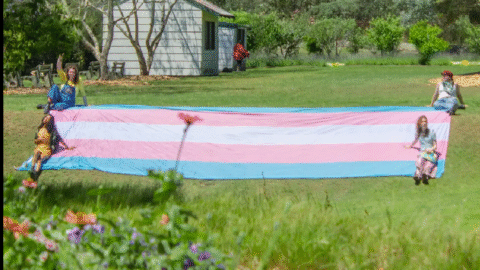
Perhaps the most drastic development on the Mardi Gras calendar this year involved the board holding an extraordinary general meeting in July, which was called for by Pride in Protest.
The meeting further involved calls to remove the two cochairs of Mardi Gras, but it actually resulted in the removal of the two Pride in Protest board members.
This further involved a dispute between PiP and relatively new conservative group Protect Mardi Gras.
So, looking back, how does your group consider what happened at the extraordinary meeting? And where would you say this situation rests at present?
Pride and Protest is the vocal, progressive presence that shifts the debate on queer rights in these institutions. It is about addressing the government’s attack on everyday queer people, especially, with Labor’s blatant transphobia and capitulation to One Nation and the religious right.
In the week of the EGM, the Albanese government rejected every single recommendation from the United Nations on queer rights, including antidiscrimination protections and a ban on gay conversion therapy.
They have also worked back their previous commitments to end religious exemptions in antidiscrimination law.
So, obviously, government and corporate interests hold institutional power in spaces like Mardi Gras. These interests shield Labor from criticism when they side with the religious right over the queer community.
I’ll be speaking at the Trans Day of Resistance rally on 21 November at Pride Square in Newtown, which will bring trans voices together to call for no right to discriminate against our communities and for full funding for gender-affirming care.
This is the ninth Mardi Gras AGM that Pride and Protest has run candidates in. The group has made a lot of impact over its first eight years of its involvement with Mardi Gras.
Can you talk about some of the past achievements that PiP has made since 2018?
That’s eight years of history. Off the top of my head, we have successfully moved Mardi Gras to support the passing of the NSW Equality Bill, and we have cut ties from corporate sponsorships, like removing Gilead for price-gouging PrEP and the antiqueer American Express.
In 2024, Pride in Protest passed a motion for Mardi Gras to support freedoms and dignity for trans women in detention, and we also fought for the tearing up of the Police Accords, which had had Mardi Gras-sanctioned police decency checks occurring before the parade, along with collaborating with the invasive strip search and sniffer dog regimes.
This Mardi Gras season, we will continue these fights, calling for action on trans rights and an end to partnering with genocide complicit corporations, as well as an end to the pinkwashing presence of the NSW police at Mardi Gras.
And lastly, Iris, looking back over the upheavals of the last year regarding Mardi Gras, there appears to have been a conservative pushback against Pride in Protest, and even on trans rights themselves, which has taken place whilst the Trump administration has been taking the entire West on something of a reactionary rollercoaster ride.
So, how do you consider the next 12 months of the Mardi Gras calendar are going to play out? Will the conservatives continue to gain ground, or should we expect some progressive pushback from Pride in Protest?
Mardi Gras at its core has always been about taking back the streets for our rights, in the face of rightwing bigotry and institutional capitulation.
Queers stood together in 1978 and demanded to “Stop Police Attacks on Gays, Women and Blacks”. We are continuing that legacy.
The rising far-right is an existential threat to the queer rights movement, and the political capture of Mardi Gras leadership, only serves to strip us of our collective roots and to leave our community behind.
It is clear the Mardi Gras leadership took the wrong lesson from the EGM. They learnt that they can retain political control with only the support of the wealthiest few, while ignoring the rest of us.
Marginalised groups are increasingly turning away from Mardi Gras. So, this is Mardi Gras’ last chance to prove to us that it stands for more than shielding the Labor Party from criticism of their abandonment of queer rights.
Whatever happens, we will continue to confront the political establishment at every turn. If the conservatives gain ground in Mardi Gras, then we will gain more ground in the street.
We will hopefully see everyone at the Trans Day of Resistance rally on 21 November.
The Trans Day of Resistance rally is taking place on Gadigal land at Pride Square in Newtown at 4 pm on 21 November 2026
Main image of the four Pride in Protest candidates making up the all trans women 2026 Mardi Gras board election ticket. All images supplied by Pride and Protest.

Paul Gregoire

Receive all of our articles weekly
Related Articles
 Mardi Gras’ Anti-Trans and Genocide-Denial Turn Is Trumpian, Says Pride in Protest’s Miles Carter
 Mardi Gras Jumps on Zionist Bandwagon to Bar Pride in Protest from Marching
 “An Outsourced Smouldering Wreckage”: Pride in Protest’s Miles Carter on Mardi Gras Afterparty Cancellation
 Cops Out of Mardi Gras Is Still Key, Says Pride in Protest’s Damien Nguyen
 Agitating Against Mardi Gras Corporatisation: An Interview With Pride in Protests’ Mikhael Burnard
 NSW Police Has No Place at Mardi Gras, Says Pride in Protest’s Mikhael Burnard