UN Expert Denied Entry to Queensland and NT Child Prisons, in True Australian Form
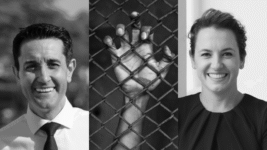
United Nations special rapporteur on the rights of Indigenous peoples Dr Albert K Barume has just been refused entry into two Australian child prisons. The UN expert has been denied entry to the Cleveland youth facility located on Bindal and Wulgurukaba land in Queensland, whilst he has also been blocked from entering the Holtz facility on Larrakia land in the Northern Territory.
On announcing his official visit on 30 October 2026, Barume outlined that he’d be in this country from 2 until 13 November 2026, in order to focus on First Nation’s human rights issues. However, he further set out that his plan to visit the youth detention centres of Cleveland in the town Townsville and Holtz in Darwin had been blocked.
“Barume expressed regret that meetings with government officials in Darwin, the Torres Strait and Townsville, and visits to youth detention centres in Holtze and Cleveland, will not take place due to refusal by state governments of Northern Territory and Queensland, to engage with the mandate,” an official UN statement announcing Dr Barume’s visit states.
The reasons behind a UN expert focused on the rights of Indigenous people seeking to enter a youth detention centre being refused on this continent are obvious. Child prisons in this country always have disproportionately high levels of Aboriginal and Torres Strait Islander kids detained within, whilst the 2016 Darwin Don Dale youth prison revelations of torture are still in recent memory.
Indeed, the rising levels of children being detained in prisons across this continent since 2024, have been critiqued by multiple international rights bodies, including Amnesty and Human Rights Watch. And denying the UN into local gaols is something of a habit, as New South Wales and Queensland both ran the UN Subcommittee on Prevention of Torture inspectors out of town in October 2022.
Rights inspectors unwelcome
“If these governments have nothing to hide, why won’t they let him in?” questioned Debbie Kilroy, founder of the National Network of Incarcerated and Formerly Incarcerated Women and Girls, on hearing the news last week. “Governments have the power to lock children up. They should never have the power to decide who gets to see what happens behind those doors.”
“Full access means the special rapporteur can see every place children are held, including isolation units, and speak privately with children who choose to talk to him, without fear of reprisals,” the lawyer continued.
A 2024 report on Queensland’s Cleveland Youth Detention Centre found that 97 percent of children in the facility were First Nations kids, whilst Indigenous minors account for 6 percent of 10- to 17-year-olds in that state. Holtze is the only youth facility operating in the NT at present, and in July, 92 percent of inmates were Indigenous kids, while they only make up 42 percent of 10- to 17-year-olds.
The UN Working Group on Arbitrary Detention visited this country to inspect centres of detention nationwide in December 2025. However, the NT Country Liberal Finocchiaro government blocked the body from visiting its prisons and from meeting its corrections staff. The current Finocchiaro ministry is known for the hard law-and-order stance it has taken against local First Nations communities.
“The National Network calls on both governments to publicly explain why they refused to cooperate and to provide full access before the visit ends on 13 November,” prison abolitionist Kilroy further insisted. “The Commonwealth must press both governments to open the centres while Dr Barume is still in Australia.”
Throwing the book at Indigenous youth
Human Rights Watch condemned Australia in its 2024 annual assessment of the country, for what it described as reversals of the rights of children in its criminal justice system. Sydney Criminal Lawyers had been tracking these developments that commenced in March 2024, when the NSW Minns government launched a targeted crackdown on regional youth repeat offenders aged 14 to 17.
The crackdown on youth crime in this state involves targeting youths aged between 14 to 17 for bail refusal on being charged with serious motor theft or break and enter, whilst being on conditional release for similar offences. This temporary law, which has just been extended to April 2028, has resulted in 80 percent of youth offenders being denied bail, 90 percent of whom were First Nations.
Victoria soon followed suit when in August 2024, then premier Jacinta Allen announced plans to raise the age of criminal responsibility from 12 to 14 were being scraped and youth bail laws were going to be toughened. Victorian Labor then tightened youth bail again in 2025, at which point it too revoked the law that made prison a measure of last resort, when being considered for children.
Ever since the Finocchiaro government took office in the NT in August 2024, it’s been a tumultuous time. The CLP has dropped the age of criminality back down from 12 to 10 years old, it’s legislated a presumption against bail for youths, as well as youth breach of bail. And the NT further removed the Aboriginal child placement principle, which is a law that prevents another Stolen Generations.
Elected in October 2024, the Queensland Crisafulli government, alongside that in the NT, is the most reactionary government in the country. The Liberal Nationals key policy over its time has been the progression of “adult crime, adult time” laws, which mean youths that are arrested over any of 47 serious criminal offences now face the same length of imprisonment as do adults.
Australian form
Then Australian attorney general George Brandis announced in February 2017 that this nation would be ratifying the Optional Protocol to the Convention Against Torture, or the OPCAT, which is a UN oversighted prison inspection system noted for its focus on preventing human rights abuses before they occur. The Australian announcement came long after the nation signed the treaty in 2009.
The conservative chief lawmaker made this determination following the mid-2016 Darwin Don Dale youth prison revelations went global. The ABC documentary Australia’s Shame exposed so-called youth justice officers in the Darwin facility teargassing children, hogtying them, shackling kids to mechanical restraint chairs and spit hooding them for prolonged periods.
Following December 2017 OPCAT ratification, Australia had until January 2020 to implement OPCAT. What followed were various jurisdictions attempting to establish their own OPCAT prison inspection teams and legislation to facilitate the initiative. Australia then missed its initial deadline, as most states only established one side of the equation, and the nation too missed its second 2023 deadline.
The entire attempt for this nation to establish a proven and evidence-based initiative to improve prison environments collapsed in on itself, after long drawn out delays, when the UN Subcommittee on Prevention of Torture conducted its first inspection tour of this nation’s facilities, only to find itself blocked from entering a NSW lockup and Queensland barred entry to closed door mental facilities.
So, rather than the Turnbull government’s promise to implement a UN framework that sought to rid local facilities of rights abuses being fulfilled, various Australian governments put up a pretence to establish a national OPCAT network, which, after years of failed implementation, appears to have been a charade to counter the international bad press and opinion following Don Dale.
Image: David Crissafulli by the Queensland government is licensed under CC BY 4.0. Lia Finocchiaro by NT government is licensed under CC BY-SA 4.0. Children’s hands from Shutterstock

Paul Gregoire

Receive all of our articles weekly
Related Articles
 The Australian Prison Boom and the Need for Decarceration
 The ‘Sports Rorts’ Scandal: Buying Votes in Targeted Electorates
 Prisoners Lives Are Still at Risk: An Interview With Ex-Inmate Damien Linnane
 Morrison’s Father’s Day Flight: Are We Really All In This Together?
 The Crackdown on Climate Defenders Will Result in an Escalation in Tactics
 Government’s Digital ID Scheme: Greater State Control and a Haven for Hackers