Questions Raised About Proposed Medicinal Cannabis Drug Driving Defence in NSW
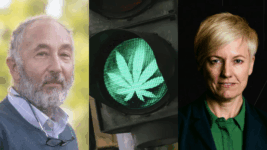
After 10 years of medicinal cannabis being a legal prescription drug, the New South Wales government has announced that it’s going to introduce a drug driving defence for those prescribed cannabis but are currently unable to drive without risk of conviction due to this state’s cracked drug driving regime, which prohibits persons from driving with the presence of any concentration of THC (tetrahydrocannabinol), which is the active ingredient in cannabis. And while this brought an estimated 300,000 users momentary relief, that was prior to reading the fine print.
The Minn’s government first spruiked its “commonsense approach” on 4 June 2026, which will see “drivers taking prescribed medicinal cannabis containing THC” no longer facing automatic penalisation for testing positive for traces of the lawful medicine in their system, yet they’ll be surveilled in the process, unlike drivers who take prescribed opiates and benzodiazepines.
If those who are prescribed the medicine want to drive in NSW, they’ll have to list themselves on a Transport for NSW medicinal cannabis user register, then, if testing positive, they’ll be banned from driving for 24 hours, while a laboratory ascertains whether the THC, which is the psychoactive component of cannabis, in their salvia exceeds a new legal limit of 50 nanograms per millilitre.
Yet, the NSW drug driving testing regime has been derided for decades now and long before the Turnbull government legalised the cultivation, production and use of cannabis medicine in 2016, and this is because, unlike random breath testing for alcohol which ascertains whether drivers are drunk, drug driving laws don’t test for impairment, but rather the mere presence of four select drugs.
So, after a decade of resisting calls for a simple defence where a prescribed cannabis user who tests positive for THC, and is obviously not impaired but has a prescription, is then able to raise this as a defence, the new proposal continues to criminalise these drivers, especially as, even though there’s a “three-strike” rule before charging, registered users will be identifiable to NSW police.
Hunting cannabis drivers made easy
“I’ve just had a cancer patient phone my office,” said NSW Greens MLC Cate Faerhmann in a 10 June social media statement, “She was distraught about the government’s proposed changes to drug driving laws for medicinal cannabis patients. She can’t believe what’s been announced by the Minns government with the backing of the cannabis party and the independent member for Sydney.”
“She said she’s worried this scheme… ‘just puts a target on her back’,” the NSW Greens parliamentarian continued. “I am increasingly concerned too, because 18 months after the drug summit, the scheme that these guys have come up with together to end discrimination against medicinal cannabis patients is establishing a police database of medicinal cannabis users.”
Faerhmann has been pushing for a medical cannabis driving defence long before anyone else in NSW state parliament. The Greens member questions why, as per the government’s press release, users of a legal medicine have to register in this manner to avoid conviction, as it means NSW police hold this information, as it will appear on the electronic drivers’ licences of all the drivers who register.
The Greens MLC has introduced several cannabis driving defence bills into parliament since 2021, with the guts of her latest proposal being, the insertion of subsection 111(1A) into the Road Transport Act 2013 (NSW) (the RTA) to provide a defence that can be raised with a magistrate to convey that the reason a driver has fallen foul of the law is because they’re using a medicine.
“I do have a question for them,” Faerhmann added, in respect of Legalise Cannabis MLC Jeremy Buckingham and Independent MP for Sydney Alex Greenwich. “Is this the best you could do? Seriously? A database of medicinal cannabis users at every police officer’s fingertips across the state, because if I was asked about it, which I wasn’t, I would have raised a few red flags.”
The laws relating to drug driving in NSW
Section 111 of the RTA contains the offence of drug driving or driving with the presence of certain drugs (other than alcohol) in oral fluid, blood or urine. The offence only relates to four prescribed illicit substances: THC, MDMA, amphetamines and cocaine. Drivers using prescription medicines that do impair, such as benzodiazepines and opiates, are not tested, and neither is heroin for that matter.
The difference between drug driving and drink driving laws in NSW is significant, as while police test for any presence of the four targeted drugs, which then leads to guilt, when officers test drivers for alcohol, they look at levels in the blood. This means the higher the level of alcohol, the more serious the crime. But it also means a low level of alcohol can result in no charge at all.
The NSW drug driving regime set out in section 111 of the RTA commenced in 2007 and drivers testing positive for the first time back then would be charged and have to go to court to face potential conviction, fining and licence disqualification. But since May 2019, first time offending drivers now face an on-the-spot fine of $704 and an instant 3-month driver licence disqualification.
This matter can still be challenged in court, however, and potential outcomes are then a finding of guilt, accompanied by a $2,200 fine and up to 6 months suspension from driving, or otherwise, a finding of not guilty and no penalties.
As for drivers who test positive for drug driving on a second or subsequent occasion within a 5 year period, there is no on-the-spot fine, as they have to go to court and face penalties of up to a $3,300 fine, as well as a driving disqualification which the court can set for a period that has no limit as a maximum but must involve at least a minimum 6 months suspension.
Yet, much has changed about the NSW drug driving regime, since the NSW District Court confirmed in July 2023 that, in line with a Liverpool Local Court decision several months earlier, drug driving is an absolute liability offence, meaning if the prosecution proves a person has been driving with a drug in their system, there are no defences or excuses available to them to avoid conviction.
So, currently, a person charged with cannabis driving cannot avoid a conviction if they are a prescribed cannabis user, and nor can they avoid it if the substance has ended up in their system by any other means besides taking it for recreational use.
So, the fact of the matter is, the NSW drug driving regime, which has always been unfair, is now significantly more unjust than ever.
Eradicate the proposed register
Southern Cross University Dean of Law David Heilpern is the campaign lead for Drive Change, which has long been calling for a medicinal cannabis drug driving defence.
As a former NSW Magistrate, Heilpern was involved in handing down three significant findings of not guilty in relation to cannabis driving, where it was found the driver tested positive while not impaired by the drug, and two cases involved the presence in the drivers’ systems being found to be due to reasons other than ingesting it for recreational use.
In terms of NSW Labor’s current driving defence proposal, Heilpern mused about over social media in an 11 June 2026 post, in which he considered whether those who’ve been campaigning for such a defence should be satisfied with what’s on the table, and the former magistrate considers that while there are some issues, it’s preferable to the medicinal cannabis defence available in Tasmania.
Tasmania has long had a medicinal cannabis driving defence in place, as that jurisdiction didn’t suffer convulsions at the prospect of allowing one. Heilpern explains that in the southern state, those testing positive for cannabis are suspended and charged with drug driving, prior to ending up in court, where they can then defend themselves based on being a prescribed cannabis medicine user.
The ex-magistrate argues that the Tasmanian system has an issue in terms of clogging up the court system, and he sees value in the three strike system proposed for this state, which can continue to result in no conviction, even if a driver takes the matter to court following having breached the third strike, and he further welcomed that the proposed law will be subject to a 12 month review.
However, the Southern Cross dean of law considers there are some problematic issues with the Minns government’s proposal, which are the requirements that cannabis medicine users have to register, whether they will be targeted by NSW police after doing so, which could include via number plate recognition technology, and the fact that the 50ng/ml cutoff is “arguably too low”.
“So, which model of these is best?” the former judicial officer asked. “The one not on the table, which is to treat THC like every other prescription medicine. Effectively that is an impairment model which exists for opioids, Valium etc. We all want that. The ALP and the opposition have no appetite for that – never have.”
“If we can tweak the current proposal to see regulations prohibiting targeting of registered users, it would be vastly superior,” Heilpern further asserted on the proposal that the Minns government has put out there. “Even as it is, I see it as better than the Tasmanian model.”
“But if we get no change at all, that would be a disaster.”

Paul Gregoire

Receive all of our articles weekly
Related Articles
 Drug Driving in NSW: Lawful Cannabis Use and Honest Mistake Are No Defence
 Medicinal Cannabis Drug Driving Defence Introduce in NSW Parliament
 Drug Driving Charges and the Defence of Honest and Reasonable Mistake
 Former Magistrate Heilpern Continues to Call for Medicinal Cannabis Driving Defence
 High Time: NSW Government to Consider Passing Medicinal Cannabis Driving Defence
 NSW Parliament to Consider Medicinal Cannabis Defence to Drug Driving