The Offence of Causing Grievous Bodily Harm with Intent to Avoid Arrest in NSW
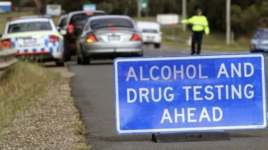
A 17-year-old boy was charged with causing grievous bodily harm with intent to resist arrest last week, after he allegedly accelerated a Mazda sedan in the direction of several New South Wales police officers in Sydney’s north on Saturday, 6 June 2026, and thereby hitting a 21-year-old police constable who sustained head injuries as a result.
The incident occurred after officers attached to North Shore Police Area Command spotted the Mazda on Borogegal land, travelling down Military Road in the suburb of Mosman at about 4.30 am on 6 June. Police allegedly attempted to stop the car, and say the driver failed to comply before a police pursuit began, with the Mazda then heading towards North Sydney, where it is said to have stopped briefly on Blue Street.
According to police, several officers then approached the stationary vehicle before the teen accelerated towards them, hitting one of the officers prior to colliding with an unmarked police car and then taking off.
The vehicle was later found abandoned on Cammeraygal land on Blues Point Road in North Sydney, with the aid of the NSW Police Highway Patrol and the dog squad.
The 17-year-old was arrested a short time later in the vicinity of the abandoned car, along with a 22-year-old man and two 17-year-old girls. The driver was also charged with further counts of use offensive weapon to prevent arrest in company, police pursuit, reckless driving, learner driving unaccompanied and driving a conveyance that was taken without the consent of the owner.
The 22-year-old man was charged with being carried in a conveyance without consent of the owner and having goods in custody suspected of being stolen. The two 17-year-old girls were released pending further investigations. And the 17-year-old alleged driver of the Mazda sedan was refused bail and was due to appear in the NSW Children’s Court on the following day.
The offence of Causing Grievous Bodily Harm with Intent to Avoid Arrest
Causing grievous bodily harm with intent to avoid arrest is an offence under section 33(2)(b) of the Crimes Act 1900 which carries a maximum penalty 25 years in prison.
To establish the offence, the prosecution must prove the following two elements, or ingredients, beyond a reasonable doubt:
- A person caused grievous bodily harm to another person, and
- The person did so with intent to resist or prevent his, her or another person’s lawful arrest or detention.
The offence sits alongside the offence of cause wound with intent to avoid arrest, which is contained under subsection 33(2)(a) of the Crimes Act, and it also carries the same maximum penalty of 25 years gaol time.
The courts have defined grievous bodily harm as any “really serious harm” and Section 4 of the Crimes Act provides that such harm includes “any permanent or serious disfiguring” of a person, or causing someone to contract a grievous bodily disease, or the destruction of a foetus of a pregnant woman, regardless of whether the woman is harmed, other than under circumstances of a termination, in line with the Abortion Law Reform Act 2019 (NSW).
The legislation does not similarly specify injuries that are included in the definition of ‘wound’. However, case law makes clear it includes the breaking of the continuity of the victim’s skin. This means that both the top layer of skin, the epidermis, and the bottom layer, the dermis, must both be broken. A split lip can be considered a wound under this definition.
Section 33 of the Crimes Act also includes the offences of intentionally causing grievous bodily harm, which carry 25 years imprisonment as well. Subsection 33(1)(a) contains the offence of intentionally wounding someone, while subsection 33(1)(b) sets out the offence of intentionally causing grievous bodily harm.
Subsection 33(3) of the Crimes Act provides for an alternative verdict for a section 33 charge, in cases where a jury is not satisfied that an accused is guilty of intentionally causing grievous bodily harm or wounding, but it is satisfied that they caused such harm in a reckless manner, and then it can find the defendant guilty of the lessor offence under section 35 of the Crimes Act.
A shift in fault elements
When an offender is found to have caused a crime in a reckless manner, it means that they weren’t trying to achieve this outcome, but in acting in the way in which they did, they were well aware of the risks that a crime could transpire, and yet they went ahead and acted in this manner regardless of the potential for the wrongdoing that did eventuate to occur.
The current version of section 33 of the Crimes Act, which contains four separate offences, was inserted into the legislation by the Crimes Amendment Bill 2007, which sought to modernise a number of key offences in the Crimes Act. Prior to the changes, section 33 had contained the offence of maliciously wounding with intent to do bodily harm or resist arrest.
A key part of this reform bill was to remove the fault element of “maliciously” from many offences within the Act and replaced it with the two fault elements of “recklessly” and “intentionally”. Maliciously was a broad fault element that covered both reckless and intentional perpetration of crime and the prosecution had to then prove which element had been involved in the crime charged.
Defences against GBH to avoid arrest
There are several defences available to a person charged with intentionally causing grievous bodily harm to avoid arrest under NSW law.
Contained in section 418 of the Crimes Act, self-defence can be argued against a charge of cause grievous bodily harm with intent to avoid arrest. This defence entails a defendant arguing that they committed the act that they’ve been charged in relation to in order to defend themselves or someone else against harm or prevent the unlawful deprivation of their liberty or another person’s.
Self-defence can also be argued in cases when the defendant was acting to stop the destruction of property or to prevent unlawful trespass. However, this defence cannot be raised against an instance of protecting property or stopping trespass if the actions of the defendant have caused death or serious injury to the person alleged to having been attempting the property damage or trespass.
Duress is another defence that can be raised against intentionally causing grievous bodily harm. This involves a defendant putting to a court that they carried out the action of which they’ve been charged over, as they were trying to avoid a much greater threat of harm made against themselves or a loved one. The threat must be shown to have been great enough to warrant the law breaking.
The defence of necessity can also be raised against a charge of intentional grievous bodily harm, and it involves a defendant arguing that they perpetrated the act that they’ve been charged in relation to in order to avoid much more dire circumstances from arising. This involves proving to the court that there had been significant danger that the defendant was trying to avoid via their actions.
And another lesser-known defence is open to a charge of intentional grievous bodily harm and that is the defence of lawful correction, which is contained in section 61AA of the Crimes Act, and it involves a parent arguing that they used force against their own child in order to discipline or punish them. A child is someone under 18, and the defence is open to a step-parent or de facto parent to argue.
Sentencing youths
As the defendant in the current case is a 17-year-old boy and he is being dealt with in Children’s Court, he would, if he ultimately pleaded guilty or was found guilty, be sentenced in a different manner than an adult who committed the same crime, and this is in accordance with the regime set out in the Children (Criminal Proceedings) Act 1987 (NSW) (CCP Act).
Under NSW law, a child is considered anyone under the age of 18. However, due to the age of criminal responsibility being set at 10 years old, only minors aged between 10 and 17 can be charged and tried over crimes, as well as being sentenced to serve time in a youth justice facility.
Section 6 of the CCP Act lists the principles involved in trying and sentencing minors in the NSW courts, and these include children having the same rights to be heard and to participate in court proceedings as adults do, along with minors having to bear the responsibility of their actions, but due to their level of maturity, they require guidance and assistance, rather than harsh penalties.
Further principles guiding criminal proceedings against children are that where possible a child should be able to continue their education, any employment and to live at home, whilst being punished for their crime. Another guiding principle when dealing with a child in the courts is that the penalty imposed should not be any greater than that which an adult could receive for the crime.
A child offender should also be assisted with reintegration into the community after being dealt with by the courts or the youth justice system. Children are expected to accept responsibility for their crimes, pay any reparations that are required of them, and in dealing with a child offender within the justice system, consideration should be given to the effect that their crime has had upon any victim.
The CCP Act also lists the penalties that can be laid against a child offender under section 33, which include dismissing the charge against them, and then either cautioning them or imposing a good behaviour bond of up to 2 years upon them.
But if the child is to be convicted, the court can then sentence them to serve a good behaviour bond of no more than 2 years or impose a fine of up to $1,100 upon them, that is unless the maximum fine that applies to the offence they are convicted over is a lesser amount and then that should be the punishment that is incurred by the child.
Other alternative sentencing outcomes for minors involve releasing a child on the proviso that they undertake an outcome plan in accordance with the Young Offenders Act 1997 (NSW), or there is the option of pausing proceedings for up to 12 months, and on readjournment, then assessing whether any punishment is needed, based upon the child’s rehabilitation over the interim period.
And further options open to the court are to release a child on probation for up to two years, or to impose a combination of the available penalties upon them, or if the child’s crime is serious enough, the case can be committed to an adult court for finalisation, and an assessment can then be made as to whether to impose a more serious penalty upon the individual than a child would usually receive.

Paul Gregoire


Ugur Nedim
Receive all of our articles weekly
Related Articles
 The Offence of Recklessly Causing Grievous Bodily Harm in NSW
 What is Grievous Bodily Harm in Criminal Law?
 Degrees of Harm in Assault Offences
 The Offence of Wounding or Causing Grievous Bodily Harm With Intent in NSW
 The Offence of Causing Grievous Bodily Harm By Misconduct in New South Wales
 The Offence of Assaulting a Police Officer in New South Wales