NSW Police Go Ballistic with Drug Dogs on Oxford Street, Again, to Destroy Pride Month
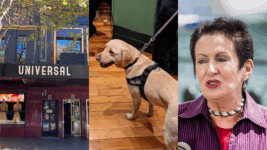
New South Wales police love to kill a party, and this month, it’s been targeting Pride celebrations, by running packs of officers and drug dogs through late night venues on Gadigal land around Sydney’s Oxford Street precinct, which has caused so much outrage and disappoint that the Sydney lord mayor and the Independent MP for Sydney have complained to the state police oversight body.
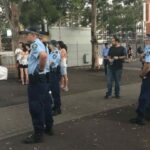
Sydney lord mayor Clover Moore and Independent MP for Sydney Alex Greenwich sent a complaint to the Law Enforcement Conduct Commission last Thursday, 18 June 2026, after the Saturday night prior had seen a number of venues, including Universal and Kinsella’s, aggressively raided by a group of six to twelve officers, who started marching patrons off to the toilets to strip search them.
Their letter to the LECC requesting it investigate outlined that the pair had been “inundated” with complaints – the most in “more than 10 years” – which involved groups of cops “saturating venues”, as officers were seen to push, shove and aggressively direct patrons to move, while “shining bright flashlights in their faces, sometimes laughing and appearing to enjoy themselves”.
Pride month is a global celebration of LGBTIQA+ culture held in June. After decades of complaints about police drug dog and strip search operations, the suggestion had been they were being pulled back. But NSW police said it conducted 93 searches on the night, 42 of which saw drugs detected. Yet only one person was charged with drug supply, and that’s what the dogs are supposed to target.
In terms of killing the party, that’s exactly what police did, as eyewitness reports repeatedly cite that the result of the drug dog raids on Oxford Street venues was that many “traumatised” patrons cleared out, during or in the aftermath of the police interventions, which, ultimately, failed in terms of curbing drug supply but triumphed in the aim of upsetting the queer community’s celebrations.
The purposeful targeting of Pride
“People were subjected to searches in full public view, pushed against walls, forced to remove clothing and have their body searched,” Moore and Greenwich wrote to the LECC. “They report feeling humiliated. One person felt so traumatised they couldn’t stop crying and had to leave. One person reports that they were searched only after an officer directed a sniffer dog to ‘sit’ near them.”
“While police say that the raid was aimed at finding drug suppliers, the evidence shows that police searched and targeted people they believed used but did not sell drugs,” the two Sydney politicians continued. “The role of police is to protect the community from harm, not to intimidate them, treat them with suspicion for no reason, or spoil their fun.”
NSW police began the warrantless use of drug dogs in public in 2002. The stated aim was to curb drug supply. The 2006 Ombudsman report found only 26 percent searches turn up any illicit drugs. The NSW Greens Sniff Off campaign long determined no drugs being found two-thirds to three-quarters of the time. And the overwhelming majority of detections fail to catch out drug suppliers.
The NSW police drug dog detection operations on Oxford Street on 13 June 2026 had a success rate of 1 percent in terms of supply.
The hazards of police drug dog use started being raised in the early 2010s and by mid-decade, accompanying strip searches were also being called out. Key issues were the targeting of train stations in certain areas, the running of dogs through pubs and clubs and their increasing use at music festivals, while using dogs to target LGBTIQA+ venues and events has always been involved.
The largest ever class action against the NSW Police Force was run last year, in relation to the unlawful strip searching of people during drug dog operations at festivals. The court found the law requires “seriousness and urgency of the circumstances” to warrant a strip search, but suspicion of drug possession or a dog indication doesn’t meet this. Yet, this is what was happening at Pride.
“We have worked over many years to build strong relationships between the police and the LGBTIQA+ community so that people feel safe to report crimes against them, including hate crimes, and we worry that Saturday night’s raid has undermined that work,” Moore and Greenwich underscored in their letter to the LECC last week.
Ramping drug dog operations back up
During a February budget estimates hearing, NSW Greens MLC Cate Faerhmann raised the “extremely invasive” practice of police running dogs through “Sydney’s bars and nightclubs” on a regular basis, similar to the 13th June Oxford Street spate. The top cop didn’t justify such operations but instead claimed he was “unaware of the circumstances” and would be briefed on the matter.
NSW police superintendent Paul Dunstan told the parliamentary inquiry into NSW live music in May that the force has had “a slight change in strategy at the music festivals in the enforcement of drug possession, in particular”, and that the NSW Police Force has “now pivoted to a more drug supply focus”, which is what drug detection dogs have always supposed to have been about.
“The days of young people attending festivals and going through a gauntlet of police lined with drug dogs are behind us,” Dunstan maintained. “We still have drug dogs, and we don’t apologise for having drug dogs in and around the festivals, but we focus on the supply of drugs, not the possession.”
Yet, the superintendent’s assertion that the focus of drug dog operations has shifted was not on display at Pride.
Faehrmann again raised the issue of the dogs during a live music inquiry hearing on 18 June, and as she referred to the impact of officers and dogs descending upon licensed premises is having, she raised the 13th June spate, and Night Time Industries Association vice chair James Thorpe said that due to the last Saturday raid on Universal, it had pulled in only 30 percent of its usual takings.
Thorpe said that NSW police are currently running drug dogs through Oxford Street’s Universal once a month. He further suggested that there is a “ramping up at the moment of these operations”. And he added that on the 13th, a drag queen had been taken into the toilets at Universal and strip searched, despite the “ruling that a drug dog indication alone is not grounds for a general search”.
The vice chair added that drug dogs are being run through venues all the time, and it involves state liquor and gaming laws “being weaponised” as an excuse to conduct such operations, while there’s “no intention of prosecuting people” under those laws, as “drug possession” is the real focus. And he added that the dogs are the “last structural barrier” when promoters consider putting on events.
A reactionary force
The NSW Police Force descending upon Oxford Street in Pride month is of heightened significance because law enforcement has a troubled past with this state’s LGBTIQA+ community, whether that be in its dismissive response to a crisis in gay hate crimes and murders over the last three decades of the 20th century or the beating officers gave participants in the initial 1978 Mardi Gras parade.
The campaign against the rampant and unlawful use of drug dogs and strip searches by the NSW Police Force was at fever pitch towards the end of the 2010s, and the main reason that it dissipated was that the COVID pandemic and its accompanying lockdowns killed state law enforcement’s overuse and misuse of these policing practices.
Numerous inquiries, a coronial inquest and the 2024 NSW Drug Summit have recommended that drug dog and strip search operations at music festivals should be ended, as it’s repeatedly been found that their presence causes young people to engage in dangerous drug taking practices to avoid being detected and at times, this can result in overdose and even death.
But the inference is NSW police is ramping up its raids on licensed venues again, while the Oxford Street raids fly in the face of long-term efforts to improve police relations with the queer community, and the force is also appealing last year’s strip search class action ruling, and in particular, its arguing that officers have the right to use force to move body parts during strip searches.
So, the assertion that the agency might be taking a different tack in its approach to policing the community doesn’t match up with what’s occurring on the ground, and the most significant example of this would be the fact that around 3,000 NSW police officers likely unlawfully brutalised a group of 20,000-strong protesters at a rally in February, and no apology or legal recourse has transpired.
Main image: Universal Nightclub photo by SproulesLane is licensed under CC BY-SA 4.0. Drug dog photo used with permission of Sniff Off. Clover Moore photo by Hpeterswald is licensed under CC BY-SA 4.0.

Paul Gregoire

Receive all of our articles weekly
Related Articles
 Sniffer Dogs: False Positives and Limits to Police Powers
 Sniffer Dogs and ‘Reasonable Suspicion’
 NSW Police Are Strip Searching Around 100 Civilians at Public Train Stations Annually
 NSW Police Use of Drug Dogs and Strip Searches Slammed as Ineffective and Unlawful
 Is a Positive Indication by a Sniffer Dog Enough for Police to Search You? Part 1: “Reasonable Suspicion”
- Is a Positive Indication by a Sniffer Dog Enough for Police to Search You? Part 2: Applying Empirical Data