AI CCTV Scanning Proposed for Sydney City, While Drone Policing Is Being Rolled Out in Perth
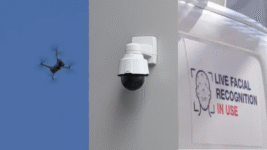
After decades of warnings from civil liberties experts, technology has reached a point where a deluge of methods to surveil the public are being developed, deployed and honed. With the question relating to the most recently announced surveillance regimes – AI CCTV surveillance on Gadigal land in Sydney and drone policing on Noongar land in south Perth – being which type is the most invasive.
The Murdoch press revealed on 1 November 2026, that the City of Sydney is to overhaul its Street Safety Camera Program, which involves 100 CCTV cameras across Sydney. The October draft proposal suggests enhancing this security, by installing artificial intelligence, or AI, capabilities into the CCTV directly or via additional software, in order to flag suspect behaviour prior to crime occurring.
WA police minister Reece Whitby announced last week that Western Australian police are going to start drone policing in the southern Perth suburbs of Baldivis, Kwinana and Rockingham. This is prior to a broader roll out of the Drone as First Responder (DFR X) program. And Main Roads Western Australia began using drones to surveil road traffic in Freemantle in June 2026.
In terms of employing new tech to surveil the public, it would appear that the New South Wales government and the WA government are conducting something of a tag team effort. As in the earlier months of 2026, the NSW Police Force trialled drone policing on Gomeroi land in the town of Moree, while WA police began using biometric facial scanning tech in Perth to monitor people on the street.
The rollouts of these technologies in the far west and far east of the continent have been criticised, as their introduction didn’t involve any legislation, which meant these developments avoided parliamentary scrutiny. And while some in NSW have quipped that regional drone surveillance would never make it to the suburbs of Sydney, developments in Perth make this assertion questionable.
AI surveilling in Sydney city
On 26 October 2026, the City of Sydney posted the draft proposal to make changes to the Street Safety Camera Program (SSCP), and it is currently seeking public feedback. The program currently involves 100 cameras operating in high-risk areas across the city 24 hours a day. The proposal involves AI either being built into these devices, or via artificial intelligence software addons.
The primary purpose of the SSCP is to counter armed robbery, robbery with wounding, robbery in company, extortion, assault, assault occasioning grievous bodily harm, assault occasioning actual bodily harm, sexual assault and aggravated sexual assault. The secondary purpose is to counter motor vehicle theft and stealing from motor vehicles.
The use of AI in CCTV systems is known as camera and systems data analytics (CSA).
“The purpose of using CSA is to assist with the identification of suspicious activities and aid in the searching of people of interest wanted in relation to crime committed, with such purpose being limited to the purposes of the SSCP,” states the draft proposal, which is an updated version of the SSCP code of practice, that’s currently posted to the City of Sydney website.
“In specific terms, the purpose is to identify and alert City of Sydney Control Room staff to unusual behaviour, streamline response times and reduce time spent searching footage when reviewing application by police.”
The proposed updated code stipulates that the biometric facial recognition tech used to automatically recognise human features in public is banned. Rather, the AI tech being employed can scan the public in real time to identify specific kinetic movements that suggest criminal behaviour may be about to happen. This can involve groups gathering or vehicles going in the wrong direction.
Aerial surveillance
The WA police minister’s 25 October presser announcing the rollout of drone policing to an initial three suburbs in south Boorloo-Perth spruiks the tech as “Australian-first drone technology”, even though NSW police commenced these sorts of operations in Moree at the beginning of the year. WA authorities have too, just like their counterparts in NSW, claimed this is not about surveillance.
But Whitby too describes the drones as the WA police having an “extra set of eyes in the sky”. These drones will launch from a dedicated centre command in the Perth CBD. And he adds that WA police will focus on “hooning, missing persons, land searches, family and domestic violence matters, welfare concerns, stolen motor vehicles and crimes in progress”.
The rollout of the drone surveillance technology trial in the northern NSW town of Moree was predicated on rising crime in the region. Yet, whether the determination was further due to Moree’s having a distinctly large Aboriginal population was also questioned. And anecdotal evidence suggests that these devices have been deployed mainly to Aboriginal areas of the town.
But after the trial, NSW authorities announced the program would be rolled out to other regions prior to the official review being released. In fact, officials announced statewide rollout at the same time as announcing the initial trial. And whilst it’s expected this will involve roll out to other regional towns with large First Nations populations, the Perth announcement tends to portend urban rollout.
An electronic panopticon
The rollout of these technologies in the two separate jurisdictions at the top of the year was concerning, but this week’s revelation that both states are now set to introduce the invasive tech that the other did earlier, tends to signal that the public ought to get used to these mounting encroachments, as CCTV AI surveilling and drone policing are likely to soon appear nationwide.
These developments are occurring in the same year, as the public has been made aware of the potential dangers of AI tech, which is to play an increasing role in public life. AI is going to lead to large numbers of unemployed, while numerous datacentres are being built to detriment of the environment, and the understanding that our electronic devices are tracking us is now much clearer.
Further, US data analytics company Palantir is building a vast electronic surveillance system that specialises in incorporating ever more data from different silos to produce fresh data points. With the support of US president Donald Trump and widespread use by US government departments, Palantir is also understood to have vast amounts of data on American citizens incorporated into its system.
This technology, which is being used to surveil publics and in weapons systems, has been incorporated into increasing numbers of Australian government departments since the mid-2010s. While Australian private sector companies have been switching to Palantir systems. Yet, some are now experiencing public pushback, which has led to Westpac and Coles ditching Palantir tech.
NSW has just made its 2024 created temporary wanding laws permanent, which allow officers to run metal detectors over randomly selected constituents’ clothing to ascertain whether they might be concealing a knife. Such regimes, which do away with any need for a ground of reasonable suspicion, now exist in the Northern Territory, WA, South Australia, Tasmania, Victoria and Queensland.
The imposition of these wanding powers in NSW serve to accompany laws that already permit NSW police to use sniffer dogs in public and to search those indicated by a canine for drugs. And increasingly over the last decade, such searches that prove fruitless are followed by a traumatising strip search. Yet, both these types of searches prove unsuccessful two-thirds of the time.
Most of these surveilling technologies and techniques have been incorporated, or are now being foisted upon the public, without any consultation. And whilst wanding laws were debated in NSW parliament, the roll out of drone policing and AI CCTV cameras are avoiding parliamentary scrutiny.
Given the right circumstances, NSW police can apply to a judge for a telecommunication service warrant, under section 46 of the Telecommunications (Interception or Access) Act 1979 (Cth), so they can track individuals every move via their mobile phones.
However, if this isn’t possible, there are a myriad of CCTV cameras already distributed around the streets, permitting the authorities to track constituents as they move about in public. But for a more streamlined method of surveilling people whilst they are out and about, NSW police may soon be able to track the movements of many more constituents from the sky with the use of drones.
Image: WA police van taken from WA incident alerts Facebook post. NSW police drone images from NSW police images for the media. CCTV camera taken by Paul Gregoire

Paul Gregoire

Receive all of our articles weekly
Related Articles
 What is the Sentencing Appeals Process in NSW?
 People from all backgrounds have found themselves in trouble for Drug Possession. Find out How to Avoid a Conviction.
 Supermax Prisons: More Harm than Good?
 Police Name and Shame Child Suspects on Facebook
 The Use of Solitary Confinement on Kids Must Be Banned
 Justice Has Been Denied to Julian Assange, Who “Plead Guilty to Journalism”