Unreliable Facial Recognition Technology Will Soon Be Used by Police Nationwide
Date published 10 July 2026
The Western Australia Police Force announced on 19 June 2026 that it is trialling the use of live facial recognition technology to randomly scan people passing through public areas to potentially match them in real time to a watchlist containing facial images of people law enforcement is looking for. And this quiet little development likely presages continentwide use of the technology.
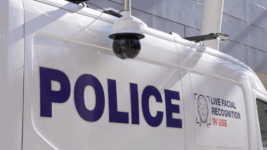
WA police are trialling live facial recognition using vans deployed to public places. The cameras are attached to the vehicle or a stand beside it. The van states that police are using live facial recognition and there is additional signage notifying passersby. Officers with computer equipment are inside the van. And the watchlist contains 4,000 photos: some of suspects, while others are missing persons.
Ten van deployments took place across a number of Boorloo-Perth districts over the first seven days of the trial. WAPOL states that it scanned 131,478 civilians, which generated 33 alerts, one of which was a false positive detection. Eighteen arrests had taken place, 21 sex offenders were identified and engaged with, while two welfare checks took place and an assault incident in a mall was foiled.
The trialling of live facial recognition in WA is rather unobtrusive. It will garner much less national attention than if New South Wales police attempted it. This method of introduction also avoids the pushback that the now defunct 2017 Turnbull government proposal to establish a national facial recognition system, which sought to match civilian ID photos with CCTV images in real time, received.
WA police commissioner Col Blanch last month explained, “This is the first time in Australia that we will be using this technology. But it is used in other jurisdictions, particularly in the UK.” Yet, the top cop failed to mention that right now permanent live facial recognition cameras that initially appeared in London last year are being expanded, whilst the legislation to govern their use is yet to be passed.
A brave new mass surveillance
“An important thing for us in our police force working with our community is transparency and public safety,” Blanch said on announcing the trial in June. “That is why the van has “police” written on the side. It has very clear signage about what it is doing. It is about bringing our community along with us and explaining exactly what we are doing.”
“This is not about mass surveillance,” he added. “This is about specifying those in our community, who are wanted by police because there is an arrest warrant out for them – who are on sex offender lists who should not be in the vicinity, particularly of young children – but it is also about helping missing people or older people with dementia who have gone missing and identifying them.”
A key issue regarding the use of facial recognition is that it’s been showed to be highly flawed in the past. Big Brother Watch UK has been monitoring the use of such technologies for decades. In 2018, it found that UK police were getting it wrong 81 percent of the time when employing the tech. Yet, the UK National Physical Laboratory now considers it produces 99 percent accurate results.
The bias latent in facial recognition technology means that it misidentifies people of colour at much higher rates than white people, and it has a tendency to misidentify women rather than men. And Big Brother Watch maintains that 80 percent of those misidentified by these cameras in London in 2025 were Black people.
As Blanch notes, facial recognition use is nothing new, as WAPOL has been employing it for over 14 years. In the past, WA law enforcement was using facial recognition in relation to footage after it had been captured. And this older tech continues to be used across all Australian police forces, including the one in NSW.
The NSW Police Force, however, did stop its use of the Cognitec PhotoTrac Suspect Identification System in February last year, as the suspect generating facial recognition tool was still operating under a racially biased algorithm developed in 2011.
The difference with the new technology that WA police are employing for the first time in this country is that it involves live feeds from cameras that can match faces in real-time with a watchlist database.
A longtime governmental want
Australian authorities toying with the idea of mass surveilling the constiuency while it is out in public is not a new development. At an October 2017 Council of Australian Governments (COAG) meeting, the predecessor to the National Cabinet, all states and territories signed onto a proposal to establish the National Facial Biometric Matching Capability.
This system then became the pet project of December 2017-appointed Australian home affairs minister Peter Dutton. The Capability was to involve the linking of all federal and state driver licence, identification and passport photo databases via a central hub that would be available to all law enforcement agencies and have the ability to match faces captured via stills of CCTV footage.
This proposal sent civil liberties advocates and digital rights experts into a tither, as what was being proposed was a mass warrantless surveillance system utilising technology that was known to be prejudicial in its application. The Capability would have been a disproportionate invasion of the right to privacy for all, and “function creep”, or expansion of its use and purposes, was likely to occur.
Unlike that now being utilised by WAPOL, Dutton’s system was to involve capturing footage via CCTV, producing an image and then matching that with any of the millions of ID photos the government has stored in real time. And by the time this was flagged, then attorney general George Brandis had already established a manual version of this solely using passport photos at the federal level in 2016.
Renowned Australian barrister Julian Burnside told Sydney Criminal Lawyers at the time that home affairs was seeking to establish the Capability, that “it would amount to having plainclothes policemen on every street, watching out for specific individuals who are of interest to the government for one reason or another”.
Two pieces of federal legislation were introduced to establish the Capability, one to facilitate the use of passport photos and another to provide for the exchange of information for identity matching purposes right across all jurisdictions. These bills lapsed with the close of parliament ahead of the 2019 election. And NSW parliament also passed a 2018 bill to facilitate the system’s use in this state.
The playbook to expand is set
The idea that after WA police trials live facial recognition in its jurisdiction, the state then moves to make it permanent, while this is subsequently followed by the other states and territories rolling out the same technology, which will eventually morph from riding in vans to becoming installed in stationary positions, prior to any legislation being passed to govern its use, has precedent.
This is what has occurred in the United Kingdom. South Wales commenced using mobile live facial recognition technology in 2017, whilst the Metropolitan police of Greater London began using it in 2020. A 2020 UK Court of Appeals case found that the use of the technology in South Wales was unlawful, as it had too broad an application. But current systems now conform to this ruling.
The use of live facial recognition by UK law enforcement is now set to be expanded across the country. In October last year, the Metropolitan police started trialling the use permanent stationary live facial recognition cameras in south London’s Croydon, which was hailed as a success in January. And last month a massive expansion of these static cameras was announced for Greater London.
“Tackling crime hotspots is in everyone’s interests, but the Metropolitan police’s rosy picture of this approach masks a dangerous reality,” said Big Brother Watch UK head of advocacy Jack Coulson last month. “Expanding the use of live facial recognition to static cameras is an alarming escalation of an intrusive technology which has already scanned the faces of millions of innocent Londoners.”
“Legislation to regulate the police’s use of facial recognition is expected in the autumn. Yet the police are rushing ahead with AI monitoring of the public under their own rules,” the privacy expert continued, in commenting on the process by which these technologies are now being implemented.
“We are calling on the Met to stop this experiment until, at least, parliament has spoken. Policing by consent is a cultural inheritance we must protect. Permanent biometric surveillance of the public square is incompatible with that ideal.”
Main Image of side of a WA police van taken from a post on the WA incident alerts Facebook page

Paul Gregoire

Receive all of our articles weekly
Related Articles
 Failed Facial Recognition Project Costs Taxpayers Millions
 Facial Recognition Technology: Coming to a Pokie Room Near You
 Facial Recognition Technology: Turning Innocent People Into Suspects
 Queensland’s Facial Recognition Regime a Complete Failure
 NSW Police Stop Using Ineffective and Racially Biased Facial Recognition Identification System
 Australia’s Future Is Nationwide Facial Recognition Surveillance