Mental Health Experts Will Soon Provide an Alternative First Response to Crisis Callouts
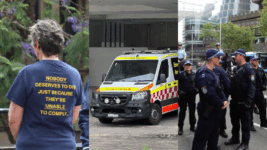
Social justice advocates breathed a sigh of relief last week, when the New South Wales government announced it is establishing an alternative to NSW police as first responders to mental health crisis callouts. This will involve an emergency line connecting to “specialist clinical support”, and it aims to curb the ongoing issue that involves police using force against those in trouble, often to lethal effect.
The Minns government announced on 30 July 2026 that it’s investing $270 million over the next decade to facilitate the new model, designed in consultation with NSW Health and NSW police, that will provide a separate “dedicated team of mental health experts” that a person placing a Triple Zero emergency call about a mental health episode can be connected to.
Sending out police to deal with mental crises is a decadeslong issue that raised its head again in May 2023, when a NSW police officer fatally tasered a 95-year-old woman with dementia during a crisis callout. By January 2024, there had been five such crisis fatalities statewide, and then the callout and killing of Waterloo man Colin Burling in mid-2025, took the issue to new levels of macabre.
Following the fatal tasering of the great-grandmother, a push from the NSW Greens and a civil society campaign calling for an alternative solution saw a 2023 NSW parliamentary committee inquiry recommend similar reforms to that then being contemplated by the London Metropolitan police. Indeed, the United Kingdom’s Right Care, Right Person model has shaped the local initiative.
Those behind the sustained campaign to end the practice of sending armed police officers out to deal with people having a mental health episode have welcomed NSW Labor’s decision to roll out a “health-led response model”. Although questions are being raised about why the eight specialist teams that will be operating seven days a week, will only be available 12 hours a day.
Alternative first responders
“We welcome the new health-led response arrangement for responding to mental health crises,” said NSW police minister Yasmin Catley last week. “Police have worked cooperatively with NSW Health to develop this model of care. It is critical that people experiencing mental health emergencies get the care they need.”
“Police will always respond when a police response is required to ensure public safety and the safety of those responding,” the minister added. “That does not change.”
The NSW model will involve continuing to call Triple Zero for all emergencies, but when the call involves a mental health crisis, the operator will be able to put the caller through to clinical support, which will then open up a number of alternative responses ranging from counselling, local mental health services and “the new specialist Mental Health Acute Assessment Team”.
A statewide Virtual Mental Health Hub will be run by Ambulance NSW. Eight Mental Health Acute Assessment Teams will be stationed in areas of heightened need across the state. And this initiative will open up around 100 new full-time jobs. However, a question that hangs over the proposal is that which involves it only being in operation for 12 hours a day.
The 2023 NSW parliamentary inquiry into mental health access and the NSW coronial inquiry report into the Westfield Bondi Junction mass murder both recommended an alternative health-centred response to community crises, while the Alternative First Responders campaign had been highlighting the need for reform within the community.
The eight mental health teams will include a paramedic and a mental health nurse, who will deliver specialist care to those in crisis. Team members will be able to provide in-person support to people having an episode, as well as arrange for their ongoing care and transportation to a NSW Health facility if need be.
Deadly first responses
“The NSW government has been designing the new health-led response model following a series of mental health emergencies that highlighted the need to strengthen the way responses are coordinated across emergency services,” the 30 July press release announcing the reform continues.
The incident that really brought the need for alternative first responders to a head was the tasering of 95-year-old Clare Nowland in a nursing home situated on Ngarigo land in the NSW town of Cooma. NSW police had been called out as the great-grandmother, who suffered dementia, was walking the halls of the accommodation centre carrying a steak knife.
Then NSW police constable Kristian White determined to twice taser Nowland, as she was attempting to leave the room she was in with the aid of a walking frame. This caused the elderly woman to fall over and strike her head, which then led to her death in hospital a week later.
Another key incident motivating the campaign for an alternative was the shooting of 43-year-old Jesse Deacon on Gadigal land in his public housing apartment in Glebe on 20 July 2023. NSW police had been sent out to check on him due to reports that he’d been self-harming, and when officers found him holding a knife, a failed attempt of one to taser him was followed by a fatal shot.
The inquest into the police killing of Deacon is currently before the NSW Coroner’s Court. The ex-officer who shot Deacon apologised for doing so, on giving testimony at the coronial hearing. Jesse’s mother Judy Deacon told the ABC that she welcomes the news that the alternative mental health support service will be available, but she questioned its 12 hours a day operating limit.
Questions also remain as to whether 45-year-old Colin Burling warranted a mental health check after he was killed by police on Gadigal land at his Waterloo home early morning on 15 July 2025, after fire brigade employees had called the police about him. His partner then filmed a number of NSW police officers wrestling him to the ground and holding him down until he stopped breathing.
The police too insist on reform
The NSW Police Force released its internal report on the need for a new system of first responders to public crises in September 2024, and it was clear that the agency considered an alternative was necessitated. The key recommendation made by the NSW police report was for the type of initiative that is now being rolled out, which was in line with the findings of the NSW parliamentary inquiry.
“Using police officers as the primary response to mental health crisis increases the risk of adverse outcomes for mental health consumers, limits appropriate service engagement and treatment, and increases missed opportunities to address consumer mental ill health,” the NSW Police Force report sets out.
“In these cases, the involvement of law enforcement is often perceived as a threat, an authoritarian response and an escalating factor,” the document continued, and added that the majority of the mental health callouts made to police don’t involve any crime or the use of any weapons.
The report further stated that NSW police is being called out to a mental health incident every 9 minutes. This translated to officers being deployed to 61,164 mental health incidents involving no criminal behaviour over 2022, and these incidents were seen to have been increasing at a pace of 10 percent annually since 2018.
The 2023 NSW parliamentary inquiry that considered the alternative to police as first responders took place as the London Metropolitan police was preparing to roll out its Right Care, Right Person first responders model in November 2023, which involves a second emergency phone number that the public can call that only connects to specialist clinical assistance.
Right Care, Right Person is now operating across England and Wales. A December 2024 assessment of how the program was operating found that a barrier to success was attempting to provide health and social support alternatives to all the incidents that police had been covering, whilst law enforcement had perceived a reduction in demand and less time being spent on certain incidents.
Main image: Photo of NSW ambulance from Shutterstock. Photos of person in shirt and that of NSW police by Paul Gregoire
Paul Gregoire

Receive all of our articles weekly
Related Articles
 The National Justice Project Is Calling for Alternative First Responders to Police: An Interview
 Critics Call High Time on NSW Police as First Responders, as Labor Contemplates Change
 Despite Calls for Reform, NSW Police Officers Are Still Killing Mentally Ill People in Crisis
 Parliament Finds Policing Mental Health Crises Is Deadly, But Major Parties Resist Reform
 NSW Police Officers Cause Death of Yet Another Mentally Ill Person
 NSW Police Fatally Shoot Yet Another Civilian During a Mental Health Callout