Use of Body-Worn Video Cameras Is Now Mandatory for NSW Police Officers
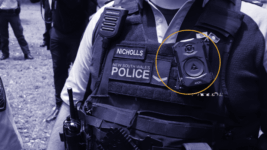
From Thursday, 5 August 2026, all New South Wales police officers have been required to turn on their body-worn video (BWV) cameras when working in an “operational capacity”, including when exercising their law enforcement powers, using force, attending serious crimes and conducting police pursuits. And the decision to progress this long-sought reform came after an ABC Four Corners report exposed widespread police brutality.
The NSW Police Force updated its BWV standard operating procedures on Thursday with the new policy given the moniker “When the job’s on, switch on.” The revised SOPs outline that officers are required to have their cameras on when exercising any policing power, including use of force, as well as if they’re a passenger during a pursuit or in the vicinity of another officer exercising powers.
The Law Enforcement Conduct Commission released its report calling for mandatory BWV camera use by NSW police officers in March 2025, which came on the back of NSW deputy state corner Harriett Grahame having recommended that the wearing of BWV devices be required for all tactical police in NSW and that these cameras be switched on in the field, as part of a 2024 coronial inquest.
The NSW Police Force commenced trialling BWV in 2013. The first 300-odd cameras were rolled out across 21 police area commands in 2016. And the NSWPF currently has a little under 10,000 Axon Body4 BWV cameras operating, with a further 1,700 legacy m-View M1 BWV cameras in use across the state as well.
Body-worn video is considered to lower the number of incidents that escalate to violence, reduce paperwork and lessen complaints. But as the Four Corners documentary revealed, officers are at times refusing to switch on cameras, as well as muting them while in use. Although the violence captured by BWV that was aired during the report, proves that BWV will not end police brutality.
When the jobs on, switch on
“The mandatory use of body worn cameras by police officers is a very important development in policing in NSW,” LECC chief commissioner Peter Johnson SC said in a statement on 5 August. “The knowledge that interactions between police and community members are being recorded helps to keep both the officer and the community safe.”
“The use of body worn cameras also promotes officer accountability by enabling the NSW Police Force and the commission to effectively scrutinise officers’ actions where there are allegations of police misconduct,” the head of the NSW police watchdog continued. “The consistent and routine use of body worn cameras should therefore increase public confidence in the NSW Police Force.”
The LECC further notes that in cases where NSW police are out in the field without wearing a BWV device, or in cases where they are out on the beat exercising powers but do not switch on their body-worn cameras, officers will now be required to provide written explanations as to why their devices were not in use.
The revised BWV SOPs explain that officers wear the devices on their chests, except for police motorcyclists, who have them fitted to helmets. And when they’re being used in the field, their use should be overt. So, if a police officer switches on a BWV camera, they’re required to state to any civilians that conversations and actions are being recorded, but they do not have to ask for consent.
There are also stipulations limiting the use of BWVs. The devices are not to be used to covertly record conversations, conduct surveillance, record in a courtroom or to film undercover police officers, and they should not be used to monitor staff in the workplace.
Switched off when exercising powers
The LECC review of NSW police use of BWV was sparked by incidents where the discretionary use of the devices was problematic. This included officers deactivating cameras during incidents and cases where police had breached protocol whilst devices were turned off. And another late 2025 released LECC incident report revealed an officer having submerged two devices in water to destroy evidence.
Serious questions had also been asked about NSW police use of BWV, after the police shooting of Todd McKenzie in his home located on Biripi land in the NSW town of Taree on a July evening in 2019, as the NSW police tactical operations officers, who arrived at the scene of a nine-hour standoff, told regular officers to switch off their BWV cameras prior to storming his house.
The NSW Coroner went on to recommend that not only do officers not switch off their cameras during serious policing operations, but further that tactical police be required to use the harm prevention devices as well. Indeed, the NSW police who entered McKenzie’s house went on to shoot the 40-year-old three times in the back, when they were well aware he suffered mental health issues.
The use of BWV is governed by the Surveillance Devices Act 2007 (NSW). And last year’s LECC report found that there existed a shortage of cameras amongst the NSW Police Force, and there was also an issue with the storage of footage. Prior to this week’s shift, officers were only required to use cameras when practicable.
Sanctioned excessive force
Following the public outrage sparked by the Four Corners documentary exposing police brutality, NSW assistant police commissioner Peter Cotter told ABC Radio on 2 June that the agency was considering whether BWV should be made mandatory, like all other states and territories besides Western Australia.
The shift to mandatory use of BWV by NSW police is expected to lower incidents involving brutality and further curb the practice of law enforcement officers using more force than is necessary in the field only to then pay their way out of this issue later via the courts and settlements. Indeed, the ABC further revealed that compensating civilians after officers have roughed them up is common practice.
The documentary explained that there were 478 such compensation cases filed against the NSW police last year and over $40 million was paid out as a result. And this long-term practice is only getting more expensive, as when then NSW Greens MLC David Shoebridge drew attention to it in 2020, a 12 month period of police use of excessive force cases had only cost $24 million in payouts.
But the mandatory use of BWV cameras by NSW police is further being implemented in a political climate where the NSW police use of force has been thrown into stark relief, as 3,000 NSW police officers set upon 20,000 pro-Palestinian demonstrators with the unbridled use of brute force, when they had gathered to march on Gadigal land at Sydney Town Hall on 9 February 2026.
Not only did this excessive use of force by NSW police appear coordinated and sanctioned on the evening, but despite widespread footage revealing officers unleashing upon the public with violence, the NSW premier, the state police minister and the NSW police commissioner have all denied repeated calls for an apology and have rather insisted that the officers were just following orders.
So, while a public concerned that it could become the subject of NSW police excessive use of force in the wake of the Four Corners documentary might now rest assured that prior to any use of policing powers BWV will be switched on, this is hardly much reassurance when our senior ministers and our top cop have concluded that brute force is warranted on certain occasions only they can define.
Main image: Photo of police officer by Paul Gregoire
Paul Gregoire

Receive all of our articles weekly
Related Articles
 Mandatory Use of Body Worn Cameras Won’t End Police Brutality
 Watchdog Recommends Making It Compulsory for Police Officers to Activate Body Cameras
 The Rules Regarding NSW Police Use of Body Worn Cameras
 Calls for Reform Around Police Body-Worn Cameras: An Interview With ALA’s Jeremy King
 Police Taser Man then Delete the Footage
 NSW Government Refuses to Require Police to Hand Over Body Camera Footage