More Than 70 Percent of Aboriginal Kids Behind Bars Australia Are on Remand
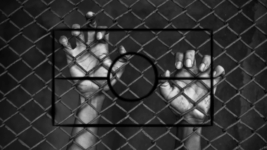
On an average night over 2024-25, more than 70 percent of First Nations youths held in Australian child prisons were on remand, which meant that either a decision on their guilt had not yet been made or they were yet to be sentenced in relation to their finding of guilt, while as for the average number of days Indigenous kids were spending on remand, that was at 57.
Not only are Indigenous youth spending months in incarceration limbo, but these kids are too being locked up at disproportionate rates compared to the non-Indigenous across all Australian jurisdictions. Indeed, in March 2026 in New South Wales, 34 percent of the 220 kids in gaol, or 118, were Indigenous, while Aboriginal youth made up only 8 percent of 10- to 17-year-olds in this state.
The revelations about the amount of time that Indigenous youths are being made to spend in prison whilst unsentenced were released on 29 July 2026, as part of the Productivity Commission’s Closing the Gap Annual Data Compilation report, which further revealed that of the 19 targets set in 2021, only one of these, that of preschool enrolment, has so far been achieved prior to the 2031 deadline.
Established in 2008, Closing the Gap is a strategy that seeks to reduce the disparities between key indicators relating to Aboriginal and Torres Strait Islander peoples and non-Indigenous persons living on this continent. This policy, which is being progressed by all Australian governments, covers areas such as education and health, and its current targets for 2031 were set in 2021.
The stark youth justice remand figures do tend to be in keeping with the progress on the majority of the Closing the Gap targets, however, four of which are worsening. And these stark youth justice figures are hardly a surprise because, as certain international bodies have noted, most Australian jurisdictions have been legislatively cracking down on Indigenous youth and crime over recent years.
Completely off track
Outcome 11 of the Closing the Gap strategy is that “Aboriginal and Torres Strait Islander young people are not overrepresented in the criminal justice system”. The 2026 report notes that prejudices are embedded within Australian justice and child protection systems that see Indigenous youth being placed in out-of-home care and in the prison setting, at starkly disproportionate rates.
The goal is to reduce the rate of Indigenous youth in detention by 30 percent by 2031. Currently, this is not on track, and the rate was at 25.7 detained youths per every 10,000 over the financial year 2024-25. The report too notes that an initial reduction after 2018-19 has simply risen again of late, and has, therefore, resulted in no real change over this timeframe.
The minimum age of criminal responsibility, or the age at which a minor can be convicted in relation to a crime remains decidedly low at 10 years of age in most Australian jurisdictions, besides Victoria where it has been raised to 12 years old and in the Australian Capital Territory, where it has been raised to 14, which is in line with a rights-focused global United Nations standard.
“The proportion of young people in detention who are unsentenced has varied over the years but is consistently above 50 percent across most states and territories,” the Closing the Gap report reads. “Nationally, on an average night, the proportion of Aboriginal and Torres Strait Islander young people in detention who were unsentenced was 69.4 percent in 2018–19 and 76.1 percent in 2023–24.”
Over the six years to June 2025, the number of 10- to 17-year-old First Nations youths Queensland and Victoria police proceeded against had declined, while NSW police, ACT policing and the Northern Territory police had proceeded against more over that period. And the report notes that a growing number of Aboriginal kids placed on community-based supervision are later ending up in gaol.
Getting tough on youth crime is trending
This shift back towards cracking down on Indigenous youth came in 2024. The Minns government launched a response to a regional “youth crime wave” in NSW in March that year, which involved a law targeting 14- to 17-year-olds who commit serious motor vehicle and break and enter offences whilst on conditional release for similar crimes then being denied bail.
By February 2025, these new laws had resulted in more than an 80 percent rise in youth offenders being denied bail in NSW. Eighty eight percent of those captured by these laws were First Nations kids, and 90 percent of those young offenders who were incarcerated as a result of the reforms were made up of Indigenous youths.
The Victorian government became the next jurisdiction to follow in August 2024, when then premier Jacinta Allan determined the age of criminal responsibility would remain at 12 and not progress to 14, as well as determining to roll out tougher youth bail laws. Bail was then tightened twice more last year, when the provision that made prison a measure of last resort for kids was revoked as well.
The election of the NT Finocchiaro ministry in August 2024 marked an overt turn against the Aboriginal population of the Northern Territory, with the age of responsibility being dropped back down to 10, a presumption against bail for youths rolled out and youth breach of bail reinstated. And since implementing these laws in April 2025, the number of Indigenous youths in gaol has doubled.
The Queensland Liberal Nationals government was then elected in October 2024. Premier David Crisafulli took out the election on the promise of a severe crackdown on youth crime. This has involved the ‘adult crime, adult time’ policy, which sees youths convicted in relation to 47 specific crimes then being sentenced to adult prison time, which comprises of much more severe penalties.
Canberra could end this
Australia received its fourth universal periodic review from the United Nations Human Rights Council on 26 January 2026, and it involved 332 reform recommendations. This country went on to reject more than a third of them last month, which included declining to raise the age, and to cease the use of solitary confinement on youths, as well as refusing to drop the use of other harsh restraints.
Senator Lidia Thorpe has been calling on the Albanese government to intervene in the increasingly severe youth justice systems right across the continent. Although federal Labor has continuously fallen back on the assertion that Canberra cannot interfere in the criminal justice matters of the states and territories.
Yet, NATSILS (the National Aboriginal and Torres Strait Islander Legal Service) announced last September that with the assistance of the Justice and Equity Centre, it has sought the advice of two senior counsels, Kate Eastman SC at New Chambers and Emma Dunlop at Omnia Chambers, on whether the federal government could intervene.
The question asked was whether the external affairs power in the Australian Constitution together with article 40(3)(a) of the Convention on the Rights of the Child (CRC) permits Canberra to intervene in state and territory law. Article 40(3)(a) of the CRC provides that states establish “a minimum age below which children shall be presumed not to have the capacity to infringe the penal law”.
The barristers found that the Albanese government does have the power to intervene in state and territory youth justice laws. The advice confirmed that right now federal Labor could raise the criminal age, it could pass a law to ensure that states and territories treat prison as a punishment of last resort for kids, and it could also prevent these jurisdictions from locking up kids in adult prisons.
So, it’s been clear for a year now that the Albanese government, which is well aware that the state and territories have gone ballistic in terms of passing laws to facilitate the imprisonment of Indigenous youth, has the powers to intervene to end the overincarceration of Indigenous youth, and it is simply choosing not to do so.

Paul Gregoire

Receive all of our articles weekly
Related Articles
 New South Wales Launches Yet Another Crackdown on Youth Crime
 Youth Crime: Prevention and Diversion Produce Better Outcomes than Punitive Measures
 NSW Police Are Targeting Aboriginal Youth Under a Secret Watchlist
 Victorian Government to Impose Adult Sentences for Violent Youth Crime
 Queensland to Launch Draconian Crackdown on Youth Crime Wave That Doesn’t Exist
 Victoria Joins the Nationwide Youth Crime Crackdown That Ultimately Targets First Nations Kids