NSW Government’s Proposal to Criminalise the Public Display of Political Slogans Is Concerning
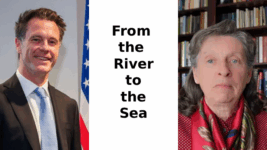
A New South Wales parliamentary inquiry into prohibiting slogans that incite hatred is accepting public submissions until Monday, 12 January 2026.
This inquiry is further continuing the Minns government’s yearlong addiction to kneejerk legislating primarily to respond to pro-Palestine/anti-Gaza genocide protests, along with staged hate crimes and most recently, the Bondi Beach massacre.
The proposal to ban words being uttered or displayed together in a certain sequence to form a political slogan in public is dragging NSW civil society deeper into a theatre of the absurd situation, whereby laws are being passed on the run that involve illogical assertions and blatant untruths all in order to deal with the fallout from the heinous genocide against the Palestinians in the Gaza Strip.
The slogan that NSW premier Chris Minns primarily appears to have his eyes set on is “Globalise the Intifada”, which Sydney Criminal Lawyers has not witnessed as being a key chant at the dozens of Palestine protests attended on Gadigal land in Sydney.
Another key slogan slated for banning is “From the river to the sea, Palestine will be free,” which has been the offending phrase par excellence since October 2023.
“There is no place in NSW for slogans or symbols that incite hatred, glorify violence or intimidate communities,” Minns said in a 20 December 2025 statement. “These laws send a clear message that hateful conduct will not be tolerated.” The premier added that the ban is about protecting the public after the Bondi terror attack, but he didn’t mention that Israel favours such moves as well.
The NSW government further asserted that “horrific recent events”, presumably the Bondi mass murder perpetrated by ISIS-inspired father and son killers, “show that the chant ‘globalise the intifada’ is hate speech and encouraging of violence in our community”, which is a pretty steep claim against the little used chant, as is the suggestion that banning it will prevent future terror incidents.
Criminalising slogans and phrases
Not only does the Legislative Assembly Committee on Law and Safety Measures to Prohibit Slogans that Incite Hatred inquiry have the highly questionable mandate of coming up with a clear idea on “how to best prevent the use” of certain phrases in public, but it is to undertake this task in a rushed manner, as rather than the usual months of deliberation, this inquiry has an end of January deadline.
The inquiry’s terms of reference include assessing the “threat that the use of phrases, like ‘globalise the intifada’, poses to community cohesion and safety and the importance of maintaining social harmony”. Yet, this phrase only appears to have become associated with the Bondi killings after the New York Times ran the headline Bondi Beach Is What ‘Globalize the Intifada’ Looks Like.
The inquiry terms further include consideration of how best to prevent the use of phrases that incite hatred, the need to protect communities from “hatred, intimidation and violence”, along with consideration of best practice methods on banning slogans, the implications of the implied right to political communication in the Australian Constitution and preexisting criminal offences in NSW law.
Another anomaly surrounding the rush job of an inquiry is that rather than the usual holding of public hearings to allow expert witnesses to shed light on the viability of banning phrases in public, there will be no such meetings contemplating the legitimacy of the proposal. And the committee will be recommending which phrases need to be banned to stop violence in our community.
“We must tackle this scourge in all its forms including inflammatory and divisive symbols and slogans which cause real fear to vulnerable communities,” NSW attorney general Michael Daley said back in December. “This government is determined to do whatever is necessary to ensure community safety and cohesion after the horrific events at Bondi.”
Criminalising vague terms
Inquiry chair Labor MP Edmond Atalla told the Herald last week that committee members engaged in the investigation over the NSW parliament summer break have been in contact with British officials as they’re apparently way down the track on how to criminally punish people over slogans, with five arrested for chanting intifada-related slogans in the UK post-the Bondi Beach massacre.
In pondering the viability of the laws, Australian constitutional lawyer Anne Twomey explained in a New Years Eve statement on YouTube that the law can be used to “regulate the use of words”. She cited 1920 legislation that protects the use of the word “Anzac” and 1987 legislation that protects the use of the word “Olympics” from being exploited.
However, protecting laws can go too far, according to the lawyer, and she cited the 1988 High Court case David versus the Commonwealth, as it found an authority had gone too far in trying to restrict commercial use of “common terms” like “bicentennial”, “200 years” and “Australia” in conjunction with “1988” or “88”. This regime involved overreach, which impinged upon freedom of expression.
“The current proposal to ban the use of certain political slogans that are used on placards or chanted publicly at demonstrations falls within the very core of political communication. It would not be a law that had the mere incidental effect of limiting political communication. The political communication is the direct target of the law,” Twomey set out.
The lawyer further explained that arguments identifying the constitutional implied right to political communication in this country have been predicated upon the need for citizens to vote in elections, and therefore, this may not protect the right to chant about foreign politics, like the Gaza genocide. Yet, people are using these slogans over here to effect foreign policy and the next local election.
Twomey then points to the two ways in which slogans could be banned. The first is the “content-neutral way”, which is directed at preventing harm and the second method is banning particular slogans. She then notes that current laws, like section 93Z of the Crimes Act 1900 (NSW), which prevents incitement of violence based on protected attributes, are based on the prevention of harm.
The University of Sydney Professor Emerita further pointed to the offence of publicly inciting hatred on grounds of race in section 93ZAA of the Crimes Act, which Minns passed during his first 2025 kneejerk legislating episode last February, as this crime, which is triggered when a reasonable person fears harassment, intimidation or violence, or for their own safety, already covers any offending slogans.
“It seems, however, what is driving the proposal for an additional law is the concern that a court might not find that such slogans or chants fall within such a category, making it difficult to successfully prosecute such an offence,” Twomey clarified.
“This is because those slogans do have a range of potential meanings and have historically been used by different groups to mean different things, making it hard to match the act of chanting the slogan with the requisite harm.”
Many in this country have long been suggesting that the phrase about the river to the sea is antisemitic, however Israeli PM Benjamin Netanyahu’s own Likud Party adopted a version of this statement on inception.
Twomey further explains that a law banning a certain political slogan necessarily burdens the implied freedom of political communication, and therefore, if this law is to be considered constitutionally valid, it must be explained why it is specifically needed to prevent the incitement of racial hatred, especially as it is considered that preexisting laws that should capture it may not.
Post truth politicking and legislating
The incitement to racial hatred laws were passed in February 2025, along with new hate crime laws and measures prohibiting protests near places of worship. This was the first round of kneejerk criminal law legislating that the Minns government conducted in the wake of last year’s so-called antisemitic hate crimewave, and the second occurred right before Christmas 2025 following Bondi.
The places of worship protest law legislation also contained a new policing power to move on protests that take place near churches, synagogues, mosques or temples. However, a NSW Supreme Court challenge saw this subsequently struck down, due to the overreach that the law permitted, which had been pointed out in parliament prior to passing.
The latest erosion of basic sense and rationality in the NSW public sphere took place last Sunday evening on Gadigal land in Sydney, when hundreds broached the official protest ban to oppose the Trump administration’s illegal invasion and kidnapping operation in Venezuela, as NSW police officers arrested a 53-year-old woman wearing a jacket with “Globalise the Intifada” emblazoned across it.
An announcement was made across the rally loudspeaker to notify other demonstrators that one of them had fallen prey to NSW police officers, which was promptly followed by a general understanding that the woman had since been released as the premier has not yet banned this little used and hardly prominent phrase in the Sydney setting.
But all gathered breathed a sigh of relief, as while the woman had not been remanded in the lockup overnight for her excessively offensive behaviour, demonstrators present had been saved from any radicalising affect the phrase might have had on them.
Paul Gregoire
Receive all of our articles weekly
Related Articles
 First Female Lawyer in NSW
 Abuse of Children in Australian Detention Centres Continues
 How Young is Too Young To Testify in Court?
 RIP Press Freedom: PM Pressures ABC to Change Report About COVID-19 App
 UK Gives US Permission to Appeal Decision Not to Extradite Assange, Despite Key Witness Lying
 Man Refused Compensation Despite Nearly Dying Due to COVID-19 Vaccine