Pushback Against Cannabis Driving Defence Involves Parochial View of Medicine
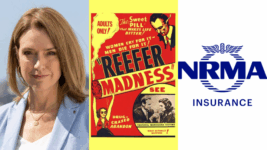
The pushback against the Minns government’s proposal to enact a statutory defence so medicinal cannabis users who drive have a legitimate means to avoid a charge of drug driving in New South Wales, is not only based on misinformation, but it’s too steeped in the stigma surrounding the drug that hearkens back to the 1930s US Federal Bureau of Narcotics “reefer madness” scare campaign.
The main campaign advocates are clearly relying on long-term cliches and prejudices. NSW Liberal leader Kellie Sloane, who’s been warning about “dangerous new drug driving laws”, says she has no beef with those “legitimately” taking the medicine, whilst the NRMA stresses it has no problem with users “doing the real thing”. Yet both imply that many are using the legal medication just to get high.
Introduced on 25 June 2026 by NSW minister of roads Jenny Aitchison, the Road Transport Legislation Amendment (Medical Cannabis and Driving Offences) Bill 2026 provides a particularly convoluted defence for a patient using a drug legally prescribed by a doctor in order to excuse any presence of the substance in their system if they test positive to a NSW police roadside drug test.
The NSW drug driving process works differently to random breath testing for alcohol in this state, as drug driving tests for the mere presence of a substance in a driver’s salvia, whilst drink driving ascertains the concentration of alcohol in the breath and blood.
Drug driving tests for four select drugs: amphetamines, cocaine, MDMA and THC, or tetrahydrocannabinol, which is the psychoactive component of the cannabis plant.
What the detractors of the new cannabis driving defence bill are failing to point out, whilst panicking the public about the sensible proposal, is that users of psychoactive prescription medicines, like benzodiazepines, which include Xanax and Valium, or those using opioids, which are similar to heroin, aren’t tested when driving by police, but rather they’re trusted not to drive whilst impaired.
“Dangerous new drug driving laws”
“So, let me bring you up to speed,” Sloane implored her fellow Instagram users on 12 July 2026, “driving with THC or cannabis in your system can impair your ability to drive.”
The NSW opposition leader explained to the Daily Telegraph last month that a Transport for NSW’s Centre for Road Safety study, of which the Minns government has not released the findings, ascertained that 45 percent of cannabis medicine users got behind the wheel within six hours of taking it, whilst 54 percent surveyed reported using more than prescribed or recreationally.
“Under the new laws, astonishingly,” Sloane continued, “that would be legal until you go caught a third time”.
Yet, this is a misleading rendering of how the law would work, as under these measures if someone does test positive for cannabis driving, they receive a caution and are taken off the road for 24 hours, and if their second test is below 50 nanograms of THC per millilitre of oral fluid, then they’re let off. Less than 50 nanograms, or 3.5 nanograms per millilitre of blood, demands a charge on “third strike”.
Twenty signatories, including directors of Greater Sydney hospitals and emergency departments and other senior clinicians, have provided a warning to the Minns government calling on it to abandon the plans, arguing that there is no peer supported basis for the 50 nanogram limit being recommended. Although this limit has been suggested to be rather low by defence advocates.
“Now, no judgment on people who are legitimately taking medicinal cannabis. There are plenty of them – plenty who are doing exactly the right thing,” Sloane continued, “but until we can have a scientifically determined impairment test – there isn’t one at the moment – until that happens, we cannot experiment on our roads. It is too dangerous. It has to stop.”
No one is experimenting on our roads
The situation that Sloane is describing to the NSW constiuency isn’t problematic. In fact, it’s extremely safe. Right now, if a person tests positive for THC, they’re taken off the road immediately. That will continue to happen after the defence is enacted.
Also, after passing, a person testing positive will undergo a second test, and if they test below the level, then at that stage, they don’t lose their licence.
Sloane is simply fearmongering about a system that poses no changes in terms of what happens to people who test positive for cannabis driving at the time when it’s considered they may pose a threat to other drivers on the road.
At present, subsection 111(1) of the Road Transport Act 2013 (NSW) (the RTA) contains the offence of drug driving or driving with the presence of certain drugs (other than alcohol) in oral fluid, blood or urine. This crime relates to four prescribed illicit substances, and it captures any presence of those specific drugs, and not the concentration of them in a driver’s system, like drink driving laws do.
A first-time cannabis driving offender faces an on-the-spot fine of $704 and an instant 3-month licence disqualification. Subsequent offenders within a 5-year period face conviction, fines of up to $3,300 and a 6-month licence suspension. Drug driving is an absolute liability offence as well, which means, right now, there is no defence available to any charge under the law.
The bill will also insert subsection 111(1A) into the RTA, which ensures that a “registered medicinal cannabis user” doesn’t commit an offence if THC is detected and neither is any other drug or alcohol found. And new section 111AA would then contain the medicinal cannabis defence, which provides for two false positive detections within a two-year period prior to a third warranting conviction.
Fear tactics
Despite the fact that the Turnbull government enacted laws in 2016 that have provided a legal supply chain for medical cannabis patients, which includes cultivation, manufacture and distribution, the stigma and discriminatory ideas about the substance continue to plague those who use it, even though it provides a much healthier alternative to some of the more traditional western medicines.
The first commissioner of the US Federal Bureau of Narcotics Harry Angslinger began an anti-cannabis campaign in his country in 1930. As Australian historian Dr John Jiggens has documented this anti-cannabis campaign caught on in Australia in the late 1930s, and prior to that medicinal cannabis had been one of the most popular over the counter medications here.
The NRMA (National Roads and Motorists Association) provides clear explanation of how the Labor proposed cannabis drug driving defence would work in its 4 June 2026 press release, which sounds quite a rational proposal. Yet, the statement then emotively cites road death figures and fatalities involving drugs without clearly explaining that roadside testing doesn’t ascertain impairment.
As for opposition leader Sloane, it’s clear that her purpose is to state facts about a law that would allow constituents who are unfairly unable to drive due to the medication prescribed to them – or to put it another way, for having a cup of tea, taking a Bex and having a good lie down the night before – in a manner that means to scare the public about the law in order to secure herself more votes.
Main image: 1936 Reefer Madness poster is in the public realm, as is the NRMA logo. Sloane in 2023 taken by Ergonomicminder is licensed under CC BY 4.0

Paul Gregoire

Receive all of our articles weekly
Related Articles
 Questions Raised About Proposed Medicinal Cannabis Drug Driving Defence in NSW
 High Time: NSW Government to Consider Passing Medicinal Cannabis Driving Defence
 NSW Parliament to Consider Medicinal Cannabis Defence to Drug Driving
 The Need for a Medicinal Cannabis Driving Defence: An Interview With Former Magistrate David Heilpern
 NSW Considers Medical Cannabis Driving Defence: Interview With Former Magistrate David Heilpern
 Drug Driving in NSW: Lawful Cannabis Use and Honest Mistake Are No Defence