The Combined Offence of High Range Drink Driving and Drug Driving in NSW
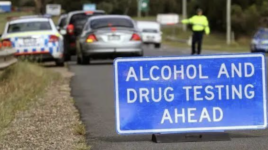
A little after 3pm on Sunday, 3 March 2026, New South Wales Police Traffic and Highway Patrol Command officers were patrolling on Bundjalung land in the northeastern New South Wales town of Tweed Heads, when they were alerted to a blue SUV dangerously driving in the vicinity, and it had reportedly crashed into another vehicle.
The traffic cops pulled the driver over on Wharf Street, spoke to the 26-year-old man, and then required him to undertake a roadside breath test. This is alleged to have returned a positive result and quite a high one at that. So, the driver was then taken down to Tweed Heads police station, where a secondary test found him blowing a blood alcohol reading of 0.181.
This is a significantly high blood alcohol concentration. In NSW, 0.05 grams of alcohol per 100 millilitres of blood has been the legal limit since 1980.
The driver of the SUV was then further subjected to a roadside drug test, which returned an alleged positive reading for cannabis and cocaine use.
The testing devices that NSW police use for drug use whilst driving differ from those used for random breath testing for alcohol that determine the levels in a person’s system, as the oral saliva tests don’t ascertain concentrations of illicit substances, but rather, the devices determine whether there is a presence of any of four prescribed drugs, which are cannabis, cocaine, MDMA and amphetamines.
The man was charged with various offences, including negligent, furious or reckless driving, under section 117 of the Road Transport Act 2013 (NSW) (the Act), as well as not giving particulars to other driver at the scene of the crash, contrary to rule 287 of the Road Rules 2014 (NSW). And he was also charged with the 2021-enacted combined offence of high level drink driving and drug driving.
The NSW police will allege that the driver had hit another vehicle twice, whilst the 26-year-old was driving in a dangerous manner, and he then failed to exchange his details with the other driver.
The accused has been issued with a court attendance notice (CAN), and he’s expected to appear in Tweed Heads Local Court on 1 June 2026.
Combined offence of drink and drug driving
The offence of driving with high range prescribed concentration of alcohol (PCA) and presence of prescribed illicit drug, also known as combined high range drink driving and drug driving, is contained under subsection 111A(1) of the Road Transport Act 2013.
To prove that the 26-year-old man is guilty it will have to be shown that he was driving the blue SUV, whilst having a blood alcohol concentration of at least 0.15 and that he also had a presence of both cocaine and cannabis in his blood.
The prosecution will rely on the results of the random breath test conducted at the police station for his blood alcohol reading, whereas to prove that he also had the presence of two illicit drugs in his system, it will rely on a blood test taken at the station and sent off for laboratory testing.
A blood sample in relation to drug driving is only taken after a driver has tested positive to two separate oral salvia tests.
A person can also be convicted over this offence if they were occupying the driver’s seat of a motor vehicle and were attempting to start it and drive, whilst having high range PCA and the presence of one of the prescribed drugs in their system. The offence also applies to licenced drivers sitting in a passenger seat attempting to teach a learner driver whilst in such an impaired state.
The maximum penalties for this combined drink and drug driving offence are up to 2 years imprisonment and/or a fine of $5,500. An automatic 4 year driver licence disqualification applies to this crime, otherwise, a court can impose licence suspension for an unlimited period or a minimum period of 18 months. And license disqualification applies immediately to this offence.
But if a driver is convicted over a second or subsequent subsection 111A(1) offence, then they face up to 2 years prison and/or a fine of $11,000. An automatic 6 year driver licence disqualification applies, and a court can impose suspension for an unlimited period or for a minimum of at least three years, and again, a driver who tests positive for this offence is immediately suspended from driving.
Additional interlock orders
For a conviction under section 111A of the Road Trasport Act, the court will also impose an interlock device order for a period of time upon the convicted person following the end of their licence disqualification period.
An interlock device is an electronic breath testing device that is installed into a vehicle and connects to the ignition. If the driver wants to turn on their car, they must breathe into the device and if any alcohol is found on their breathe then it won’t start.
Interlock device drivers must have zero alcohol on their breath in order to start their vehicle. Random breath tests are required by the device during a journey, and a photo is taken of the driver to ensure that it is indeed them providing the sample.
For a first-time offender in respect of high grade PCA with the presence of an illicit drug in their system whilst driving, an interlock period of 24 months applies, and entering the program reduces their mandatory licence disqualification period to somewhere between a minimum of 6 months and a maximum of 9 months.
For second or subsequent time offenders of this crime, an interlock period applies for 48 months, which then lowers their licence disqualification period to a minimum of 9 months or a maximum of 12 months.
Defence of honest and reasonable fact is no longer available
The defence of honest and reasonable mistake of fact had previously applied to both drink driving and drug driving offences in New South Wales, including that of driving with the “presence of both prescribed illicit drug in person’s oral fluid, blood or urine and prescribed concentration of alcohol in person’s breath or blood” under section 111A of the Road Transport Act, which is entitled
This defence provides that where a person committed the ingredients of an offence due to their honest and reasonable, although mistaken, belief that a fact existed – for instance, that they did not have alcohol or drugs in the system – they are not guilty if, had their belief been correct, they would not have satisfied the ingredients of the offence.. that was mistaken, and if that mistake of fact had been true, then they would not be guilty.
Both drink driving and drug driving had long been understood to be strict liability offences, and drink driving still is. A strict liability offence means that a prosecution does not have to prove a mental fault element, so unlike other crimes it does not have to be shown that a person intentionally committed the wrongdoing, or that they were reckless to it, meaning they were aware a crime might occur.
However, the February 2024 NSW Court of Criminal Appeal case R v Narouz upheld a NSW District Court ruling of the year prior, which found that drug driving is an absolute liability offence, which means that the prosecution only has to prove the act occurred and no mental fault element, and most significantly, the defence of honest and reasonable mistake of fact doesn’t apply to this crime.
Therefore, since the appeals court confirmed that drug driving is an absolute liability offence in NSW, this translates to the offence of high range drink driving with the presence of a prescribed illicit drug also being an absolute liability offence. So, there are no defences to argue in this respect of this crime.
Subsection 111A(6) further provides that it is not a defence against a charge under a subsection of this section if it is proven that, at the time of their alleged offending, that a “greater concentration of alcohol was present in the defendant’s breath or blood than the prescribed concentration of alcohol referred to in the offence”.
The other combined offences
Section 111A of the Road Transport Act contains two more offences. Subsection 111A(2) contains the offence of middle range prescribed concentration of alcohol and presence of prescribed illicit drug, which can see an individual imprisoned for up to 18 months and/or fined $3,300, whilst a second or subsequent time offender can be sent away for up to 2 years gaol time and fined up to $6,600.
Mid-range drink driving involves a prescribed concentration of alcohol between 0.08 and 0.149 grams of alcohol per 100 millilitres of blood. And the subsection 111A(2) offence includes mandatory licence disqualification and an interlock device order.
The third offence is contained in subsection 111A(3), and it involves an offender having been caught with a lesser level of prescribed concentration of alcohol whilst driving, along with the presence of a prescribed drug in their system and they have already been convicted over one of the combined offences in section 111A within the last five years.
This crime can be broken via the presence of low level PCA, which is a blood alcohol concentration of between 0.05 to 0.079, as well as special level PCA that sits between 0.02 and 0.05 and novice level PCA, which is a blood alcohol concentration reading of between 0.00 and 0.019.
A defence to a subsection 111A(3) novice range PCA is contained under subsection 111A(7). It involves the offence being considered the same as the novice range PCA offence under subsection 110(1) of the Act and the defendant proving the alcohol was either caused by drinking for religious purposes or it resulted from consumption of another substance, like food or medicine.
Alternative verdicts
Subsection 111A(5) of the Road Transport Act further allows for alternative verdicts, whereby if the court is not satisfied that the accused had committed the combined offence they are charged with, but it is satisfied that they have committed an offence against another section 111A offence, or a section 110 drink driving or a section 111 drug driving offence, then they can be found guilty of that.
In this instance, the court acquits the defendant of the offence they were originally charged with and then convicts and punishes them under another crime that carries the same or a lesser penalty.
Paul Gregoire


Ugur Nedim
Receive all of our articles weekly
Related Articles
 The New Offence of Combined Drink and Drug Driving in New South Wales
 Drug Driving in NSW: Lawful Cannabis Use and Honest Mistake Are No Defence
 “I Hope It’s Overturned”: Former Magistrate Heilpern on Revoking of Drug Driving Mistake Defence
 The Offence of Drug Driving in New South Wales
 High Range Drink Driving in NSW: The Law, Penalties and Defences
 The Law, Defences and Penalties For High Range Drink Driving In New South Wales