The Special Terrorism Policing Powers Triggered by the Bondi Beach Massacre Explained
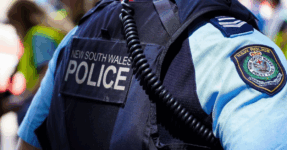
New South Wales police commissioner Mal Lanyon declared the 14 December 2025 Bondi Beach mass shooting, a terror-related incident in the hours following the murder of 15 Jewish people at a religious festival. This determination served to unlocked the special investigative powers available to law enforcement officers, under the Terrorism (Police Powers) Act 2002 (NSW) (the Act).
The calling of a terrorism-related incident further results in the NSW Joint Counter Terrorism Team taking over the investigation. The JCTT is a multijurisdictional body comprised of officers from the NSW police, the Australian federal police, ASIO and the NSW Crime Commission.
The team is investigating the mass shooting perpetrated by father and son, Sajid and Naveed Akram, under Operation Arques.
This state passed enhanced law enforcement powers in respect of terrorism incidents as part of a United Nations recommended global trend towards criminalising terrorism domestically in the wake of the 2001 9/11 terror attack in New York City. The Act was the first NSW legislative response to terrorism offences, and it further came in the wake of the October 2002 Bali Bombings, which saw 88 Australians killed.
“The events in the past 14 months have caused us to change our view about our safety as a nation,” then NSW premier Bob Carr said, during his second reading speech on tabling the Act on 19 November 2002.
“The terrorist attacks in New York and Bali show a new preparedness among terrorist organisations to strike at civilians with the aim of causing casualties.”
The initial extraordinary policing powers were enacted in late 2002. These included a provision for cooperation between state law enforcement and federal police, as well as the chief domestic spying agency. And Carr too explained that a 70-odd member NSW Police Counter Terrorism Command had been established, which is today called the Counter Terrorism and Special Tactics Command.
The original terrorism policing powers
As its 2002 explanatory memorandum explains, the object of the Terrorism (Police Powers) Bill 2002 was to “confer special powers on police officers to deal with imminent threats of terrorist acts and to respond to terrorist acts”.
Section 3 defines a ‘terrorist act’, as an incident involving serious harm to or endangering of people, death, serious property damage, harm to public health, as well as serious harm to an electronic system underpinning society. Such action must seek to progress “a political, religious or ideological cause”. And it can’t be “advocacy, protest, dissent or industrial action” devoid of such harms.
The NSW police commissioner or a deputy can authorise the use of the powers, with NSW police minister concurrence. This can be done to prevent a terrorist act or investigate one already committed. Such authorisation can last for 7 days and then be extended to 14 days to prevent an act, or for an initial 24 hours or extended to 48 hours to investigate one.
Part 2 of the Act contains the original special policing powers. These include police being able to require a terrorism suspect to identify themselves, via threat of 12 months prison. Officers can stop and search a suspect, search their vehicle, enter and search their premises without a warrant, along with seize items. And obstructing such inquires can see a person liable to up to 2 years imprisonment.
Extreme reforms further progressed
In 2005, the NSW government enacted two further sets of terrorism powers that continue to require three year oversight reviews, due to the excessive nature of these provisions. This saw part 2A inserted into the Act, which contained preventative detention powers, which allow police to obtain a court order to detain a suspect 16 years or over for up to 14 days to prevent a terror act.
Part 3 of the Act contains the other 2005 reforms, which involved a covert search warrant regime that allows terror police to apply for such a warrant, via the NSW Supreme Court, to search a premises in order to prevent or investigate a terrorism act, and without informing the owner of the premises that the search is taking place. Warrants can include an ability to search electronic devices.
An investigative detention regime was then inserted under part 2AA of the Act by the Baird government in 2016. These powers allow a terror suspect, 14 years or over, to be detained for up to four days in order to be questioned in respect of an act of terrorism. Continuous questioning can occur for up to 8 hours in any 24 hour period. This order can be extended for up to 14 days.
Another major reform came in 2017 legislation, in response to the December 2014 Lindt Café siege in Sydney that saw two hostages lose their lives. This inserted part 2AAA into the Act, which allows the police commissioner to authorise the use of lethal force by NSW police officers if an ongoing incident is terrorism-related. Section 24B of the Act removes any criminal liability for officers in such cases.
Terrorism-related bans on public protest
The most recent changes to the Terrorism (Police Powers) Act were enacted on 24 December 2025. These measures are unlike the other reforms over recent decades, as they do not unleash special powers to investigate potential or perpetrated acts of terrorism, but rather, this has given NSW police the ability to ban civil society protests in the wake of a terrorism incident being declared.
The new powers provide that the NSW police commissioner or a deputy can declare a public assembly restriction declaration, or a PARD, over areas of Greater Sydney that prevent public protests in the wake of a declared terrorism-related incident for up to 14 days. This can be applied due to a perceived risk, and it can be extended, after reassessment, every 14 days for a total of 90 days.
These laws have been rolled out after NSW premier Chris Minns and other politicians and prominent figures have suggested there is a link between the pro-Palestine/antigenocide rallies of the last 26 months, which saw them influence the Bondi Beach massacre. The fact that the killers were found to have been adherents of ISIS ideology, however, reflects that this conflation is dubious.
The suggested link saw the NSW police commissioner declare a designated area, just hours after the laws were enacted on Christmas Eve, which now covers three policing regions: the Central Metropolitan Region, the North West Region and the South West Region. This means the right to public assembly, free speech and political communication is restricted until after 7 January 2026.
“The NSW police is committed to exercising these new powers responsibly and transparently,” Lanyon said, as he struck out rights for anyone seeking to raise their voice publicly within the PARD zone. “This is a time for community to come together and to show respect and courtesy – it’s not a time for large public assemblies and division. The community deserves to be safe and feel safe.”
“In the immediate aftermath of the attack at Bondi last week, further protest activity would aggravate fear and divisiveness in the community at a time when we need to build safety and confidence,” the recently hatched top cop ended.
Paul Gregoire

Receive all of our articles weekly
Related Articles
 Keep Sydney Open: Thousands Protest Lockout Laws
 Driver Who Collided with Cyclists Appeals Sentence
 The ‘Sports Rorts’ Scandal: Buying Votes in Targeted Electorates
 Pandemic or Not, the Morrison Squad Represents the Corporates
 Driver Allegedly Filmed Dying Police Officer After Road Accident
 The Criminal Offence of Coercive Control in New South Wales