A Summary of the Medicinal Cannabis Drug Driving Defence in NSW
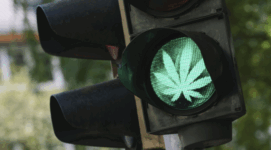
New South Wales has passed a law establishing a medicinal cannabis drug driving defence, which means that “registered drivers” who are prescribed cannabis medicine and test positive for THC, the psychoactive component of the drug, in their system when driving, will be able to defend themselves against license disqualification and fining, as long as the presence of the drug is within a set limit.
The Minns government’s August-introduced Road Transport Legislation Amendment (Medical Cannabis and Driving Offences) Bill 2026 passed NSW parliament on 17 September 2026.
The law provides that if a follow-up laboratory test finds a driver prescribed cannabis was driving with a THC level of below the maximum limit of 50 nanograms per millilitre of saliva, then the law hasn’t been broken. But if they test above 50 ng/ml, then they’ll receive a warning. This can happen twice, with a third detection in 2 years, warranting a $722 fine and 3 months licence suspension.
The medicinal cannabis defence applies to the offence of drug driving, or driving with the presence of certain drugs in oral fluid, blood or urine. This crime relates to just four prescribed illicit substances: THC, MDMA, amphetamines and cocaine. And it differs from the offence of drink driving, as breath testing for alcohol relies on levels in the blood, and not mere presence, like the drug law.
The Turnbull government legalised the manufacture and use of cannabis medicines in 2016. With its cannabis driving defence, NSW has joined just two other local jurisdictions: Tasmania, with its long-established defence, and Victoria’s 2025-enacted partial defence. A key difference with the NSW law is that local medicinal cannabis drivers must register prior to being charged and raising the defence.
The NSW medicinal cannabis driving defence
The medicinal cannabis driving defence regime will take effect later this year or early in 2027, according to the Minns government 18 September 2026 press release.
The drug driving law that the medicinal cannabis offence applies to sits under subsection 111(1) of the Road Transport Act 2013 (NSW) (the RTA). The drug driving defence sits in new subsection 111(1A) of the RTA and it provides that a “registered medical cannabis user does not commit” a drug driving defence if limited THC is detected in a driver’s system, along with no other drug or alcohol.
The medicinal cannabis defence can only be raised by current “NSW unrestricted licence holders”, who are not subject to a driving disqualification or prohibition, while the defence does not apply to novice or commercial driver licence holders or driving instructors.
New subsection 111(1B) sets out the rules for the circumstances in which “registered medicinal cannabis users” commit a drug driving offence. This involves having over the “maximum concentration” of THC in their system. Further, the driver cannot have any other drug or any alcohol present, and they must be a current NSW unrestricted licence holder.
The maximum penalty for a first or second time “registered medicinal cannabis user offence” is a $2,200 court imposed fine. And new section 204A of the RTA stipulates that commission of the offence results in a 6 month driver licence suspension, which can be lowered to 3 months by a court.
Section 4 of the RTA provides the maximum concentration of THC, or delta-9-tetrahydrocannabinol, that a registered driver can have in their system, is 50 nanograms per millilitre of oral fluid or in terms of blood, the limit is 3.5 ng/ml.
New section 111AA then further provides that a registered medicinal cannabis user who tests positive for cannabis driving must not be charged with the offence if they’ve had fewer than two positive detections within 2 years, and they’ve never been charged with the offence prior within that same timeframe.
Further stipulations set out in last week’s NSW government press release announcing the new laws involve registered medicinal cannabis drivers who show signs of impairment still being charged with a driving under the influence (DUI) offence, standard penalties continue to apply where multiple drugs are detected and registered drivers will still be subject to post-crash blood and urine sampling.
Transport for NSW must issue the warning to a registered driver in writing, and this formal warning must be recorded against the driver’s “record in the NSW driver licence register”.
Registering for ability to raise the defence
Unlike the cannabis drug driving defences operating in the states of Tasmania and Victoria, NSW drivers, who are prescribed medicinal cannabis and would like the protection of the defence, are required to put their name on a register maintained by Transport for NSW and accessible by the NSW Police Force.
New section 114B of the RTA provides that unrestricted NSW driver licence holders may apply to Transport for NSW to become a registered medicinal cannabis user. This requires the individual to undertake a Transport for NSW driver education program related to cannabis driving, and further, prove that they have a valid medical cannabis script.
A user is registered with Transport for NSW from time of notice of registration until two months after a current prescription expires. This must be recorded on the NSW driver licence register. Registration can be extended via proof of a new prescription.
The offence of drug driving in NSW
The medicinal cannabis legislation also overhauls the NSW offence of drive with presence of certain drugs (other than alcohol) in oral fluid, blood or urine, which is contrary to subsection 111(1) of the Road Transport Act. Section 4 of the RTA defines a prescribed illicit substance as one of four illegal drugs: THC, amphetamines, MDMA and cocaine.
This amendment basically presents the offence in a simpler form and provides that a first-time offender taking the charge to court faces a $2,200, while a second or subsequent time offender faces a court-imposed fine of up to $3,300.
However, as per section 195 of the RTA, an offence against the RTA that has been “prescribed by the statutory rules as a penalty notice offence” can then be dealt with via an on-the-spot fine, and under schedule 5 of the Road Transport (General) Regulations 2021 (NSW), the subsection 111(1) offence of drug driving is listed as a ‘penalty notice offence’, warranting a level 7 penalty.
Regulation 134 of the Road Transport (General) Regulations then notes that a level 7 penalty is a fine of $722, while section 205 of the RTA stipulates that a subsection 111(1) offence carries a 6 month automatic driver licence suspension, which can be then lowered to 3 months by a court.
For the prosecution to establish that an accused has committed the crime of drug driving, two elements must be proven beyond a reasonable doubt, these are that they were driving and that they had the presence of a prescribed drug in their system.
These two elements used to be accompanied by a third, which comprised of a mental fault element, or that the driver either ‘intentionally’ drove with the presence cannabis in their system or that they were ‘reckless’ to the fact.
This meant that the legal defence of honest and reasonable mistake of fact could be argued in circumstances when the substance was present via other means. In terms of cannabis driving circa 2016-17, this saw several drivers found not guilty of cannabis driving in Lismore Local Court, due to the fact that the individual didn’t expect THC to be present in their system.
This all changed with the ruling in the 2023 NSW District Court case Narouz versus R, as the magistrate found that drug driving is an absolute liability offence, rather than a strict liability offence.
An absolute liability offence means that the prosecution only has to prove that a physical act occurred, or in the case of drug driving that there was the presence of one of four illicit substances in a person’s system, as well as that they were driving at the same time.
The subsection 111(1) offence of drug driving, however, had always been understood to be a strict liability offence, which comprised of three elements: the presence of a prescribed drug, that the person was driving, and that the driver “did not have an honest and reasonable belief that there was not an illicit drug present” in their oral fluid at the time of driving.
The 2024 NSW Court of Criminal Appeal case R versus Narouz confirmed that the NSW drug driving crime is an absolute liability offence, which means that drivers in this state who do test positive for any of the four illicit substances in their system, and yet, they haven’t intentionally consumed the substance, are now left with no way to avoid charging, fining and licence suspension.

Paul Gregoire

Receive all of our articles weekly
Related Articles
 Conviction of State MP Leads to Renewed Calls for a Federal ICAC
 Aboriginal People Twice As Likely to be Sentenced to Imprisonment, Study Finds
 Queensland Premier Referred to Human Rights Commissioner
 Protesting Australia’s Peak Far-Right Gathering: CARR’s Owen Marsden-Readford on CPAC
 As the Genocide Continues, So Too, Do the Demonstrators on Gadigal: 16th Sydney Rally in Pics
 Upsurge in White Nationalism Signifies the Deep Divisions in Australian Society