Australia Continues to Shackle First Nations Adults and Youths to Hospital Beds
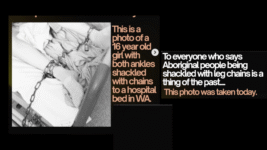
Right now, there is a 16-year-old Aboriginal girl in the state of Western Australia shackled to a hospital bed by the authorities because she is in the custody of corrections. And this means that the settler colonial state of Australia is continuing to shackle Aboriginal people in the year 2026. And this is unravelling just after federal parliament voted down a law to end this barbaric practice.
The National Networkraised the alarm over this ongoing situation on Wednesday, 21 October 2026, as it outlined that a Noongar teenager, who gave birth to her child several months ago,remains restrained to a bed on Noongar land in a Perth hospital, after she was arrested over alleged child neglect and then placed in the healthcare setting due to an ailment.
This development came after the federal Labor government and the Coalition opposition voted against Independent Senator Lidia Thorpe’s bill to end the practice of shackling incarcerated women whilst giving birth right across the country. TheCrimes Amendment (Prohibiting Shackling During Childbirth) Bill 2026 was voted down on the basis of the “this is a state issue” excuse.
The 16-year-old Aboriginal girl shackled to a bed in Perth is not the only First Nations female who has been forcibly restrained and locked on to a hospital bed of late, as it further came to light earlier last week that an Aboriginal woman in Queensland, who’d given birth via caesarean section a week prior, continued to be restrained to her bed with the use a shackle and a handcuff whilst in recovery.
In terms of the girl shackled to a bed in Western Australia, the National Network is calling for her to be unshackled and for an independent state investigation into this ongoing and archaic practice. But more broadly, and despite the fact that the federal major parties have attempted to wash their hands of the deplorable issue that they could prevent, multiple actors are not letting this matter go.
Cruel, inhuman and degrading treatment
“She is a child. She is a young mother. She should be receiving healthcare, dignity and protection,” said Debbie Kilroy, founding member of the National Network of Incarcerated and Formerly Incarcerated Women and Girls. “Instead, the state has chained her to a hospital bed. What possible justification can there be for treating a child this way?”
“Politicians sat in parliament and heard evidence about women being shackled to hospital beds. They heard from women who had lived through this violence. They heard from doctors, midwives and human rights experts, and they chose to do nothing,” the lawyer added. “Today, a 16-year-old girl… is in a hospital bed with both ankles shackled. This is the reality of their political decisions.”
The National Network stresses that shackling such a young mother to a hospital bed so soon after birth raises concerns about the physical and psychological wellbeing of the girl and her newly born child. And the chains attaching her to her hospital bed, evidently to prevent escape, further raise questions about the quality of the healthcare she is receiving whilst corrections has her in hospital.
The practice of shackling incarcerated women during birth can’t be divorced from the “broader political agenda” of criminalising and incarcerating kids in this country, which has an overwhelmingly disproportionate effect on Aboriginal and Torres Strait Islander kids, Kilroy explained. Early targeting of a child by the criminal justice system sets them up for a life stuck in the revolving door of prison.
“When politicians tell us that shackling is a state issue, what they are really saying is that they are prepared to leave women and girls at the mercy of police and prison officers,” Kilroy made clear. “Human rights do not stop at state borders. They do not disappear when someone is arrested, and they certainly do not disappear because a girl has been criminalised.”
Maintaining shackling at birth
Gunnai, Gunditjmara and Djab Wurrung senator, Lidia Thorpe, told federal parliament on 15 October 2025 about the late Noongar Wongi and Pitjantjatjara woman Heather Calgaret, who, whilst on remand in 2019 and in her late 20s, gave birth to her fourth child in a hospital bed while shackled to it and her sister now considers that this process, ultimately, broke Heather.
Thorpe further explained two weeks back that the committee inquiry into the shackling of women at birth bill had heard from “medical organisations, legal organisations, oversight and ombudsman bodies, human rights organisations” and many more parties, who were all calling for this practice that mirrors old colonial photos of Aboriginal men shackled and chained by British colonisers to end.
The committee report said that the issue of shackling is a state and territory matter, which is “not up to this Labor government to legislate on,” Thorpe continued. “But this government has the external affairs power to legislate on this. This is backed by the evidence received by this inquiry from a range of legal bodies and others.”
“We shouldn’t expect state and territory governments to ban the abuse they are themselves causing, when this government won’t do anything themselves,” the Independent senator emphasised. “That will just ensure the abuse continues.”
The external affairs power that is available to the federal government sits under subsection 51(xxix) of the Australian Constitution. NATSILS (the National Aboriginal and Torres Strait Islander Legal Service) obtained legal advice from the Justice and Equity Centre in September 2025,which found that the external affairs power does empower the federal government to intervene in state matters.
But despite all this evidence before the committee and the parliament, the majors voted the law down 24 to 10. Australian Greens senators and Independent senators Fatima Payman and David Pocock voted in support of Thorpe’s laws.
Liberal Senator Paul Scarr was absent during the vote, which meant he abstained. But he then appeared in the chamber directly afterwards to address this matter. Scarr said he wasn’t across it as much as he should have been, and that he’d spoken to Thorpe and he is “deeply concerned” about the practice, and he plans to speak with the Queensland attorney general about it.
Scarr further noted that the Bangkok rules, or the 2010 United Nations Rules for the Treatment of Women Prisoners and Non-custodial Measures for Women Offenders, of which Australia is a signatory, specifically stipulates that “instruments of restraint” should never be used “on women during labour, during birth and immediately after birth”.
Not my problem
During a 26 October 2026 Legal and Constitutional Senate estimates hearing, Thorpe put it to the representatives of the Australian Attorney General’s Department present that since her shackling bill had been voted down, “a number of cases have since been reported that continue to shackle Aboriginal women and girls in hospital”, and she further asked what the AG’s office is doing about it.
In response Esther Bogaart, the Attorney General’s Department first assistant secretary of the First Nations and Justice Policy division told Thorpe that this issue had been raised by a 2024 Health Department review of healthcare in prisons. And she added that the health minister continues to be in consultations with the state and territory ministers about it.
Thorpe queried the extended nature of the conversations between the various health ministers, and she further questioned why the AG’s office is “handballing” the issue to Health. Bogaart responded that her department was not handing it on but rather, it is a matter for the Health Department, as the office of the chief lawmaker doesn’t have a “corrections function”.
Australian Greens leader David Shoebridge then asserted that he found it “an extraordinary avoidance of responsibility” that the AG’s office would handball the issue to Health, because the “handcuffs and the shackles are not being put on by health officials”, but rather, it’s the carceral system, the police and prison officers who do that, and the AG’s department is responsible for them.
“This young girl should be supported to recover from childbirth, to care for her baby and to receive whatever healthcare she needs,” Tabitha Lean, cofounder of the National Network, said last week. “Instead, she is being subjected to the humiliation and violence of being physically restrained in a hospital bed.”
“We need to ask ourselves what it says about this country that we can look at a 16-year-old mother and see someone who needs to be chained down rather than someone who needs care,” the abolitionist further underscored.
Image supplied by the National Network

Paul Gregoire

Receive all of our articles weekly
Related Articles
 Thorpe’s Legislating an End to Strip Searching Children and Shackling Birthing Women
 Major Parties Vow to Continue Strip-Searching Kids and Shackling Imprisoned Women Giving Birth
 NSW Police Are Illegally Strip-Searching Children
 State-Sanctioned Sexual Assault: The Rally to Ban Strip Searches at Silverwater Gaol
 Illegal Strip Searches Are Sexual Assault, But Police Watchdog Has No Power to Discipline Offenders
 “Strip Searches Are Effectively a Form of State-Sanctioned Sexual Assault”.