Growing Calls to Drop the Criminal Charges Brought Against Anti-Herzog Protesters
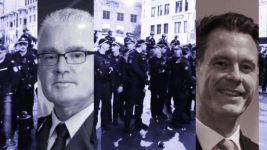
A growing number of civil society groups are calling on the New South Wales government and NSW police to drop the charges laid against 30-odd civilians related to the 9 February 2026 protest of the visit of Israeli president Isaac Herzog, which involved officers brutalising a mass of protesters, who sought to march in defiance of a protest ban law since struck down by the courts as unconstitutional.
The demand is for all the criminal offences laid against the anti-Herzog protesters be dropped immediately, as while NSW police commissioner Mal Lanyon said on 13 May that those charges laid under the revoked ‘public assembly restriction declaration’ or PARD law may be withdrawn, only two of the accused have had theirs dropped, while the state’s dragging out the process for all others.
Led by the NSW Council for Civil Liberties and the Civil Liberties Defence Centre, a just released open letter calls on NSW premier Chris Minns, police minister Yasmin Catley, attorney general Michael Daley and Lanyon to drop all charges. Yet, the top cop, Minns and Catley have refused to apologise for the brutality and insisted it was sanctioned, while they now appear quite fond of the charges.
The anti-Herzog protest held on Gadigal land at Sydney Town Hall opposed the Israeli president’s state visit due to the ongoing Gaza genocide. The NSW police beat up pro-Palestinians protesters, of whom the NSW premier has been demonising since the Israeli perpetrated holocaust began. And after bashing them, police started arresting protesters in provocative ways, including dawn raids.
The issue for NSW Labor and its law enforcement arm now is that the coordinated beating up and pepper spraying of a kettled in crowd by officers and then the absurdist pressing of charges against the abused, is all falling down due to the NSW Supreme Court having ruled that a law enabling bans on protest marches enacted post-Bondi massacre was an affront to basic democratic rights.
Illegitimate retribution
“What happened at Town Hall on 9 February was politically motivated suppression,” Civil Liberties Defence Centre executive director Nikolai Haddad insisted this week. “The charges that followed are built on a foundation of unlawful conduct and unconstitutional powers.”
The PARD law was rushed through parliament, after the 14 December 2025 ISIS-inspired Bondi Beach massacre took place. The measures permitted the police commissioner to declare a blanket ban on street protests within a specified area for up to 90 days, following an incident being declared as potential terrorism by NSW police.
A PARD was in place in the Sydney CBD during the anti-Herzog rally, which was linked to the Bondi mass shooting. Protesters had peacefully rallied at Town Hall against the Herzog visit and stood their ground seeking to march nonviolently. The NSW police then unleashed a coordinated plan to disperse the crowd, which involved kettling them in and beating, shoving and pepper spraying them.
But NSW Chief Justice Andrew Bell and two other Supreme Court justices found that the law illegitimately impinged upon the freedom of political communication implied in the Australian Constitution.
So, if the PARD law was not in place that night, the protesters would have marched peacefully, rather than have the shit kicked out of them by “law enforcement officers” and the dubious charges laid in the wake of this travesty would not have been pressed.
“Pursuing these prosecutions is not only legally untenable, it compounds the harm already done to people who were simply exercising their right to protest,” Haddad, a civil liberties lawyer, added in a 1 June statement. “The government must act now and drop the charges.”
Dropping like flies
On the day Lanyon flagged that all charges pressed against the anti-Herzog protesters would be reconsidered, one protester had their charges dropped and 14 others had their cases adjourned for review. And as further charged protesters went before the court on Wednesday this week, another had their charges withdrawn, while 15 more will fight their charges at a joint hearing on 11 June.
The open letter is clear that the violence at the anti-Herzog protest “was first and foremost a direct consequence of unconstitutional lawmaking”, or the PARD law. The legal experts who’ve drafted the letter then posit that because of this it is “impossible to disentangle the consequences”, whether that be people now charged with failure to comply with a move on order or with resisting police.
Lanyon has implied that the ongoing fluffing about over charges instead of just dropping them is that the state had also declared the Herzog protest a “major event”, which unlocked further policing powers, and some charges may relate to those laws. But this attempt to hold onto the charges is “misconceived”, the letter adds, as the use of that order was too dubious given the circumstances.
“The response by police was not a proportionate reaction to spontaneous public disorder,” the open letter further clarifies. “It was a preemptive enforcement strategy directed at stopping and interfering with a peaceful political assembly and procession and motivated by political considerations.”
“In NSW, evidence obtained in consequence of unlawful or improper conduct is presumed inadmissible. All of the evidence in relation to the protest is tainted by the unlawful and improper use of powers by police,” it continues. “An intransigent perseverance with the charges will lead to failed prosecutions, large costs orders against the state and further harm to protestors.”
The drafters too point out that these charges are being handled by the NSW Police Prosecution Service, which is part of the NSW Police Force. So, it appears that police are hording these charges to deflect from the fact that its officers were drunk on the use of excessive force on that night. And it calls for the remaining charges to be handed to the NSW Director of Public Prosecutions to deal with.
“Intent to inflict pain on peaceful protesters”
“The right to peaceful protest is a cornerstone of any healthy democracy,” said NSW Council for Civil Liberties president Timothy Roberts last Monday. “When police act unlawfully to crack down on a public assembly like we saw on 9 February, the courts cannot be used as an instrument to finish the job. These charges should never have been laid.”
“Continuing to pursue them while having the police prosecute their own conduct is a fundamental affront to the independence and integrity of the justice system. We stand with the protesters and call on the government to end this now,” he continued.
Those who witnessed the NSW police operation on the 9 February 2026 were dumbfounded by the manner in which officers unleashed clear brute force upon a crowd that wasn’t looking for a fight but rather a right to march from Town Hall to NSW parliament. Civilians were bashed and brutalised simply for being amongst a crowd, and that it was a pro-Palestinian gathering was not insignificant.
The only other example of such a large show of excessive force by NSW police was its handling of the first Mardi Gras in 1978, which was a protest. Mark Gillespie, a 78er, said there was a “commonality” between the “the ferocity and intent to inflict pain on peaceful protesters”, when the police beat up LGBTIQA+ people half a century ago, and how they got stuck into pro-Palestinians in February.
“Police should not have interfered with protestors exercising their democratic freedoms. They had a right to assemble and march, and they should have been allowed to,” Roberts continued. “Public confidence in the police and the administration of justice has been undermined by the premier in setting us on this course and the actions of police at the Herzog rally.”
“The charges should be immediately dropped,” the respected lawyer said in ending, “but it is only the start of what is required to restore trust and protect our democratic rights.”
Paul Gregoire

Receive all of our articles weekly
Related Articles
 NSW Police to Continue Raiding Herzog Protesters to Sully Police Watchdog Inquiry
 NSW Police Are Raiding, Arresting and Charging the Herzog Protesters They Assaulted
 NSW Police Bash and Brutalise Herzog Protesters into Submission
 No Apologies: Threat of Police Violence Stands After Protest Ban Ruled Unconstitutional
 NSW Police are Withdrawing Criminal Charges Brought Under Unconstitutional Protest Ban
 The Blanket Ban on Protests in NSW Has Been Lifted, But the Damage Has Been Done