NSW Police Watchdog Directs that Drug Dogs Raids During Pride Month Be Reinvestigated
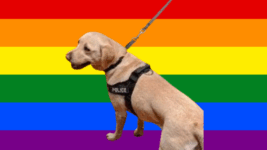
The state’s law enforcement watchdog has directed the New South Wales Police Force to reopen its inquiry into a mid-June 2026 spate of drug dog raids upon LGBTIQA+ nightclubs located on Gadigal land in Sydney’s Oxford Street precinct, right in the middle of Pride month, as the agency’s having cleared itself of any misconduct is at odds with the witnessed intimidatory behaviour of officers.
The ABC reported this week that the Law Enforcement Conduct Commission has insisted that NSW police reinvestigate itself over a matter that saw groups of six to twelve police officers aggressively descending upon multiple venues around Oxford Street with sniffer dogs in tow, shining flashlights in faces, conducting pat down searches and dragging patrons off to the toilets for strip searches.
After being inundated with community complaints, Sydney lord mayor Clover Moore and Independent MP for Sydney Alex Greenwich called upon the LECC to investigate the incident. And the watchdog has this week outlined that a recent letter the pair received from the NSW police professional standards unit outlining no further investigation being warranted is not good enough.
Moore and Greenwich noted that they hadn’t received so many complaints about the NSW police in respect of the LGBTIQA+ community for over 10 years. Indeed, the NSW police operation occurring in the middle of Pride, a global celebration of LGBTIQA+ culture, appeared as if the law enforcement body was once again taking a prejudicial and confrontational approach to the queer community.
NSW police claims that dog operations were warranted as part of a broader strategy to reduce risks of drug use in the community, despite sniffer dog operations having long been discredited as a means to curb drug supply. And on the evening, 93 searches were conducted, with 42 involving drug detections. Yet only one person was charged with drug supply, the crime the dogs are said to target.
Old school tactics
NSW police professional standards manager inspector Michael Butcher set out in a letter to Moore and Greenwich that the law enforcement body had scoured body-worn video, CCTV footage and eyewitness accounts to have found last month that “no further investigation was warranted”, and that no “evidence of misconduct, unlawful conduct or breaches of NSW police policy” was found.
However, LECC commissioner Anina Johnson explained in a letter addressing the two politicians last week that the watchdog “has conducted its own assessment and disagrees with the NSW Police Force’s decision not to investigate your complaint”, and in this regard the body has invoked its statutory powers to require the law enforcement body to reopen its investigation.
The mid-June raids caused a stir on social media, as content involving officers descending on Oxford Street venues flooded local feeds to remind the NSW public of a time when state law enforcement had taken a confrontational approach towards the LGBTIQA+ community, which had, in the past, involved prejudicial attitudes towards it and a dismissive response to violence crimes against it.
The 2013 Mardi Gras parade event was marred by NSW police officers using brute force upon members of the crowd in a proactive manner. A police assault upon then 18-year-old Jaime Reed became the key example of the police brutality on that night. And this led to the establishment of the 2014 Mardi Gras Police Accord, which was supposed to end this volatility.
As Moore and Greenwich put to the LECC on 18 June 2026, NSW police officers had saturated Oxford Street precinct venues, like Kinsella’s and Universal. The pair added that constituents had told them that “police pushed, shoved and aggressively directed patrons to move”, while they shone “bright flashlights in their faces, sometimes laughing and appearing to enjoy themselves”.
Routine sniffer dogs and strip searches
The running of drug dogs through LGBTIQA+ venues occurred after a decadelong debate about the warrantless use of drug dogs in public and the increasing use of strip searches to accompany them. State law enforcement commenced using sniffer dogs in 2002, but by 2006, a NSW Ombudsman report had found that the searches only turn up illegal items on 26 percent of occasions.
The Ombudsman further found that drug dogs weren’t curbing drug supply, as on an overwhelming number of occasions, they were turning up small amounts of cannabis, and since Apri 2000, NSW police officers have been able to simply caution individuals in possession of a personal amount of cannabis. So, the use of sniffer dogs has mainly foiled behaviour that is barely a crime.
The NSW Greens Sniff Off campaign went on to track the lack of success of drug dog use over the 2010s to find that no drugs were found two-thirds to three-quarters of the time. While strip searches accompanying dog indications started raising eyebrows circa 2014, with incidents of people being stopped on their way into music festivals and being required to strip off becoming more prevalent.
Then NSW MLC David Shoebridge released figures in late 2018 that found that the use of strip searches in this state had increased by 57 percent over the previous four years, and 64 percent of these searches continued to turn up nothing. This meant that over 3,400 constituents had been made to strip off after a dog indication over 2017-18, only to find they were in possession of nothing.
NSW Greens MLC Cate Faehrmann queried NSW police commissioner Mal Lanyon about recent incidents that had involved police running drug dogs through Sydney clubs in February this year, and he responded that he was not aware of this behaviour.
Yet, the spate of raids on nightclubs during Pride does appear to be a reassertion of drug dog rights in light of the decadelong campaign.
Institutionalised prejudice
“People were subjected to searches in full public view, pushed against walls, forced to remove clothing and have their body searched,” the complaint to the LECC further conveyed. “They report feeling humiliated. One person felt so traumatised they couldn’t stop crying and had to leave. One person reports that they were searched only after an officer directed a sniffer dog to ‘sit’ near them.”
“While police say that the raid was aimed at finding drug suppliers, the evidence shows that police searched and targeted people they believed used but did not sell drugs,” Moore and Greenwich continued. “The role of police is to protect the community from harm, not to intimidate them, treat them with suspicion for no reason, or spoil their fun.”
A participant in the first 1978 Mardi Gras parade, 78er Rebbell Barnes told the ABC that the recent scenes he’d witnessed in Kinsella’s reminded him of the first event, which had actually been a protest march at a time when homosexuality was still a crime in NSW. The NSW police set upon the 78ers with such ferocity that had never since been matched until the 9 February anti-Herzog rally this year.
The relationship between the NSW Police Force and the local LGBTIQA+ community had long been the subject of neglect and a dereliction of duty as well, as “gay bashings” and murders became a regular occurrence over the last three decades of last century, yet the policing response was laxed. More recent research has uncovered 88 suspected gay hate homicides over the 24 years to 2000.
So, as the LECC orders the NSW police to reinvestigate the Pride drug dog raids on Oxford Street venues, what is at stake is the prevention of the reinstatement of aggressive posturing towards the NSW queer community on the part of state law enforcement, and the inquiry is further meant to uncover why officers were all of a sudden ordered to revert to the behaviours of the past.
Image: Sniffer dog image supplied by Sniff Off. Rainbow flag is in the public domain.

Paul Gregoire

Receive all of our articles weekly
Related Articles
 NSW Police Go Ballistic with Drug Dogs on Oxford Street, Again, to Destroy Pride Month
 Drug Seizures May Suggest a Drug War Victory – But the Reality is Very Different
 NSW Police Use of Drug Dogs and Strip Searches Slammed as Ineffective and Unlawful
 “Hey Commissioner, Stop Running Drug Dogs Through Pubs and Clubs”, Demand NSW Greens
 Don’t Bring the Drug Dogs Back: An Interview With Sniff Off’s Xiaoran Shi
 NSW Police with Drug Dogs Saturate Global Mardi Gras: An Interview With Greens MLC Cate Faehrmann